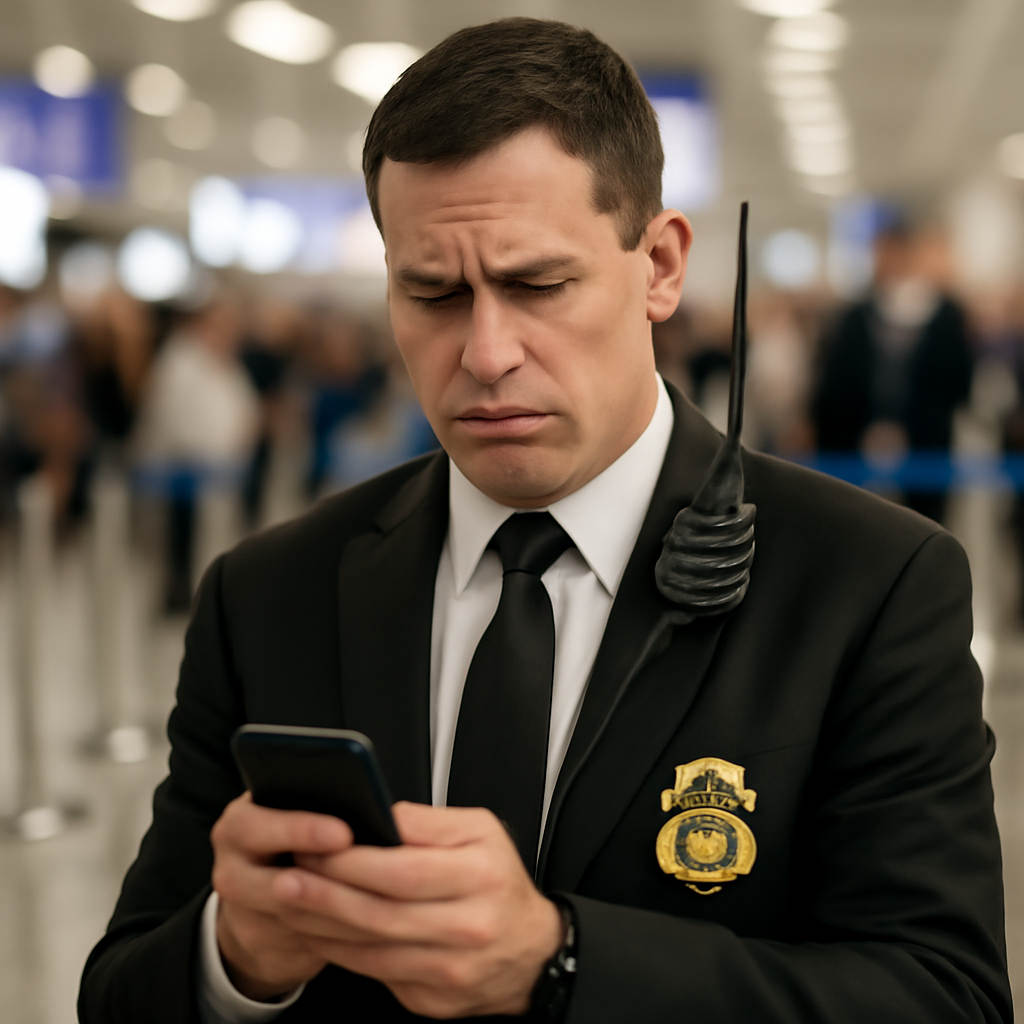
Investigators found more than 15,000 instances — out of roughly 4.8 million calls reviewed — in which Secret Service employees sent or received calls from colleagues’ personal phones while on protective events, according to a Department of Homeland Security inspector general report.
DHS inspector general: personal phones used during protective operations
The inspector general’s review, ordered after the 2024 assassination attempt against President Trump in Butler, Pennsylvania, concluded that Secret Service agents routinely relied on unsecured personal cell phones during mission operations both in the United States and overseas. The report says agents turned to personal devices because their government-issued equipment “lacked the capabilities they needed to perform their missions.” The inspector general reviewed call and text logs from government-furnished mobile device records covering October 2022 through May 2025 and identified the 15,000-plus instances of personal-phone use during protective events.
GFE mobile devices lacked protections and carried vulnerable apps
Even when employees used government-furnished equipment (GFE), the devices “didn’t have sufficient security to ensure real-time, continuous protection from cyberattacks by foreign adversaries or individuals,” the report found. Investigators identified vulnerable apps on GFE phones and noted that the Secret Service did not begin installing mobile threat defense software on any GFE phones until August 2025. The inspector general warned that outdated and vulnerable apps could let malicious actors “conduct surveillance, track locations, or record employees’ communications,” and added that connecting to unsecured networks may allow cybercriminals to access data or install malware.

Audit-ready is a season. It shouldn't be.
Evidence in spreadsheets, controls drifting between audits, frameworks multiplying on flat headcount. Nubivance runs continuous compliance on Rapid7 Cyber GRC - SOC 2, HIPAA, ISO 27001, PCI, CMMC.
End the scrambleInternational missions: hotspots, reimbursements, and missing device wipes
Investigators examined travel vouchers for Secret Service employees who traveled internationally between October 2022 and April 2025 and found 30 employees who claimed reimbursement for using personal phones for official government business. Of 24 interviewed, 23 said they needed to use their personal cell phones on nearly every foreign assignment. The report also documents agents using personal devices as hotspots to provide internet access for government laptops or to reach websites blocked on GFE phones.
Despite Secret Service policy that requires employees to wipe GFE devices within 24 hours of returning to the United States, the inspector general found the agency did not consistently erase data from devices after international missions.
Inspector general’s five recommendations, and the Secret Service response
- The report includes five recommendations: implement a formal policy ensuring GFE devices have the required capabilities to conduct mission functions securely; ensure all employees complete required cybersecurity awareness training; improve communication from the office of the chief information officer to make clear that personal device use for official business is prohibited; implement controls to wipe all mobile devices returning from international missions; and apply an updated vulnerability testing policy to all mobile app code.
- The Secret Service “concurred” with all five recommendations. In a letter included in the report, Secret Service Director Sean Curran said the agency made “several comprehensive enhancements to Secret Service communications policies and protocols to both mitigate the potential for adversaries to intercept and exploit Secret Service information, as well as further strengthen the protective environment.” A Secret Service spokesperson declined further comment beyond that letter.
What this means for technologists, policymakers, and the public
- Technologists and security teams: The report highlights concrete gaps — delayed deployment of mobile threat defense software (not installed on GFE until August 2025), vulnerabilities in app code, and inconsistent device-wipe practices — that security teams will need to prioritize if GFE is to replace personal-device workarounds. The inspector general’s recommendation to update vulnerability-testing policies for mobile app code targets a specific, actionable control.
- Policymakers and regulators: The inspector general ties operational risk to policy compliance. Homeland Security policy permits only GFE for official business, yet the review found widespread noncompliance and reimbursement for personal-phone use during foreign travel. Policymakers will likely focus on closing capability gaps that drive employees to use prohibited devices as well as enforcing the wipe and training requirements already on the books.
- End users and the public: The report underscores how personal devices can reveal far more than a single agent’s communications — they can expose mission details and geolocation by proxy, potentially disclosing the locations of the president, the vice president, and visiting heads of state, as well as photos, contacts, family members and home addresses. Because personal phones are not government-managed, the report points out they are easier targets for surveillanceware or other malware.
The inspector general’s review lays out a simple practical dilemma: agents turned to personal phones because GFE didn’t meet operational needs, yet personal phones expose mission information and people to higher risk. The Secret Service has agreed to the report’s recommendations and says it has made “comprehensive enhancements.” What remains to be seen — and what the report leaves sharply framed — is whether the technical fixes, training, and enforcement proposed will be sufficient to close the gap that produced more than 15,000 recorded instances of personal-phone use during protective events.