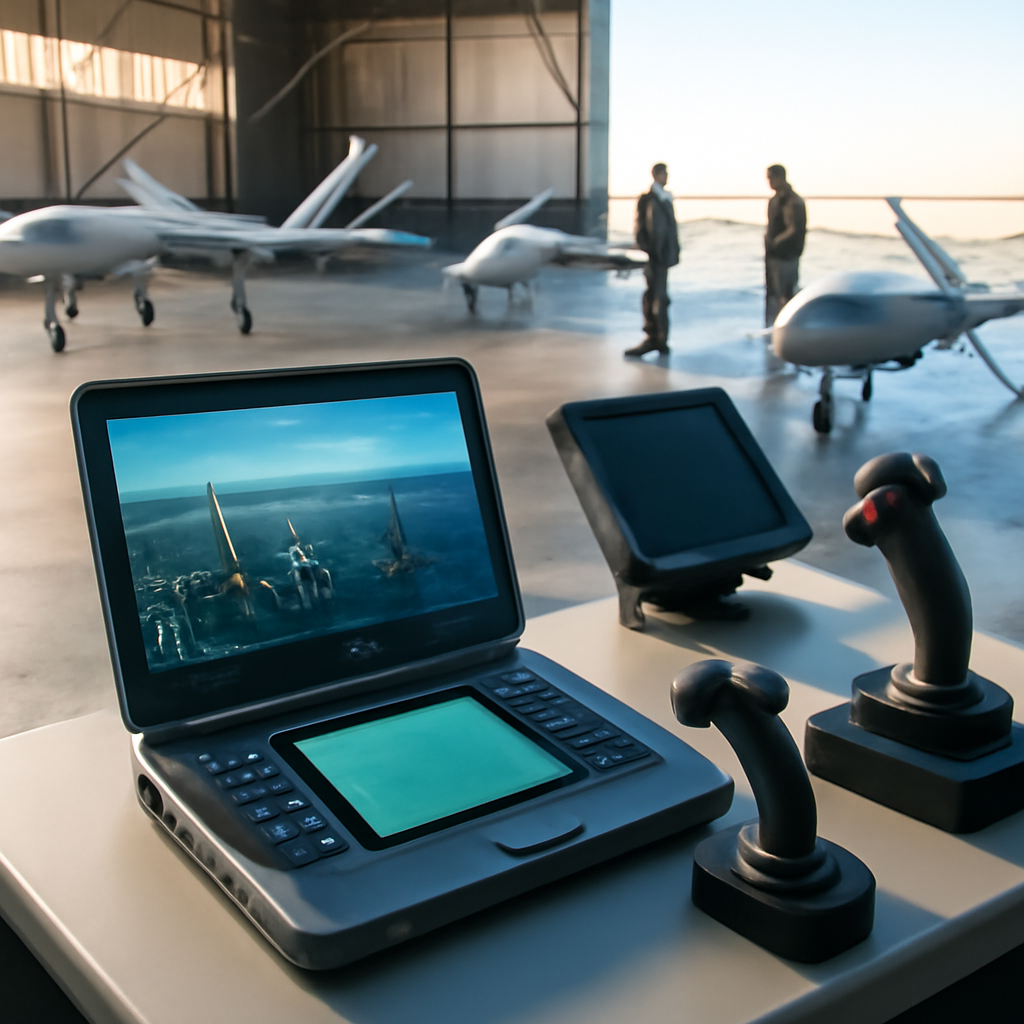
"What I would like to have is multiple aircraft designs that go into production that can be operated with a common interface that’s more like mouse clicks and keyboard as opposed to stick and throttle, and I can have, whatever an MMA operator ends up looking like, fly all of them." — Lt. Gen. Christopher Niemi
Massed Modular Aircraft: accelerated fielding and new scale
The Air Force has moved to expand its unmanned fleets rapidly. The service, which previously set a goal to have 20 Massed Modular Aircraft (MMA) in service by fiscal 2031, is now pursuing a far larger build-out: Air Force Secretary Troy Meink said at the 2026 AFA Air, Space, Cyber Conference that the service is looking to field 100 MMAs by 2029 and 500 by 2032. That change represents not only a scaling of production but a shift in how airborne ISR capacity will be distributed across the force.
Standardized controls: a single console for many airframes
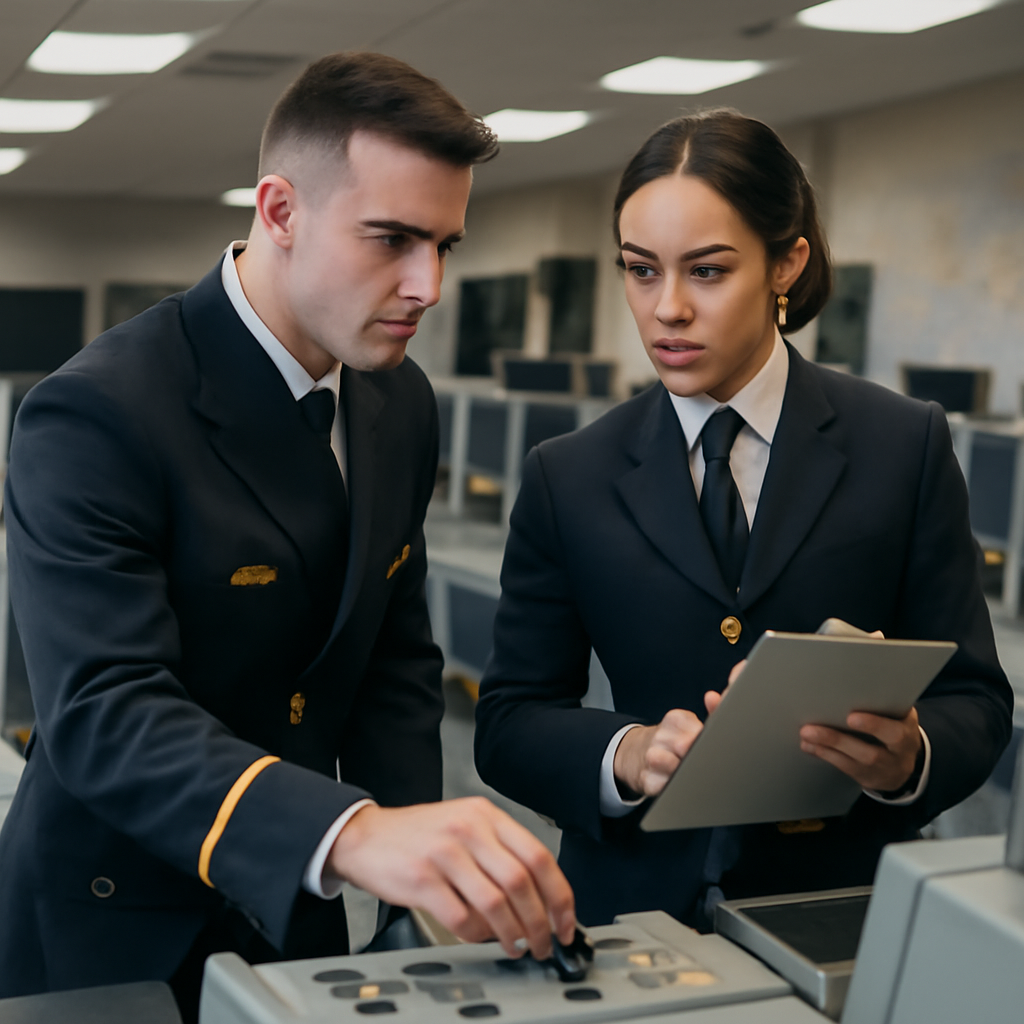
Standardization of control interfaces is positioned as a central enabler of that scale. Lt. Gen. Christopher Niemi, the Air Force’s chief modernization officer, described a desired future in which multiple aircraft designs are operated through a common interface that favors "mouse clicks and keyboard" over traditional "stick and throttle" inputs. The aim is operational flexibility: have one type of operator able to fly many different MMAs and bring common procedures, training, and handoff practices to UAS operations.

Audit-ready is a season. It shouldn't be.
Evidence in spreadsheets, controls drifting between audits, frameworks multiplying on flat headcount. Nubivance runs continuous compliance on Rapid7 Cyber GRC - SOC 2, HIPAA, ISO 27001, PCI, CMMC.
End the scrambleMarine Corps seeks its own ISR controller software
The U.S. Marine Corps is pursuing a similar but institution-specific approach. At the 2026 Modern Day Marine Conference, Marine Corps Maj. Michael Zbonack said the service wants to implement its own ISR capabilities by working with industry on a common controller software solution. The stated intent is to allow troops to hand off control of drones as needed rather than rely solely on contractor-operated systems—an effort that mirrors the Air Force emphasis on standardized operator interfaces while reflecting the Marines’ desire for organic capability.
Space-based ISR and Space Force Delta 7
Space is now a central layer of the ISR construct. United States Space Force Delta 7 is identified as responsible for space-based ISR, with several squadrons focused on monitoring adversarial activities, threat analysis, and support for integrated fires and combat operations. The source notes an expanding role for satellite sensors—optical, multispectral, radar, and radio-frequency—and an explicit link between space-based collection and the command-and-control picture needed by commanders and troops.
Adversary capabilities in space: China and Russia
Space Force public materials and the reporting flag specific adversary capabilities. A July fact sheet noted more than 500 Chinese satellites with optical, multispectral, radar, and radio-frequency sensors. Russia has been described as having tested anti-satellite missiles and ground-based lasers that can blind intelligence satellites to potential missile launches. Both Russia and China are also suspected of launching space-based weapons systems in addition to reconnaissance capabilities. Against that backdrop, Meink said the United States "now has on-orbit space control weapons capable of defending the joint force against hostile adversary action."
What this means for technologists, policymakers, and combat units
- Technologists and security teams: Expect requirements that prioritize interoperable control software and hardened command links. The Air Force and Marine Corps emphasis on common interfaces implies software-development and integration work across multiple airframes and vendors.
- Policymakers and acquisition leaders: The accelerated MMA procurement tempo (100 by 2029, 500 by 2032) will press contracting, testing, and sustainment timelines. Decisions will need to align acquisition pacing with standards for control interfaces and with space-based defenses managed by Space Force Delta 7.
- Combat units and operators: Units will be asked to adopt new human-machine workflows—handing off drone control, training on common interfaces, and integrating space-derived ISR—while operating in an environment where adversaries possess both extensive sensor fleets and counterspace tools.
The emerging ISR picture in this reporting is not a single technology problem but a systems puzzle: scalable unmanned airframes, shared operator interfaces, Marine Corps force ownership, and a contested space layer all must be made to work together. The Air Force’s aggressive MMA numbers and the Space Force’s on-orbit control posture set two hard requirements at once—more platforms to manage, and more ways those platforms must be protected in orbit. The central test ahead is practical: can common controls and software handoffs be fielded quickly enough to exploit the rising numbers of drones while Space Force Delta 7 and on-orbit defenses keep pace with adversary ISR and counterspace activity?