Austrian air policing: two days, multiple scrambles
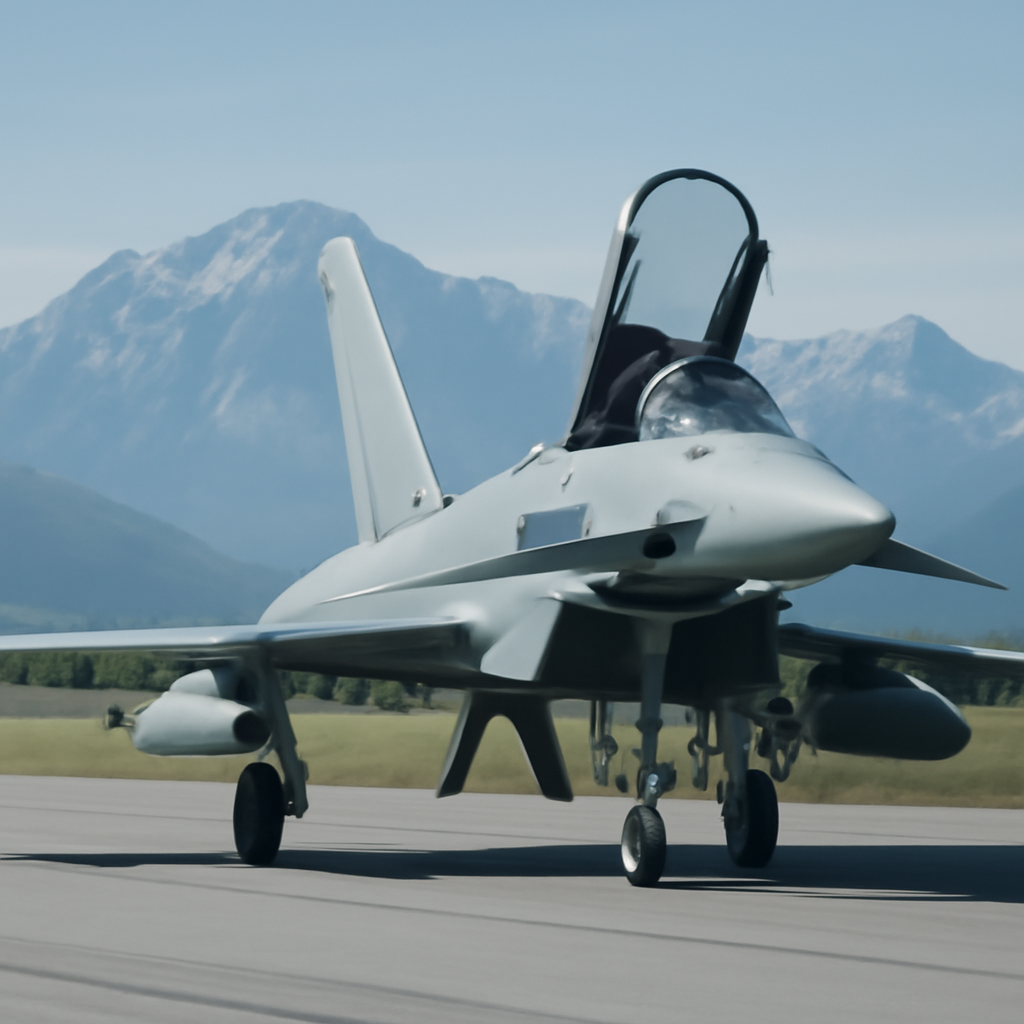
For two consecutive days this week the Austrian Air Force scrambled Eurofighter Typhoons after detecting U.S. military turboprops in or near its airspace, the Ministry of Defense said. On May 10, two Eurofighters were sent to intercept a pair of "PC-12s" detected in the Totes Gebirge region of Upper Austria; after identification those aircraft reportedly turned back and returned to Munich, Germany. On May 11 another Priority A intercept — the highest-priority Quick Reaction Alert response — was launched at 12:31 p.m. in response to two additional "PC-12s," though Austrian officials said it was unclear whether the May 11 flights had the necessary clearances.
An official ministry video documenting a QRA scramble was shared publicly, and the ministry emphasized that "the matter is to be resolved through diplomatic channels," according to spokesperson Michael Bauer.
Aircraft identified in public accounts: "PC-12" and the U-28A Draco
The ministry described the detected platforms as U.S. Air Force PC-12 turboprops — almost certainly a reference to the U-28A Draco, the Air Force Special Operations Command’s militarized variant of the Pilatus PC‑12M used for intelligence, surveillance and reconnaissance (ISR). The U-28A carries an electro-optical/infrared sensor turret and signals-intelligence systems; some iterations reportedly include synthetic aperture radar imaging capability.
Public documents and imagery cited by the reporting note that AFSOC has fielded an upgraded U-28A configuration known as EQ+, which Pentagon budget documents say includes a higher-definition, multi-spectral full-motion video camera that extends standoff range and allows higher-altitude operations. The Draco also hosts communications and data-sharing suites that enable near-real-time transmission of collected data for exploitation or use by ground forces.
Fleet size is imprecise in public records: a December 2023 Government Accountability Office report stated that "close to 40 U-28As remained in service," and in September 2024 the GAO confirmed to TWZ it was conducting a classified review of Special Operations Command’s decision to divest the U-28As and King Air-based ISR aircraft often referred to collectively as MC-12s.

The cyber insurance questionnaire just landed. Now what?
SOC 2, HIPAA, insurance renewals - someone has to own security strategy. Nubivance provides fractional CISO leadership without the full-time salary.
Get a security leadAlpine flight patterns and a recent spike in activity
The Alpine corridor between Germany and Italy makes Austria and Switzerland frequent transit routes for military flights routing to southern Europe or farther. Media reports in Switzerland documented nine U.S. Air Force overflights of Swiss airspace in the three days preceding the Austrian incidents — all of those Swiss flights were authorized, the reporting said. The Austrian Ministry reiterated that clear guidance exists for transits of its airspace and that the current matter would be handled diplomatically.
Historical precedent: a 2002 incident and why Austria watches transits closely
The recent intercepts are not without precedent. The reporting recounts a 2002 episode in which two F-117A Nighthawks transited Austrian airspace tucked beneath a KC-10A tanker’s wings after irregularities in a flight plan prompted Austrian Saab Drakens to scramble. Imagery of that intercept was presented by the Austrian Minister of Defense at the time, Herbert Scheiber, and used in a diplomatic protest lodged at the U.S. Embassy in Vienna.
Austrian air policing remains a core function of its air force. The country’s Eurofighter fleet is dedicated primarily to air policing and — the reporting notes — has "no air-to-ground capability at all," underscoring a narrowly defined interception role for the jets involved.
What this means for the Austrian Ministry of Defense, the U.S. Air Force, and Swiss authorities
- Austrian Ministry of Defense and Air Force: Expect continued vigilance and rapid QRA responses for any suspected unauthorized transits. The ministry has signaled it will pursue diplomatic channels to resolve the May incidents and has publicly documented at least one intercept.
- U.S. Air Force and AFSOC: The incidents underline that the U-28A Draco remains in operational use in Europe. The reporting notes the platform’s sensor upgrades and its continued role in ISR missions, while public records show oversight activity by the GAO concerning the platform and related ISR assets.
- Swiss authorities and regional airspace managers: Recent reporting of nine authorized U.S. overflights of Switzerland in the same window suggests a regional uptick in U.S. activity across the Alpine corridor; differential authorization status between neighboring states can produce fast-moving intercepts and diplomatic questions when flights cross boundaries or appear to.
The Austrian Ministry of Defense has stated the intercepts will be handled through diplomatic channels and an inquiry has been made to the U.S. Air Force for clarification, according to the reporting. Whether the May interactions reflect short procedural failures, misfiled flight plans, or other causes, they underscore how a few minutes of transit across a narrow Alpine corridor can trigger high-priority military responses and immediate diplomatic scrutiny.