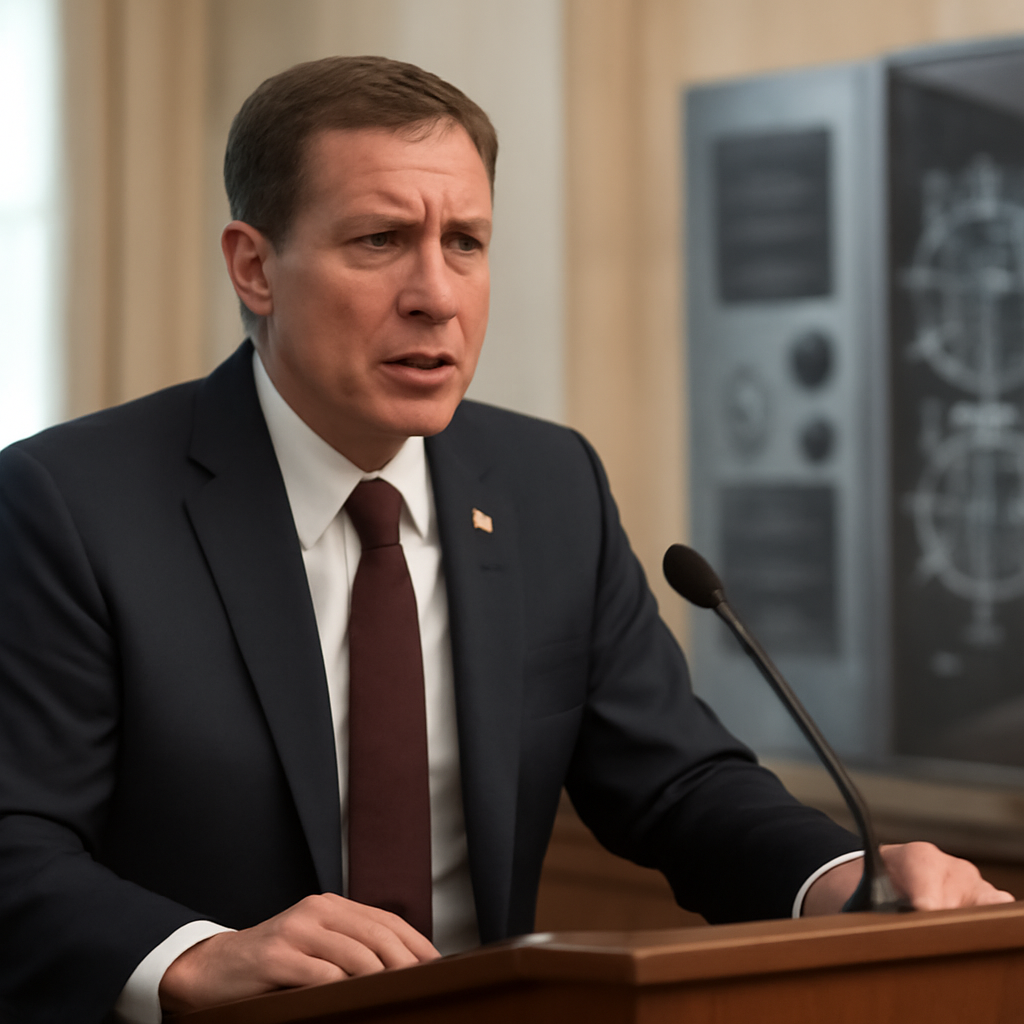
“Over the past two weeks, we have worked closely with Anthropic to analyze and approve Fable 5 to ensure alignment across the US Government and strengthen America’s leadership in AI,” Secretary of Commerce Howard Lutnick wrote on X, appearing to confirm that export controls on Anthropic’s models would be lifted.
Anthropic restores Fable 5 and Mythos 5 after negotiations with White House and Commerce
Anthropic announced that its Fable 5 and Mythos 5 models are once again available to the public after reaching an agreement with the Commerce Department. The company said export controls that had prevented sales to foreign companies and individuals were lifted following weeks of negotiation with the White House and Commerce Department, and that access for U.S. users has been restored.
Amazon threat-intelligence report, the jailbreak alarm, and the “borderline case”
The Commerce Department initially imposed export controls after the Trump administration said it was alarmed by a threat-intelligence report from Amazon asserting that Fable had been jailbroken to reveal cybersecurity capabilities. Administration officials were reportedly concerned that the release of Fable 5 would make such jailbreaks imminent.
Anthropic pushed back on the novelty of the capabilities described in the Amazon report, saying scanning code and identifying exploit techniques are already possible with existing models. The company said testing found equivalent and lesser models — specifically ChatGPT 5.5, Claude Opus 4.8 and Kimi K2.7 — could identify the same vulnerabilities, and that roughly half a dozen existing models were able to produce the same proof-of-concept code the report described. Anthropic also said it has not seen a jailbreak that undermines the model’s restrictions on cybersecurity and biology work, calling the reported instance “a borderline case.”
At the same time, Anthropic acknowledged cybersecurity professionals had complained that Fable 5’s safety guardrails were blocking routine defensive cybersecurity work in addition to malicious use cases.

This site is the portfolio.
OSINTSights runs on Cloudflare Workers, D1, R2, and Vectorize, with an AI pipeline on Hetzner ARM. Nubivance designed, built, and operates it. We do the same for clients.
See what we buildNew safety classifiers, federal stress testing, and operational trade-offs
Anthropic said it has trained new safety classifiers specifically to target and block the behaviors described in the Amazon report and to notify users when such blocking occurs. The company reported that the new classifiers have been stress tested by the federal Center for AI Standards and Innovation and will block the techniques “99.9%” of the time.
Anthropic emphasized the classifiers are not intended to stop all lower-risk defensive capabilities; instead, they aim to block the most harmful behaviors. Still, the company warned the added restrictions will likely make it harder to use Fable 5 for defensive cybersecurity: more “benign” requests for routine coding and debugging tasks are expected to be flagged by the system.
Christopher Padilla’s critique and policy tensions inside the administration
Christopher Padilla, former Assistant Secretary for Commerce for export administration, described the lifting of controls as “good news” while criticizing the Trump administration’s overall approach to AI policy. In a LinkedIn post, Padilla called the administration’s approach “chaotic and unpredictable” and warned it was the opposite of the clear, consistent rules industry needs.
Padilla contrasted the export-controls action against Anthropic with other administration decisions, saying “the same BIS that stopped Fable and Mythos has a permissive policy for exporting high-end AI semiconductors to China — in exchange for a cut of the take,” a reference to the Trump administration’s lifting of export controls on advanced AI chips. He called that mix of actions “not a smart way to make policy,” saying it harms both industry competitiveness and national security.
The source also notes that while Vice President J.D. Vance mocked AI safety regulations in a speech in Europe last year, the administration had quietly partnered with OpenAI and Anthropic on voluntary national-security testing, a relationship that was said to be codified in a White House executive order last month shaped heavily by industry backers. Days after Fable’s release, however, Commerce nonetheless imposed export controls on Anthropic’s models.
What this means for technologists, policymakers, and affected enterprises
- Technologists and security teams: Expect more benign defensive tasks to be flagged on Fable 5 as Anthropic’s classifiers prioritize blocking the behaviors described in the Amazon report; routine coding and debugging requests may face friction even where the intent is defensive.
- Policymakers and regulators: The episode highlights competing tools — export controls, voluntary national-security testing, and executive orders — leaving implementation choices and timing central to outcomes, a point underscored by public critiques from former Commerce officials.
- Affected enterprises and procurement leaders: Foreign sales restrictions that had been in place were lifted, but purchasers should be prepared for changed operational behavior in the models as classifiers and notifications alter how benign and risky requests are handled.
The immediate, concrete markers to watch are whether Anthropic’s classifiers — now stress tested by the Center for AI Standards and Innovation and claimed to block the reported techniques “99.9%” of the time — actually reduce successful jailbreaks without creating untenable friction for routine defensive work. The company and federal testers say the system targets the most harmful behaviors; the record now will show whether it achieves that balance in practice.