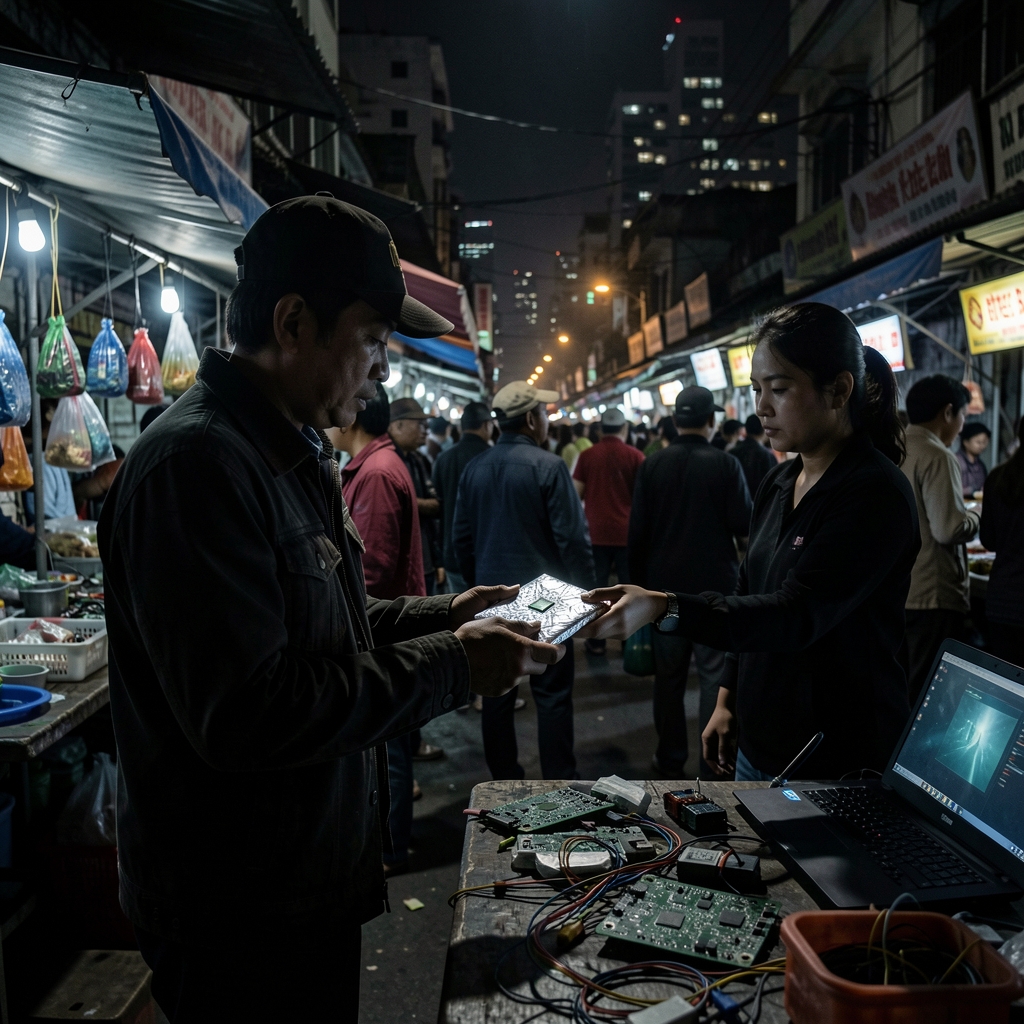
How deep does a problem have to be before the public sees it? Recent court actions suggest Americans are only catching glimpses — the indictments are the tip of an iceberg that stretches far beyond airport seizures and customs paperwork.
The emerging evidence
A string of federal indictments has lifted a corner of what the reporting calls a pervasive shadow network. According to the CyberScoop post, those legal actions revealed an organized system of data centers and counterfeit products operating across Southeast Asia. The indictments, the piece says, expose more than isolated shipments: they point to an infrastructure that can manufacture, disguise and channel hardware into global markets.
What the reporting says about enforcement
The CyberScoop post argues that current enforcement too often focuses on the last choke point — inspections at airports and ports — rather than confronting the problem at its source. The core recommendation is clear: to protect national security, enforcement must move "from the airport gate to the factory floor." That is a call to shift emphasis from interception to prevention, from reacting to illicit shipments to disrupting the systems that create and certify those products in the first place.

Audit-ready is a season. It shouldn't be.
Evidence in spreadsheets, controls drifting between audits, frameworks multiplying on flat headcount. Nubivance runs continuous compliance on Rapid7 Cyber GRC - SOC 2, HIPAA, ISO 27001, PCI, CMMC.
End the scrambleWhy it matters: perspectives and implications
- Technologists: The reporting implies that counterfeit components and shadow data centers can undermine the integrity of hardware and the systems that run on it, complicating efforts to secure networks and supply chains.
- Policymakers: The indictments and the op-ed’s recommendation frame a policy choice: retain a customs-and-inspection model or invest in upstream measures that target production, certification and the networks enabling illicit trade.
- Users and operators: When products in circulation may be fake or routed through covert facilities, end users face greater uncertainty about reliability, provenance and potential security risks.
- Adversaries and intermediaries: The uncovered network suggests actors with the ability to exploit manufacturing and distribution channels, presenting opportunities to insert compromised or misrepresented hardware into global supply chains.
What comes next
The CyberScoop piece frames the indictments as revealing a broader, systemic problem that demands a strategic shift. If enforcement remains focused on seizures at entry points, the reporting warns, authorities will continue to see only the visible fraction of illicit trade. Shifting attention upstream — to production, certification and the networks that sustain counterfeit and shadow-market operations — is presented as the necessary step to protect national security and reduce future interdictions to their true scale.
Are indictments enough to change a system built on dispersed manufacturing and complex supply chains, or are they merely the first, visible cracks in a much larger edifice?
https://cyberscoop.com/ai-chip-smuggling-china-export-controls-enforcement-op-ed/



