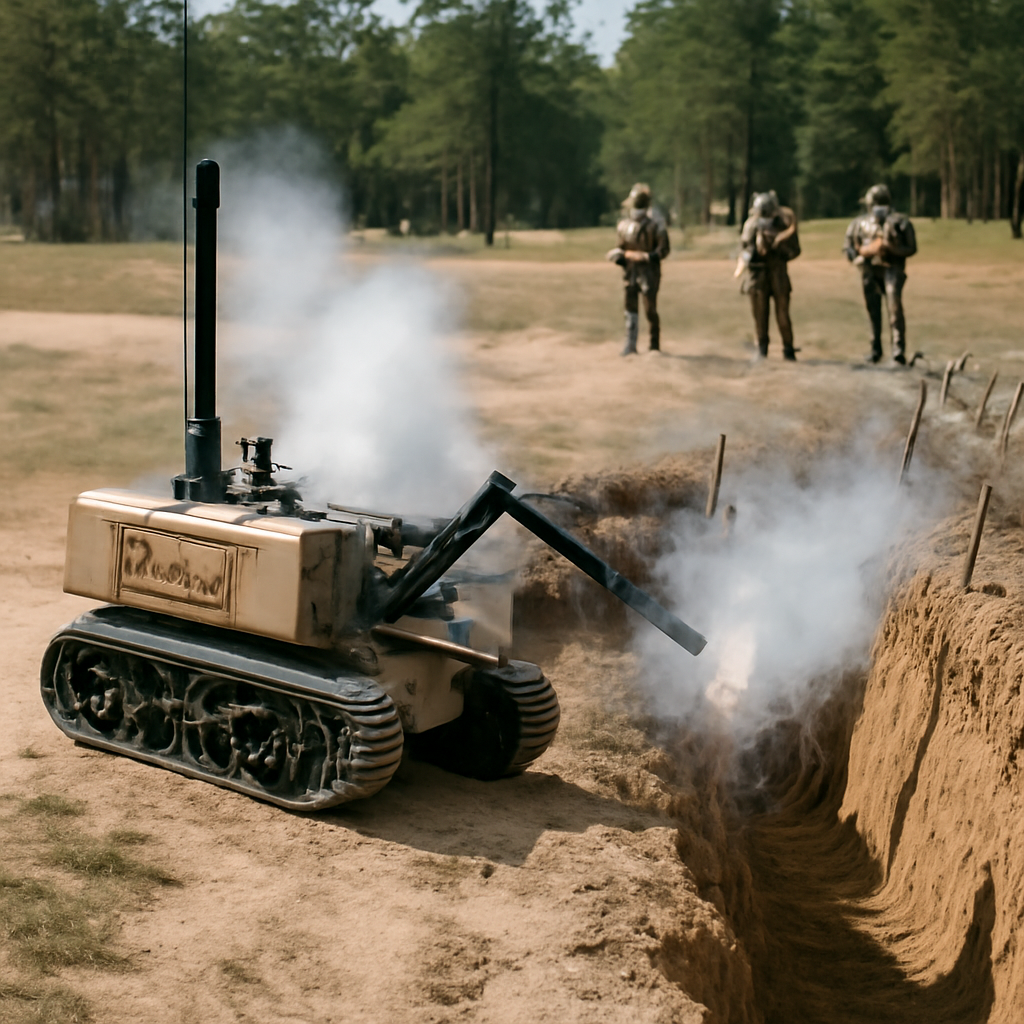
“The most dangerous point in a fight for an infantry battalion is the breach point where I’m trying to breach an obstacle — usually around like a trench or a defense,” Col. Ryan Bell said after sending robots forward in place of soldiers during a recent training rotation.
Col. Ryan Bell and the 3rd Mobile Brigade Combat Team at JRTC
At the Joint Readiness Training Center rotation in Fort Polk, Louisiana in April, soldiers from the 3rd Mobile Brigade Combat Team, 101st Airborne Division largely stood aside while uncrewed systems carried out a simulated assault. Col. Ryan Bell framed the exercise as a robotic combined arms breach — an attempt to use uncrewed ground and aerial vehicles to defeat heavily defended, mined and wired obstacles so infantry would not have to risk direct entry into the breach point.
Bell described the goal simply: “can we, with robots, make this uncontested for the rifleman?” He judged the exercise successful, saying the drones and UGVs “absolutely did what we asked” and that keeping soldiers in reserve until needed had been the right call.
How the breach was executed: Abe-101s, an AERO Sky carrier, and breaching charges
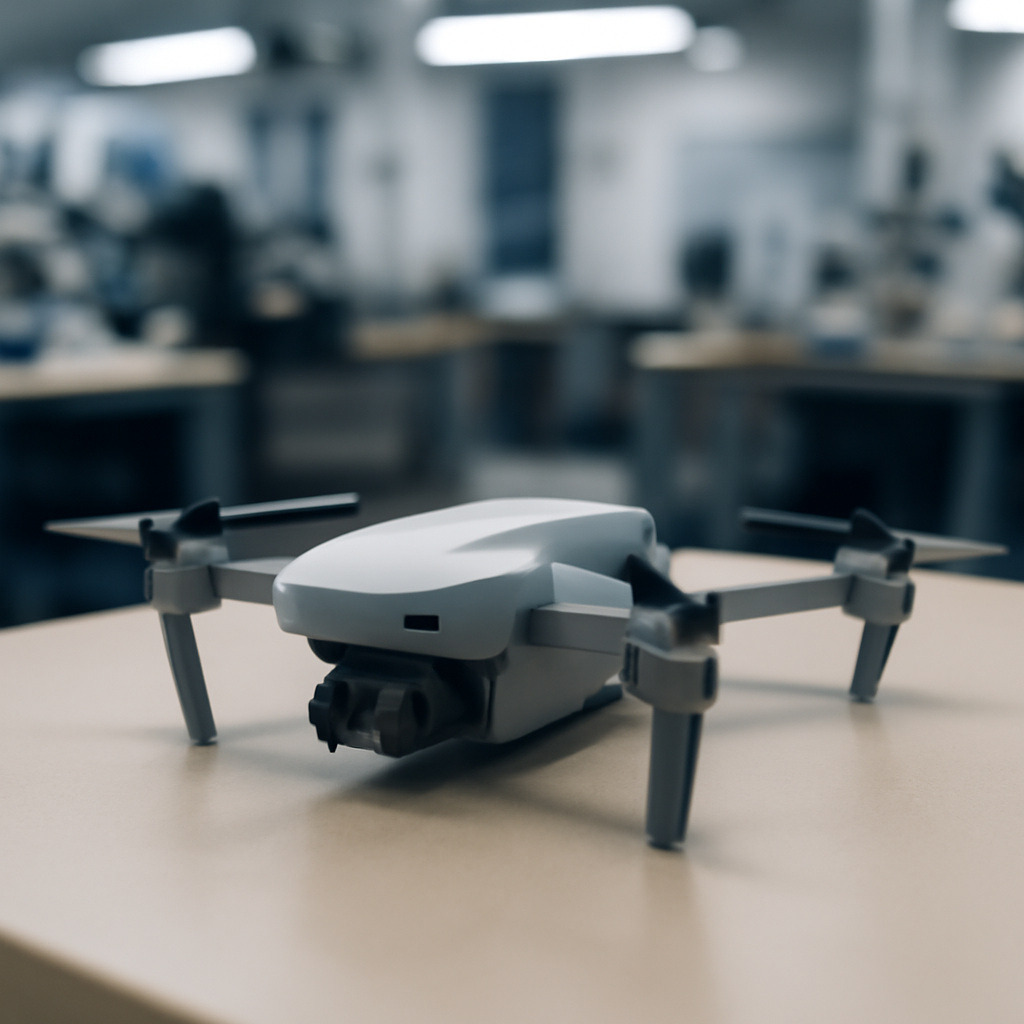
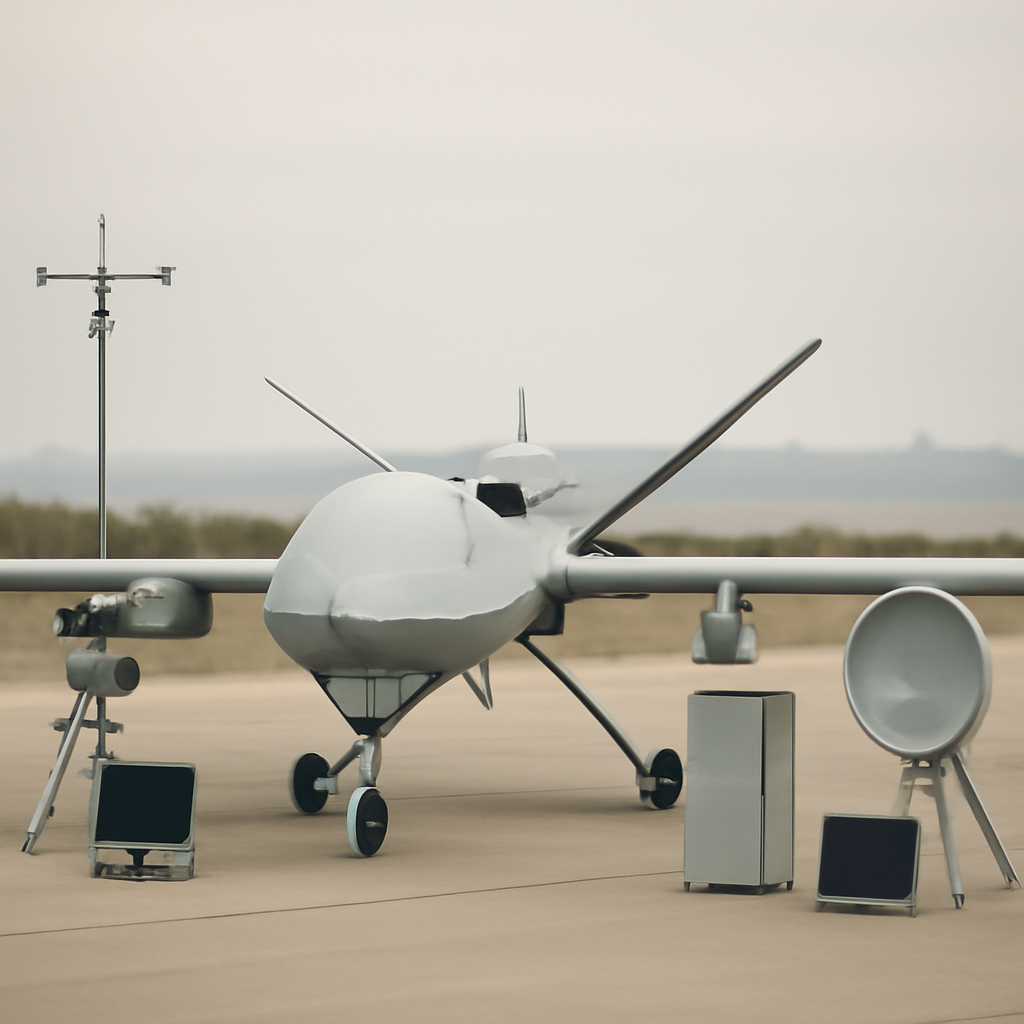
The brigade employed purpose-built attritable system (PBAS) drones called Abe-101s and two unmanned ground vehicles (UGVs) for the breaching sequence. Soldiers attached two Abe-101s to a modified AERO Sky “carrier drone” to simulate a hardened one-way attack munition aimed at taking down jammers. Subsequent waves — flown in groups of five — carried attack munitions to target bunkers, vehicles and simulated fighting positions, while other waves dropped smoke to disorient the opposition. Two UGVs then approached the mined wired obstacles with 28-lbs. breaching charges that were remotely detonated to create openings for infantry.

The cyber insurance questionnaire just landed. Now what?
SOC 2, HIPAA, insurance renewals - someone has to own security strategy. Nubivance provides fractional CISO leadership without the full-time salary.
Get a security leadObserved capability gaps: swarming, ground-vehicle robustness, and operator workload
Even as Bell praised the outcome, he identified clear limits. The brigade practiced three drones with one operator during the rotation and “it didn’t work that well.” A multifunctional reconnaissance company in Montana, Bell said, had tested swarm control more successfully, flying three to five drones with a single operator, but he argued that the future requirement is far larger: “I need to have one operator to control 15 to 20 to 30 drones at a time.”
On the ground side, Bell noted that the UGVs “were great for breaching, but there’s things they need to do to become more robust as they go over different types of terrain, so they don’t get stuck.” He emphasized that units must practice driving and maneuvering the vehicles to reduce those risks.
Production scale and the price point problem
Bell also turned to industrial scale and cost. The brigade can build “a decent number” of Abe-101s in a week but lacks the manpower and facilities to produce at the volumes he believes are necessary. He sketched a chain of requirements: if he needs 1,000 a week and a division contains three mobile brigades, that becomes roughly 15,000 a month; across 11 divisions he estimated “150,000 to 200,000 a month” and about “2 million a year.”
Cost matters in Bell’s calculus: the Abe-101 can be built for about $750 apiece “without any add-ons like terminal guidance or night vision capabilities.” He argued the systems must be thought of “more like artillery shells” and kept at a low price point so attritable drones are “competitive with artillery for cost for effect.”
How the 3rd MBCT, industry, and training units are responding
- 3rd Mobile Brigade Combat Team: is refining tactics that keep infantry in reserve while robots attempt the most dangerous tasks, and is iterating on how to operate and maneuver UGVs across varied terrain.
- Industry and manufacturers: are the target for scaling production and reducing unit cost — Bell explicitly asked for help producing far larger quantities than brigade-level shops can manage and for lower price points per drone.
- Training and experimentation units: such as the multifunctional reconnaissance company in Montana, are testing swarm-control techniques to move from single-operator control of a few drones toward one-to-many operator ratios that Bell says will be required.
Conclusion
The April JRTC exercises offered a concrete demonstration: a brigade can use purpose-built attritable drones and UGVs to clear a breach and hold soldiers back from the most dangerous point of attack. The exercise also exposed three interlocking challenges the brigade must solve to make this operational at scale — scalable one-to-many control of aerial swarms, more terrain-robust ground vehicles, and industrial production at low unit cost. Bell reported progress since April, saying “the technology has continued to mature,” but his production and operator ratios frame a stark logistical question: can manufacturing and command-and-control practices keep pace with the scale and cost targets the brigade says it needs?