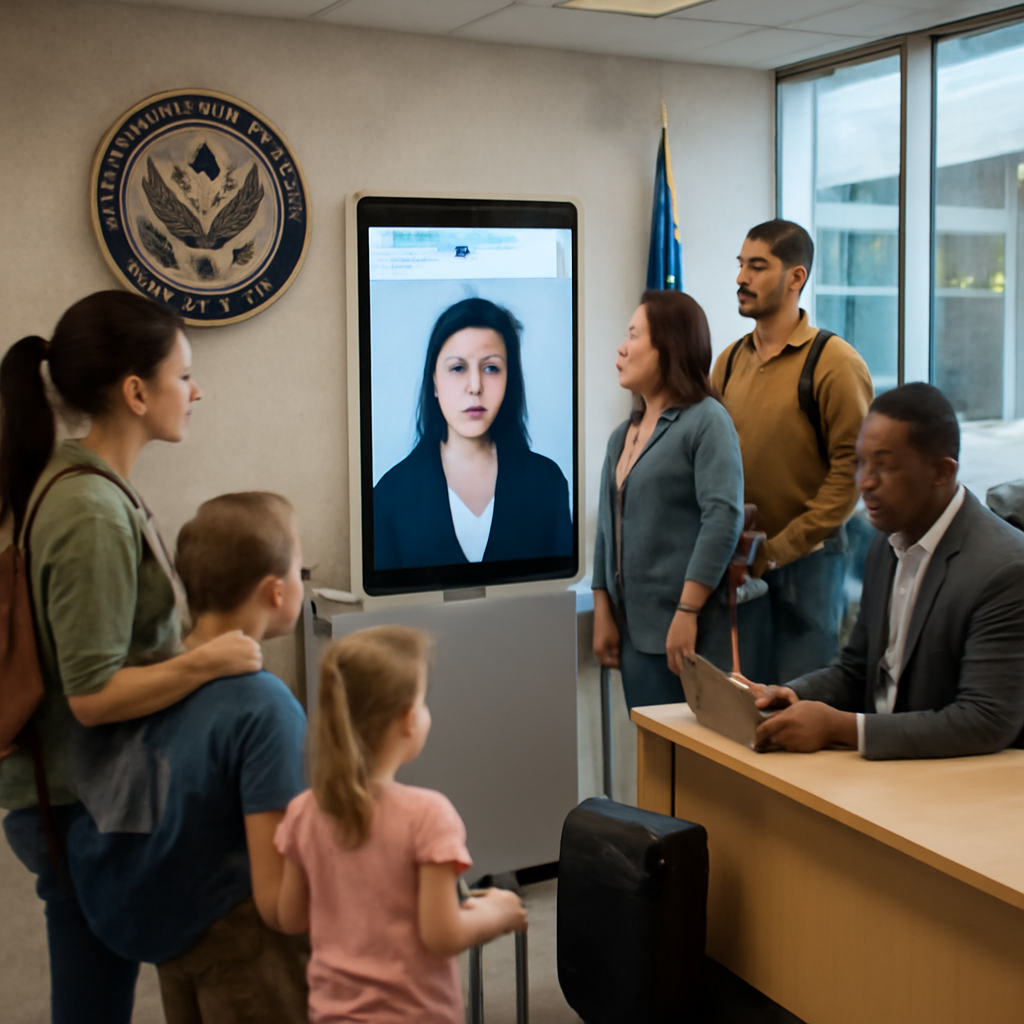
"Wait I’m done?" "That’s what we’re aiming for – delight," said Janet Pence, Director of CBP Experience, Office of the Commissioner, U.S. Customs and Border Protection (CBP).
CBP: removing friction across the traveler journey
CBP is treating customer experience (CX) as an operational priority, not a cosmetic upgrade. Janet Pence described a program of usability testing and customer feedback to refine technologies before deployment and to measure whether those investments actually improve outcomes. The agency highlighted concrete tools: COMPASS, a virtual assistant that helps international travelers navigate entry requirements in 21 languages, and enhancements to Global Entry and biometric processing that have reduced time in customs. Pence said CBP’s success metric is not novelty but impact — whether innovations reduce friction for employees and travelers and deliver an experience passengers describe as finished and even delightful.
VA: a “mosaic” of feedback turned into better care
The Department of Veterans Affairs positions listening at the center of CX. Deputy Chief Veteran Experience Officer Barbara Morton explained the VA compiles surveys, caregiver input, contact-center records, frontline employee reports, and social media into what she called a “mosaic of all these different types of feedback” to form a holistic picture and take targeted action. Morton pointed to the VA’s Patient Experience program, implemented at more than 170 medical centers, and credited these efforts with contributing to record-high trust scores among veterans. She emphasized shifting from corporate communications to customer communications — using data to target messages so the VA “can bring more veterans to us.”

The cyber insurance questionnaire just landed. Now what?
SOC 2, HIPAA, insurance renewals - someone has to own security strategy. Nubivance provides fractional CISO leadership without the full-time salary.
Get a security leadIRS: digital first, but not digital only
The Internal Revenue Service frames CX around a spectrum of taxpayer needs. Courtney Kay-Decker, Chief Taxpayer Experience Officer, said roughly 80 percent of taxpayers can complete filing independently, while others require personalized assistance. That reality shapes the IRS approach: expand digital notices, online taxpayer accounts, payment plans, and AI-assisted processing to speed routine interactions, while keeping employees available for complex cases. The IRS combines operational data with direct customer feedback to prioritize improvements that simplify interactions and reduce processing time.
Verizon: AI as an assistant that removes work, not replaces judgment
Brian Pancia, Senior Solutions Client Partner, Public Sector, Verizon Business Group, stressed that technology alone does not improve CX — understanding customers does. Verizon’s public-sector work uses AI to summarize customer interactions, recommend next steps, and eliminate repetitive administrative tasks so employees can focus on problem-solving. Pancia cited a practical deployment with the IRS: voice callback technology that lets taxpayers keep their place in line without waiting on hold. The emphasis is on making interactions “simple, clear, and delightful” by using AI to remove friction for both customers and employees.
Cloudflare: reliability, security, and AI at the edge of service
Victoria Calvert, Senior Manager, Federal Civilian, Cloudflare, argued that CX must be built on a foundation of trust: fast, reliable, and secure underlying technology plus tools that let employees work efficiently. Calvert urged agencies to simplify operations through integrated platforms that strengthen cybersecurity and improve service, rather than juggling disconnected systems. She also discussed bringing AI capabilities closer to users while preserving security and privacy, summarizing the objective as “building trust, speed, and reliability into public service.”
What this means for technologists and security teams; procurement leaders; and travelers, veterans, and taxpayers
- Technologists and security teams will watch integration and AI deployments closely: the message from Cloudflare is to favor platforms that unify performance and security, and from Verizon to place AI where it augments employee work rather than substituting judgment.
- Procurement leaders and policymakers will need to balance digital investments with measurement: CBP and the IRS stress evaluating how technology affects employees and customers, and the VA’s use of diverse feedback sources shows procurement choices must support data-driven outreach and measurement.
- Travelers, veterans, and taxpayers stand to gain faster, more personalized service: COMPASS, improved biometric processing, the VA Patient Experience program at more than 170 medical centers, and IRS digital tools are concrete examples agencies are already using to reduce friction and increase access.
Customer experience is no longer a parallel initiative; across CBP, the VA, the IRS, and the private partners on the panel, CX is being used as a measure of mission success. Agencies are combining usability work, datasets, cloud technologies, and AI with a stated intent to preserve the human element — measuring not whether technology exists but whether it produces measurable reductions in friction and increases in trust. The next step those organizations have outlined is simple and exacting: continue modernizing services while proving, with data, that those changes make life easier for travelers, veterans, taxpayers, and the employees who serve them.