Ukraine’s Precision Strike on Savasleyka: Shifting the Balance in the Hypersonic Arena
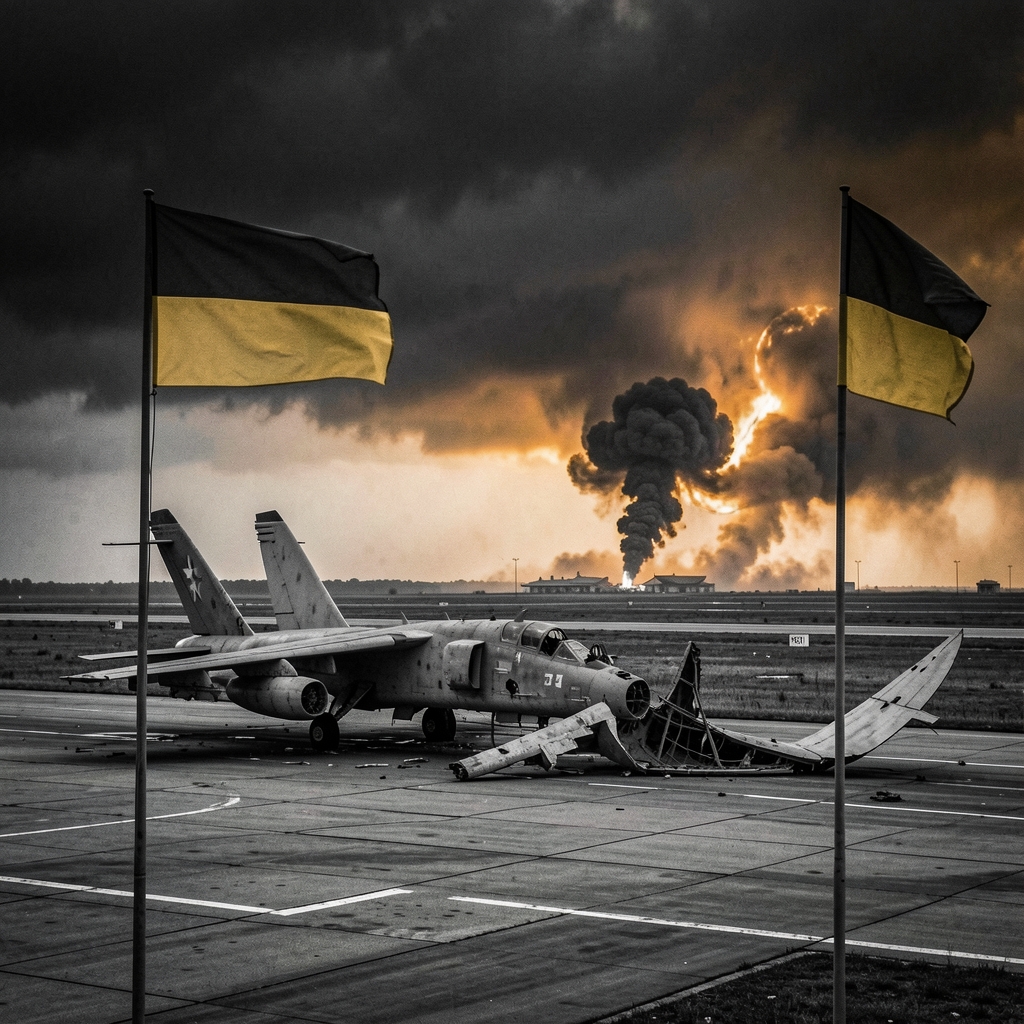
In the predawn gloom of June 9, Ukrainian Special Operations Forces executed a high-stakes strike deep into Russian territory. The target was Russia’s Savasleyka airbase in the Nizhny Novgorod region—a critical installation that hosts MiG-31K fighters equipped with the formidable Kinzhal hypersonic missile. The General Staff of the Armed Forces of Ukraine confirmed that this carefully coordinated operation was part of an ongoing effort to challenge Russia’s aerial supremacy.
For military strategists and geopolitical watchers, this operation marks another chapter in the enduring conflict between Ukraine and Russia. By pressing into what had long been considered a secure Russian asset, Kyiv not only demonstrated its operational agility but also sent a calculated message to Moscow: no installation, however fortified, is beyond reach. The assault has reinvigorated debates on the balance of power in the region, particularly with regard to Russia’s hypersonic capabilities.
The Savasleyka airbase is not merely another military installation. It is home to Russia’s advanced MiG-31K fighters, a variant known to boast sophisticated avionics and weaponry, including the Kinzhal—a missile that has repeatedly been cited in Moscow’s strategic defense communications. The base serves as a strategic linchpin for Russia, underpinning its deterrence and rapid response capabilities across vast distances. The choice of Savasleyka as a target was deliberate, aimed at undermining the adversary’s confidence in its own technological edge.
While official briefings from the Ukrainian General Staff focused on the precision of the attack, independent defense analysts emphasize the wider strategic narrative. The operation comes at a time when both sides are locked in a high-stakes contest of military innovation and tactical ingenuity. Observers note that the use of Special Operations Forces in concert with other units underscores Kyiv’s commitment to integrating conventional maneuver warfare with surgical strikes—a duality that has kept the conflict dynamically fluid.
Historically, airbases such as Savasleyka have played pivotal roles in shaping regional military doctrines. During the Cold War, Western analysts closely monitored similar installations, wary of their potential as launchpads for hypersonic weaponry—a class of arms that promises to redefine modern warfare. Today, events at Savasleyka remind us that old battlegrounds continue to evolve. Recent missile tests, joint military exercises, and international arms assessments further contextualize the Ukrainian strike as not merely a tactical adjustment but as a meaningful escalation with broader implications.
Officials on both sides now face the consequential question: What does the disruption of a critical asset mean for regional security and deterrence? For Ukraine, the strike is a demonstration of its capacity to reach well-protected military installations and to challenge Russian military assumptions. Conversely, for Russia, the breach of its defensive perimeter poses complicated dilemmas regarding the adequacy of its security protocols and the resilience of its strategic assets.
Multiple factors underscore the seriousness of this development. Analysts from the International Institute for Strategic Studies (IISS) have observed that Ukraine’s enhanced asymmetric warfare capabilities now play a bigger role in counterbalancing conventional firepower. Meanwhile, policymakers in Washington and Brussels continue to watch developments closely. As one senior U.S. defense analyst explained in a public briefing by the Pentagon, “The strike against Savasleyka is a signal, as much about operational intent as it is about tactical proficiency.” While this interpretation is widely regarded in defense circles, it remains one voice among many in the broader conversation on Eastern European security.
Critically, the strike also shines a light on the human element within the conflict. Behind strategic calculations lie the lives of soldiers and civilians alike—individuals whose stories often get lost amid the broader geopolitical chess match. The bravery and calculated risks undertaken by operatives on both sides underscore a conflict that is as much about human resolve as it is about modern weaponry. In war, every operational decision carries a moral and personal weight, often hidden beneath layers of military jargon and strategic imperatives.
Looking ahead, observers and defense strategists predict that incidents such as the Savasleyka strike will likely provoke a recalibration of military postures. The incident may spur Moscow to reinforce its airbase security measures, potentially redistributing its advanced assets across a wider geographic footprint. Moreover, the strike could prompt a reassessment of force structures in the region, driving both sides to double down on technological investments and novel tactical concepts. The ripple effects may well extend into arms control discussions between global powers, as Washington, Brussels, and Moscow reassess the stability of deterrence in an era defined by hypersonic capabilities.
As the geopolitical landscape continues to shift, one wonders whether this recent operation is the harbinger of a new phase in the conflict or merely an isolated tactical engagement. The deliberate, measured nature of the strike suggests that Ukraine is not only responding to current pressures but is also positioning itself for long-term strategic gains. With each operation, the delicate balance between technological advancement and tactical innovation is redrawn, and the rules of modern warfare are continually rewritten.
Ultimately, while the clouds of conflict have long obscured clear lines of accountability and purpose, the repercussions of this strike will likely be felt far beyond the borders of Nizhny Novgorod. As both sides brace for potential escalations, the international community—and indeed the broader world—eyes these developments with cautious concern. In the era of hypersonic missiles and digital warfare, the question remains: In an increasingly interconnected global theatre, where do strategic certainty and human vulnerability begin and end?