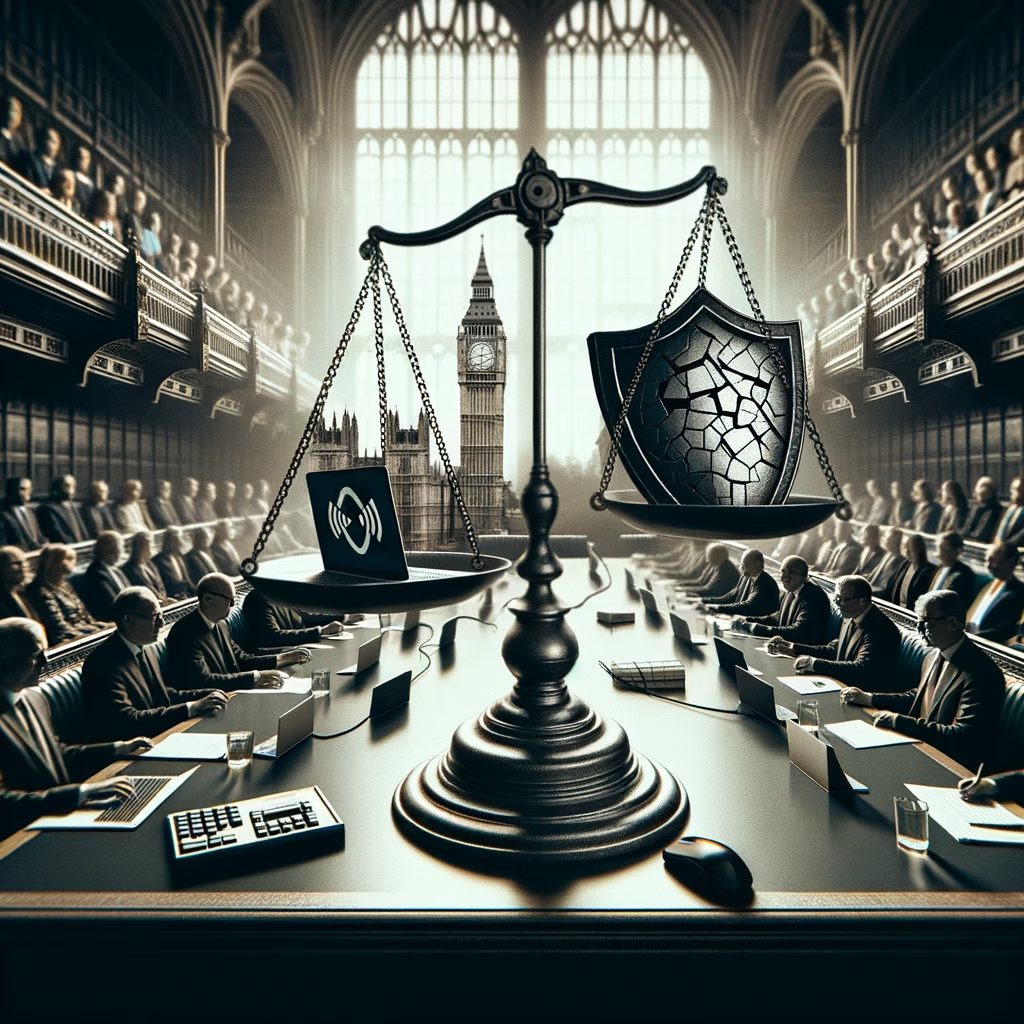
“How do we protect society from harm without infringing on freedom of expression?” This question has become increasingly urgent as the UK grapples with the complex realities of online content in the wake of last summer’s riots. While the Online Safety Act, enacted to police the digital realm, aims to shield users from illegal and harmful material, a recent parliamentary report highlights a critical gap: the legislation falls short in addressing the viral spread of misinformation that, though not illegal, can nonetheless wreak havoc.
The backdrop to this debate is a rapidly evolving digital ecosystem where social media platforms and online forums serve as primary conduits of information—and sometimes, misinformation. During the disturbances last summer, content that fueled tensions was often harmful but did not cross the legal threshold, exposing a regulatory blind spot. MPs from the Digital, Culture, Media and Sport Committee and the Home Affairs Committee joined forces to produce a report scrutinizing the Act’s effectiveness. Their findings are unambiguous: the current framework fails to adequately curb misinformation, leaving the UK vulnerable to the pernicious effects of false narratives spreading unchecked.

At its core, the Online Safety Act mandates that tech companies take greater responsibility for moderating content on their platforms, focusing particularly on illegal and “harmful” material. Yet, as Dr. Claire Wardle, an expert in misinformation at First Draft News, points out, “The definition of ‘harmful’ is nebulous, and misinformation often skirts the edge, causing societal harm without being deemed illegal.” This legal ambiguity means platforms are often hesitant to act decisively against misinformation for fear of censorship claims or legal repercussions.
From the perspective of policymakers, the Act represents a commendable step toward holding technology companies accountable. Secretary of State for Digital, Culture, Media and Sport, Michelle Donelan, has asserted that “safeguarding users, particularly vulnerable groups, from online harms is paramount.” Nonetheless, MPs argue that the Act’s current scope lacks robust mechanisms to effectively combat misinformation’s virality, which can incite unrest and erode public trust in institutions.
Technologists weigh in with caution. Sarah Wilkinson, former CEO of the UK’s National Cyber Security Centre, warns that “overregulation risks stifling innovation and may inadvertently drive harmful conversations underground, making them harder to monitor.” Users, meanwhile, often find themselves caught in a tug-of-war between content moderation and freedom of speech, wary of both misinformation’s dangers and heavy-handed censorship.
The challenges are multifaceted. Adversaries—ranging from foreign state actors to domestic agitators—exploit misinformation to sow discord and manipulate public opinion. Without clear, enforceable provisions addressing the spread of false information, the UK risks repeating scenarios where viral untruths fan flames of unrest before authorities can intervene effectively.
In practical terms, the MPs recommend that future legislation incorporate clearer definitions of misinformation, coupled with proportionate enforcement powers that encourage platforms to act swiftly and transparently. They emphasize the importance of investing in media literacy and public education as complementary strategies to regulation, fostering a more discerning public capable of navigating the digital information landscape.
As the UK moves forward, the pressing question remains: can government, technology companies, and civil society collaborate to forge a digital environment where safety and freedom coexist, and where misinformation no longer finds fertile ground to undermine democracy? The answer will shape not just regulatory frameworks but the very fabric of public discourse in the years ahead.



