Allied Urban Combat Drills in Poland Reflect a Modern Security Imperative
In an era marked by evolving security challenges and the increasing complexity of urban warfare, roughly 300 soldiers from the United States, Poland, Romania, Lithuania, Sweden, and the Czech Republic converged on Polish soil for NATO Exercise Brave Boar, held from May 17 to May 19, 2025. The training operation, hosted by Poland’s 16th Mechanized Division, was designed to sharpen urban combat tactics and ensure seamless coordination amongst coalition forces as they grapple with the demanding realities of metropolitan battlefields.
This gathering of multinational troops is more than a mere drill. It is a calculated response to modern military needs—a recognition that urban environments, often densely populated and interlaced with critical infrastructure, now represent the front line in any future conflict. Nations that have long recognized the importance of joint readiness are now intensifying collaborative efforts to mitigate the risks of urban warfare, where the stakes extend far beyond territorial gains or losses.
Historically, the operational theater of urban combat has necessitated a blend of precision, caution, and rapid adaptability. Conflicts in cities such as Stalingrad during World War II, Mogadishu in the early 1990s, and more recent engagements in the Middle East have underscored the unpredictability of warfare in built-up areas. In this light, the NATO-led Brave Boar exercise serves as a timely reminder that the evolving character of warfare demands that allied forces are equipped to operate effectively in an urban maze—a setting where civilian lives, vital infrastructure, and strategic targets intertwine in complex patterns.
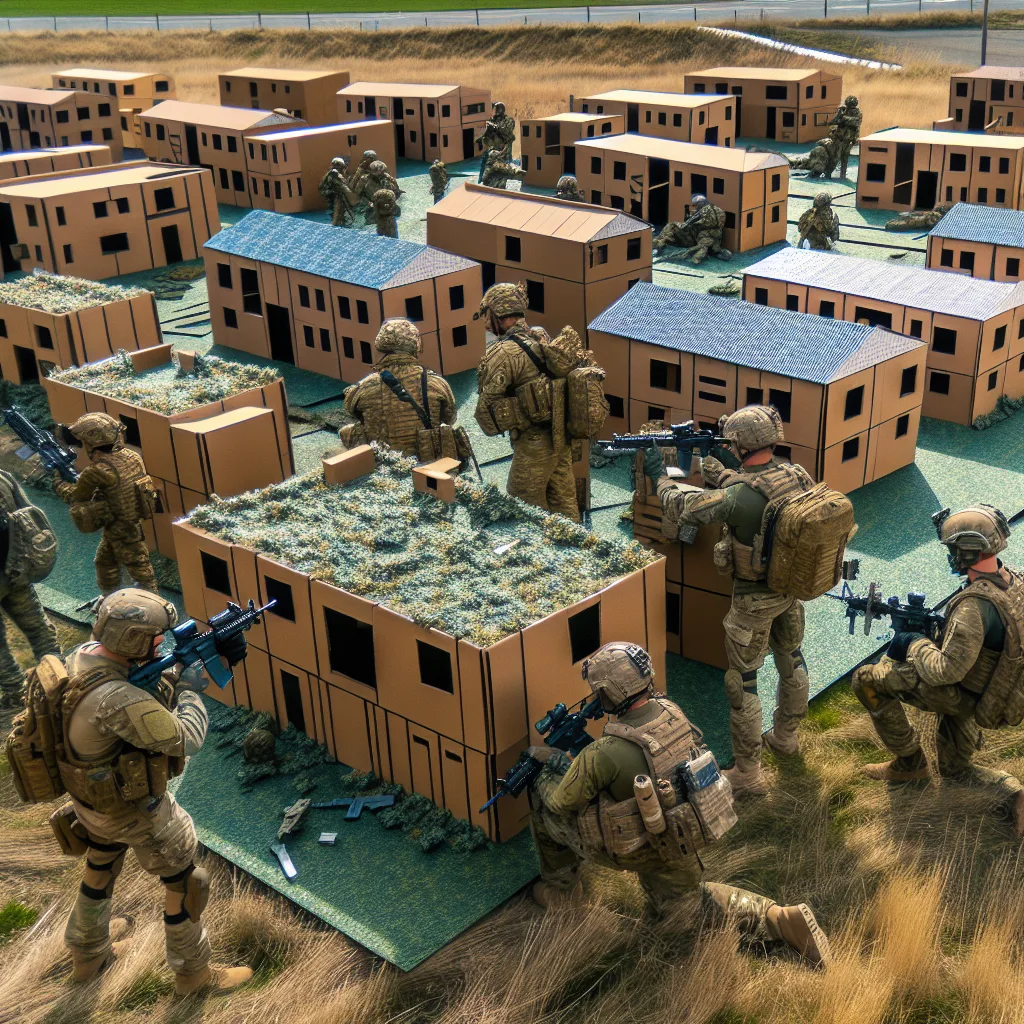
During the exercise, the focus was on not only mastering the technical aspects of urban combat but also developing robust communication, intelligence sharing, and coordinated tactical responses. The simulated urban environment allowed participants to confront the challenges of fighting in close quarters, managing collateral risks, and executing joint operations under conditions that mimic potential real-world scenarios.
Officials from the participating nations have underscored the importance of such proactive measures. Major General Christopher T. LaBelle, a spokesperson for the United States Army in Europe, remarked at a post-exercise briefing that “the ability to operate in any environment—including the complexities of urban combat—is fundamental to our commitment to collective defense.” His comments echoed a sentiment shared by military leaders throughout NATO: exercises like these are not only about refining combat skills but also about reinforcing the enduring bonds of alliance and mutual trust.
While the primary tactical focus was on urban warfare, several underlying strategic priorities emerged from the exercise. The training was designed to test interoperability—ensuring that diverse national forces can seamlessly communicate and coordinate. Practitioners engaged in simulated operations that spanned everything from rapid response to humanitarian assistance, reflecting the multifaceted nature of modern military engagements wherein operational adaptability is paramount.
Adding another layer of relevance, the exercise arrived at a time when geopolitical tensions in Eastern Europe remain ever-present. Analysts note that Poland’s strategic location and its commitment to NATO’s eastern flank accentuate the importance of maintaining a high degree of readiness in the region. Urban combat drills in such settings are not only precautionary but also act as a deterrence measure—demonstrating capability and resolve to potential adversaries.
Experts from the RAND Corporation and Atlantic Council have observed that urban warfare presents unparalleled challenges due to the density of urban centers and the inherent risks posed to civilian populations. Dr. Mark J. Urban, a senior defense analyst with the Atlantic Council, stated, “Urban environments force militaries to rethink conventional tactics. They must balance precision strike capabilities with risk mitigation in populated areas. Coordination among allies becomes critical, as a delay or miscommunication can have profoundly damaging consequences.” Dr. Urban’s perspective is emblematic of a broader expert consensus: as warfare increasingly projects into urban spaces, the ability to operate effectively within these settings is non-negotiable for maintaining regional security and public trust.
Indeed, this joint exercise in Poland is a microcosm of a larger trend in defense planning worldwide. The evolution of combat is now intertwined with technological advancement—ranging from drone reconnaissance to cyber-enabled communications—and the human element, where split-second decisions can spell the difference between mission success and unintended disaster. NATO’s commitment to fostering interoperability not only enhances its operational capabilities but also serves as a clear message of readiness and unity to both its members and detractors.
Looking ahead, the outcomes of Exercise Brave Boar are likely to shape future training directives and policy adjustments within NATO. Defense strategists are anticipating further enhancements in urban combat doctrine, with an increased emphasis on intelligence integration and responsive command structures. Moreover, this exercise serves as a potential blueprint for more expansive multinational drills, fostering a culture of persistent readiness that may well extend to other challenging operational domains.
There are broader implications as well. The emphasis on coordinated urban combat training reflects a broader strategic recalibration in an era when asymmetric warfare and hybrid threats have significantly redefined conflict dynamics. As alliances strengthen their commitment through such joint endeavors, it is reasonable to expect that future exercises will incorporate even more advanced technologies and innovative tactical approaches to counter nontraditional threats, including cyber warfare and information operations.
In a rapidly changing global landscape characterized by both overt confrontations and covert conflicts, exercises like NATO’s Brave Boar play a critical role. They remind us that the highest levels of military planning and national security are inextricably linked to the human elements of courage, cooperation, and adaptability. As soldiers train in simulated urban environments, the lessons learned extend beyond weapons drills and tactical maneuvers—they inform the broader narrative of international stability, shared responsibility, and the relentless pursuit of peace through strength.
Ultimately, the exercise in Poland underscores a simple yet enduring truth: in modern warfare, the battlefield is as much about building bridges as it is about preparing defenses. As urban combat evolves with technological innovation and shifting geopolitical realities, the integration of diverse national forces becomes not merely a strategic necessity but a testament to the cohesiveness of global security alliances. If today’s drills are any indication, the future of multinational military cooperation will continue to rise to meet the challenges posed by a world where the margins between combat zones and civilian life are increasingly blurred.
As we look to the horizon, one may ask: can the resolve and readiness displayed in Poland today forestall tomorrow’s uncertainties, and will the collaborative spirit of nations truly translate into a more secure urban future? The answer, though complex and multifaceted, will undoubtedly be written in the coordinated footsteps of soldiers training under the banner of shared defense.