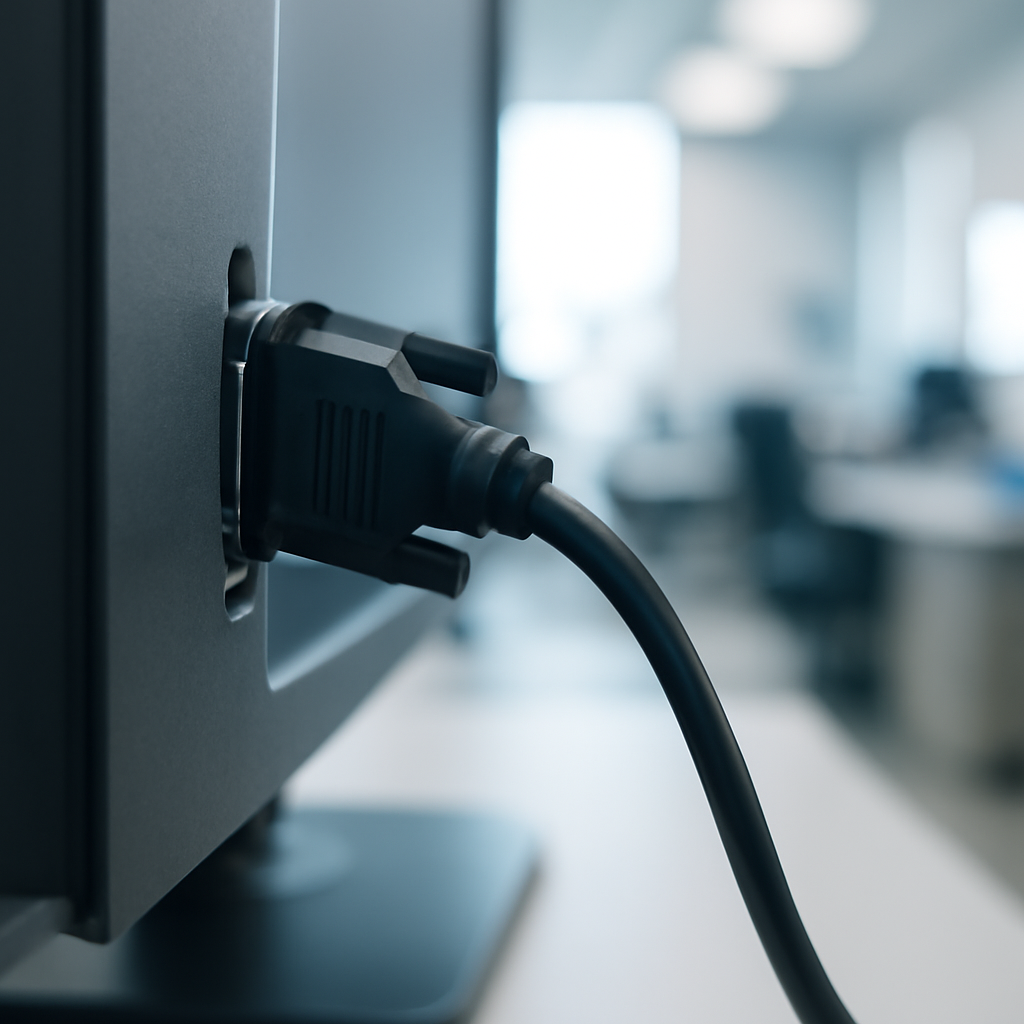
At 8.1 megabits per second, TrojPix can move roughly a megabyte a second — fast enough, the researchers say, to exfiltrate a 100 MB file in under two minutes while the target monitor appears dark.
Shandong University researchers describe TrojPix and its claims
Researchers at Shandong University published tests of a technique they call TrojPix that turns a video cable into a faint radio transmitter by nudging on-screen pixels in ways the human eye cannot see. The team calls the method "imperceptible pixel modulation." They report the attack works from user‑level malware that can draw to the screen — no administrator rights and no hardware modifications are required — but only after the machine is already compromised.
Measured throughput and range — high numbers, measured separately
In laboratory measurements the researchers report a peak throughput of 8.1 Mbps and a maximum range of 208 meters. The paper notes those two figures were measured separately rather than simultaneously, and that real‑world range will vary: a receiver must contend with walls, shielding and background radio noise. By contrast, the researchers reference a prior study called TEMPEST‑LoRa (CCS 2025), which used a similar idea with LoRa radios and reached 87.5 meters at 21.6 kbps. TrojPix's peak throughput is hundreds of times higher than that earlier work under the different test conditions the teams used.

Audit-ready is a season. It shouldn't be.
Evidence in spreadsheets, controls drifting between audits, frameworks multiplying on flat headcount. Nubivance runs continuous compliance on Rapid7 Cyber GRC - SOC 2, HIPAA, ISO 27001, PCI, CMMC.
End the scrambleTwo concealment modes: fake power‑off and content masking
The team describes two ways to hide TrojPix traffic on a target display. One mode simulates a powered‑off screen while transmitting; the display appears dark to an observer even as the video cable radiates a decodable signal. The other mode embeds the signal within normal on‑screen content, so ordinary-looking visuals carry the covert data. The researchers also report successful tests across nine monitor brands and fifteen types of video cable, indicating the effect is not limited to a single vendor or connector.
How TrojPix sits among other air‑gap techniques
TrojPix is an exfiltration channel rather than an initial access method — it requires malware already present on the air‑gapped host. The team contrasts the technique with historic and recent air‑gap vectors: the well‑known air‑gap attacks that have been observed in the wild used USB drives to cross gaps, and other research has used displays to emit sound (PIXHELL, covered by The Hacker News in 2024) or placed hardware implants on network equipment to pull data from Ethernet. TrojPix avoids hardware implants by relying on software that can render pixels, but like those other channels it remains, for now, demonstrated in laboratory conditions rather than reported in operational intrusions.
Countermeasures: fiber optics, shielding, and keeping malware off the machine
The researchers stress that the emission itself cannot be patched by software. Their recommended mitigations are physical and preventive: run video over fiber‑optic links, which do not radiate the same signals; shield cables and rooms where data warrants it (as TEMPEST‑rated facilities already do); and focus on preventing malware from gaining a foothold, because without that foothold TrojPix has nothing to send. The paper underscores that once an attacker is inside, a channel at the reported speed can move large files in the time the screen sits dark.
What this means for technologists, policymakers, and procurement leaders
- Technologists and security teams: the paper suggests prioritizing controls that stop or detect the initial compromise and considering physical changes — switching to fiber‑optic video, stronger cable shielding, or TEMPEST mitigation where data sensitivity demands it.
- Policymakers and regulators: the results point to mitigations that are outside the scope of software updates and thus squarely in physical‑security and procurement policy domains, including guidance on facility shielding and approved cabling for sensitive installations.
- Procurement leaders and enterprise architects: because the researchers tested across nine monitor brands and fifteen cable types, vendor selection alone is not a guaranteed defense; cable type (copper versus fiber) and room shielding are the practical variables called out by the team.
Measured in bits and meters, TrojPix is a reminder that covert channels can look very different from the USB sticks and implants that have dominated public accounts of air‑gap breaches. The researchers show what is technically possible when an attacker already controls the endpoint: a fast, software‑driven radio emission from an ordinary video cable that can be hidden in plain sight. Whether those lab numbers translate into routine operational capability will depend on walls, shielding and noise — and, crucially, on whether defenders can keep the malware off the machine in the first place.



