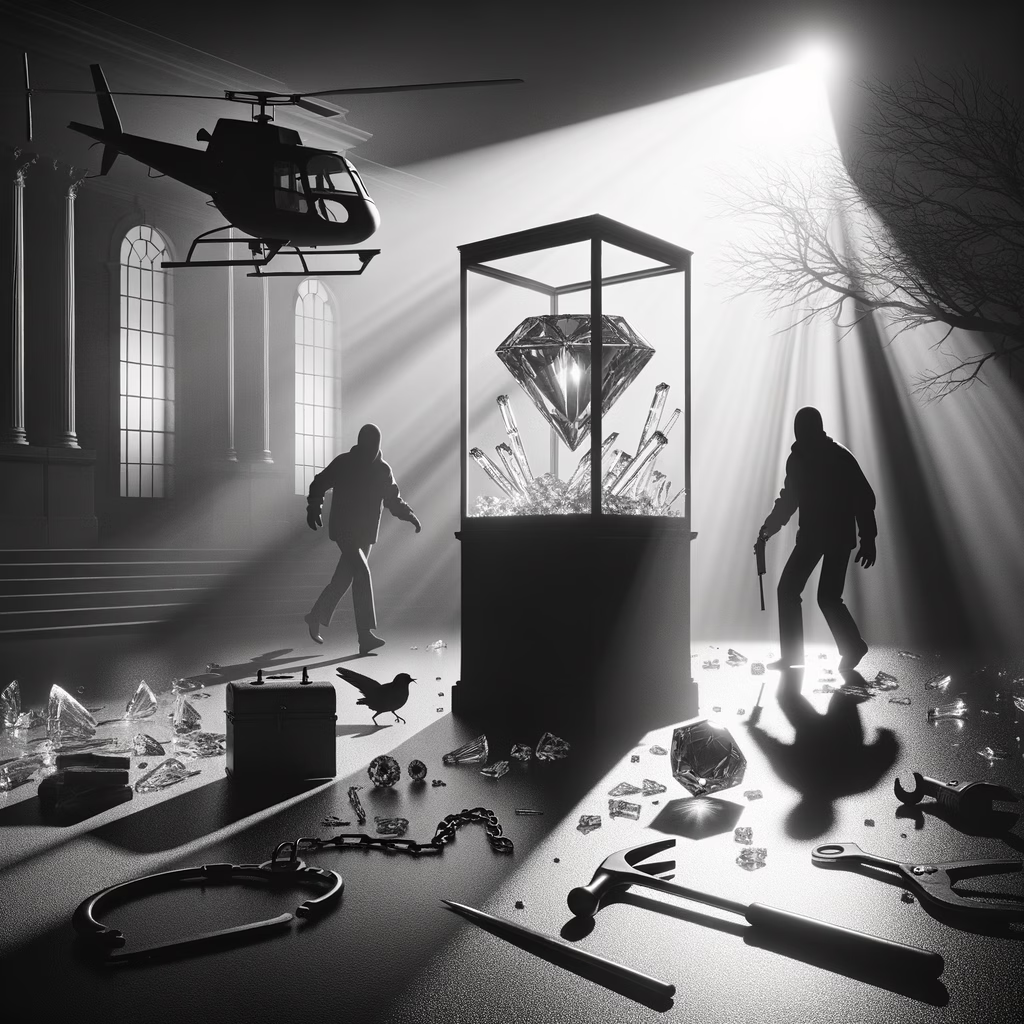
Could seven minutes change how the world protects its cultural treasures? That is the question haunting security experts and museum-goers after a brazen theft at the Louvre that left priceless jewels gone and reputations exposed.
According to contemporaneous reporting, four people—two who carried out the break-in and two accomplices—entered the museum, used an electric ladder to reach a second‑floor window, and brought an angle grinder to breach a display room and its cases. The assailants were reportedly in and out in roughly seven minutes, leaving no internal surveillance footage of the intrusion because the gallery’s only outdoor camera was pointed away from the building’s single exterior access point. The result: a caper that reads like fiction and a set of security lapses that read like a policy manual of what not to do.
Background: how the theft unfolded
The thieves targeted the Apollo Gallery, a part of the Louvre housed in the palace’s ancient wings and normally one of the museum’s most trafficked spaces. Reporters and analysts have noted three practical vulnerabilities that the perpetrators exploited: limited camera coverage (one outdoor camera angled away from the balcony used to enter), reliance on patrols and guards focused on visitor safety rather than artifact protection, and display cases that—once breached—offered little in the way of rapid containment. In short: access was easier than surveillance, and concealment was faster than response.
Why the absence of footage matters
Surveillance footage does more than identify culprits; it establishes timelines, traces movement, and supports digital and forensics leads. The lack of interior camera coverage in the Apollo Gallery deprived investigators of those primary tools. While eyewitness accounts and physical evidence remain important, they are poorer substitutes for continuous, well‑positioned electronic observation. The gap is not merely technical. It reflects investment choices and operational priorities that determine whether guards are oriented to protect patrons, priceless artifacts, or both.
Wider context: the modern threat landscape for museums
- Cyber-enabled crime and physical theft are increasingly linked. Recent analyses of museum and auction‑house incidents emphasize that cyber disruptions—ransomware, network sabotage, or systems outages—create windows for physical theft by diverting attention and degrading surveillance and communications. That convergence elevates the stakes for institutions that combine public access with irreplaceable assets.
- High-value cultural institutions often face resource constraints and legacy systems—both in IT and facilities security—that make them attractive targets for opportunistic or organized thieves. Attackers now frequently choose targets where concentrated value meets modest protective modernization.
Who this matters to—and why
– For technologists: the heist underscores the need for integrated sensing architectures that fuse interior and exterior camera feeds with real‑time alarms, tamper detection on display cases, and resilient, segregated networks that remain operable even if other systems fail.
– For museum leadership and policymakers: the incident is a cautionary tale about risk appetite. Open access is central to modern museums’ missions, but it must be reconciled with layered security: physical barriers, appropriately placed surveillance, hardened vitrines, trained response teams, and incident playbooks that account for both in‑person and cyber threats.
– For the public and patrons: trust is at stake. Visitors expect safety and institutions must assure them that access does not come at the price of negligence. Transparency about breaches, while painful, helps rebuild confidence.
– For adversaries: the event is instructive. A combination of simple tools (a ladder, grinder) and careful reconnaissance can yield outsized results when institutions leave predictable gaps. That predictability is a vulnerability; it invites imitation.
Responses and immediate consequences
Investigative authorities and museum officials will now prioritize several immediate actions: patching camera blind spots, reexamining guard deployment and training, replacing or upgrading alarmed showcases, and conducting independent security audits. Insurers and regulators may also press for updated standards and disclosure rules. Longer term, museums may be pushed to adopt bank‑grade controls or to accept additional costs for guarded, less accessible exhibitions of the highest‑risk items.
Competing perspectives on remedies
Some security professionals will argue for a technology‑heavy response: more cameras (with interior and exterior overlap), encrypted networked sensors, and centralized monitoring with automated anomaly detection. Others caution that technology alone is insufficient—procedural rigor, staff training, and even physical design changes (reconfiguring access routes and sightlines) are equally critical. Policymakers face a balancing act between preserving public access and mandating costly upgrades that could limit smaller institutions’ ability to operate.
What investigators and experts are watching next
- Whether the stolen items surface on illicit markets or through informal channels tied to regional fencing networks.
- Whether the theft was opportunistic or part of a larger, possibly cyber‑enabled plan—investigators will look for any correlated network intrusions, outages, or targeted reconnaissance preceding the event. Analysis of recent incidents shows attackers often pair cyber actions with in‑person operations to maximize success.
- What legal and insurance ramifications follow: will victims press for stronger regulation, and will insurers reprice the risks of displaying movable high‑value items?
Accountability and institutional learning
It is too soon for definitive judgments about culpability beyond the obvious—people broke the law—but past incidents suggest public scrutiny will center on whether the museum’s leadership adequately assessed the risks and invested accordingly. The sector’s pattern is familiar: a high‑profile breach catalyzes investment, standards evolve, and then attention drifts until the next crisis. Breaking that cycle requires sustained commitments to audits, staff capability, and interagency cooperation.
A final thought
The Louvre heist is more than an armed robbery of objects; it is a mirror held up to institutions that value access and openness but must also reckon with modern threats. If a handful of minutes and simple tools can bypass centuries of prestige, how should the custodians of memory and culture rethink the balance between inviting the public in and ensuring those treasures stay where they belong?
Source: https://www.schneier.com/blog/archives/2025/10/louvre-jewel-heist.html