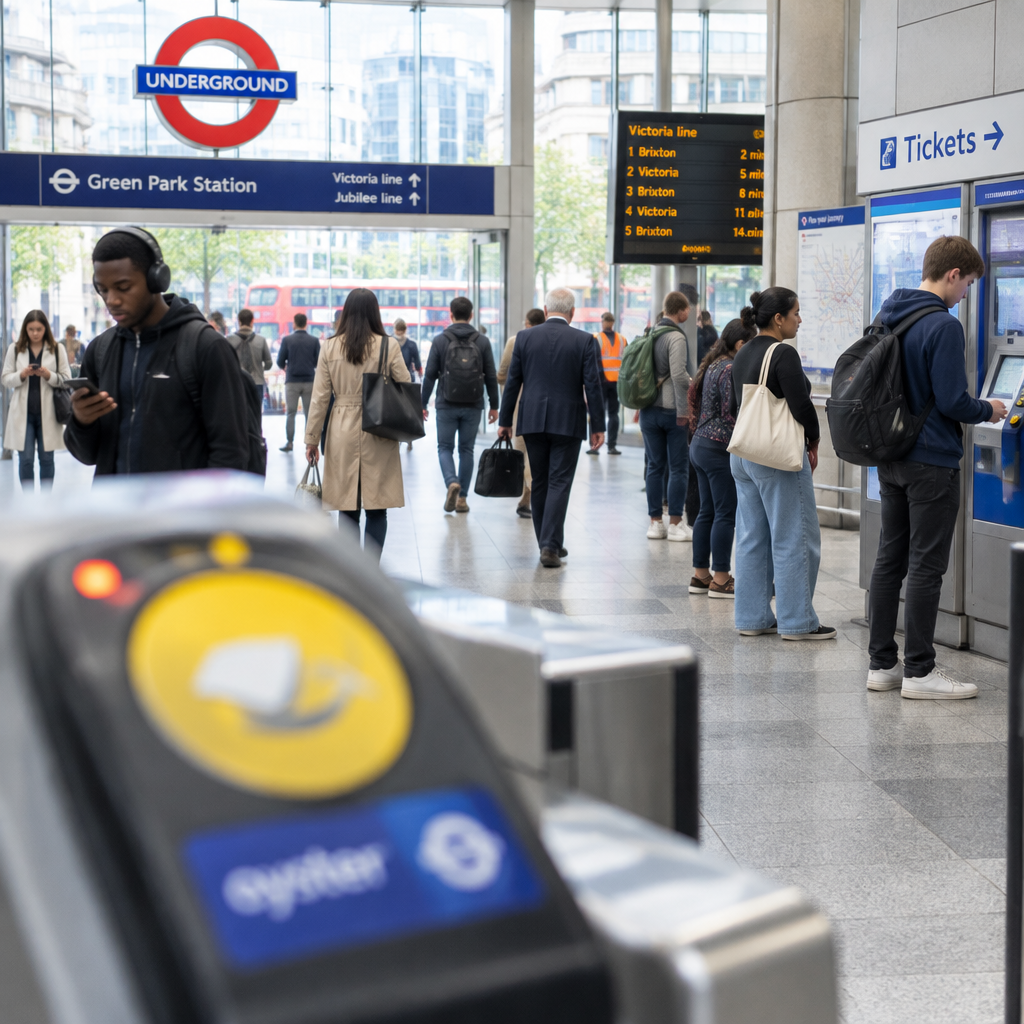
"Around 265,000 Oyster photocard customers may have had their account details exposed." That is Transport for London’s current assessment after a security incident that forced the Oyster photocard portal offline and prompted direct notifications to affected users.
Scale of the breach: 265,000 Oyster photocard customers
Transport for London (TfL) says roughly 265,000 holders of Oyster photocards — the travel smartcards with holders' photos that give eligible passengers free or discounted travel — may have had personal account details exposed. The agency’s estimate rose from a prior figure of about 250,000 and remains provisional; TfL said the investigation is not yet complete and the number may increase.
For context within TfL’s operations, the organization recorded 3.53 billion passenger journeys in 2025/26, including 1.78 billion bus journeys and 1.20 billion Tube journeys. Oyster photocards are a widely used concession mechanism within that system.
Data exposed — and what TfL says was not taken
- TfL’s breach notifications, one of which was shared on Reddit, list the following items as possibly exposed: full names, phone numbers, email addresses, home addresses, dates of birth, and security questions and answers.
- TfL’s current assessment is that passwords, bank and payment card details, journey information, and the names and dates of birth of children with Zip Oyster cards were not compromised.
- The agency also said it has found no evidence so far that the affected data has been misused.

Audit-ready is a season. It shouldn't be.
Evidence in spreadsheets, controls drifting between audits, frameworks multiplying on flat headcount. Nubivance runs continuous compliance on Rapid7 Cyber GRC - SOC 2, HIPAA, ISO 27001, PCI, CMMC.
End the scrambleHow the breach was discovered and TfL’s immediate actions
TfL discovered the security incident on November 16, 2026, after customers reported emails asking them to create an account. Those emails originated from TfL’s own mail systems as a consequence of a compromise, the organization said. TfL has taken the Oyster photocard website offline, contained the incident, and begun sending breach notifications to impacted individuals.
TfL instructed customers who received the earlier email urging them to create an account to ignore it. It also notified the UK's Information Commissioner’s Office (ICO) about the incident.
What affected customers should do now
TfL said Oyster photocards remain valid for travel. Customers who need to renew cards or check journey history can still do so by contacting TfL Customer Services rather than using the offline portal.
Because the leak includes security questions and answers — information commonly used to restore account access — TfL cautioned customers to remain vigilant and report suspicious activity to the organization as soon as possible. When the photocard portal is restored, all photocard customers will be prompted to change their password, security question, and answer. TfL additionally recommended that where the same security questions are used at other sites, customers should rotate those questions and answers and change passwords on other services that used the same credentials.
What this means for Oyster photocard customers, the ICO, and security teams
- Oyster photocard customers: Expect a direct notification from TfL if you are affected; ignore the earlier unsolicited emails asking you to create an account; monitor accounts and personal communications for suspicious activity; plan to change passwords and security questions when the portal returns.
- The ICO and regulators: TfL has notified the Information Commissioner’s Office. That notification places the incident on the regulator’s radar and means the breach may be subject to further regulatory review as the investigation continues.
- Security teams and technologists: The incident involved emails sent from TfL’s own mail systems as a result of a compromise, and it exposed security questions and answers — a particularly sensitive data class. Those facts will be pertinent to defenders assessing mail-system protections, account-recovery mechanisms, and the controls around stored authentication data.
The incident also echoes a prior major intrusion: in 2024, members of the group known as Scattered Spider breached TfL’s network, stole customer data and disrupted online services including Oyster refunds; that attack cost the agency £29 million in losses and recovery costs, and two of the hackers pleaded guilty in June 2026 and were sentenced to five years and six months in prison. TfL’s newest disclosure does not link today’s compromise to any named threat actor; the investigation remains ongoing.
For now, the immediate facts are clear: TfL has contained the incident, taken the photocard portal offline, alerted the ICO, and begun notifying potentially impacted customers; investigators have not yet found evidence of misuse but warn that the dataset includes security questions and answers that could enable broader account access if reused elsewhere. The number of affected photocards may yet rise as the inquiry continues.