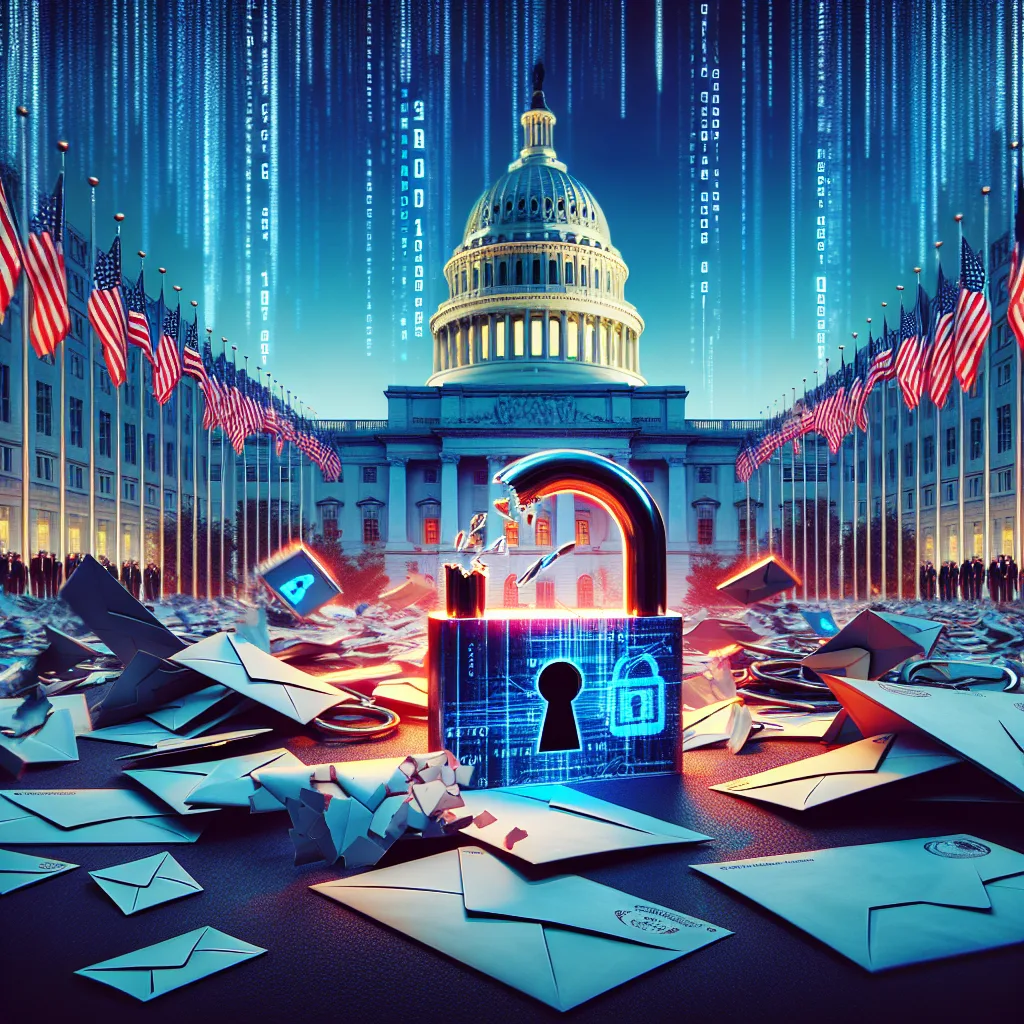
Exposing the Breach: TeleMessage Security Oversight Exposes 60 Government Staffers Amid Widening Cyber Challenges
In an unsettling development for government cybersecurity, a security mishap involving the messaging service TeleMessage has led to the exposure of sensitive information belonging to 60 government staffers. This incident, emerging in the context of several high-profile cybersecurity cases, underscores the mounting vulnerabilities that shadow both public agencies and private corporations as they grapple with an increasingly sophisticated digital threat landscape.
TeleMessage, a service that has seen adoption by various government entities to facilitate secure communications, came under scrutiny after a security audit revealed that an exploitation in the system may have allowed unauthorized actors to access accounts used by about 60 government personnel. Although official statements by government spokespeople have been cautious, preliminary reports indicate that the exposed accounts may include sensitive operational details, further complicating the already murky realm of national cybersecurity.
Parallel concerns in the infosec community have heightened anxiety. Interpol’s recent announcement on its intensive operation against malware networks highlights a larger context—a global crackdown on cybercriminal activities that extends far beyond any one breach. Simultaneously, a separate case involving GoDaddy has come to light, with the web services giant settling allegations in what some experts have described as an “awful” infosec case. And as if the situation could not be more dire, a massive stolen credentials database has been exposed, threatening personal and institutional data alike.
A confluence of events now paints a stark picture for cybersecurity: a trusted messaging platform faltering under scrutiny, international law enforcement making headway against malware distributors, and corporate giants facing accountability over lapses in security protocols.
The history behind government reliance on third-party secure messaging services dates back years. In an era when digitized communication became essential for operational efficiency, agencies turned to companies like TeleMessage for their promise of protected channels. Over time, however, the rapid evolution of cyber threats, combined with potential lapses in the implementation of stringent security measures, set the stage for incidents like the current breach. Officials have long argued for a balance between adopting modern technologies and ensuring that these systems do not inadvertently become backdoors for potential adversaries.
What is transpiring now is multifaceted. On one hand, cybersecurity experts from independent firms have confirmed that at least 60 government staffers’ credentials were compromised due to a vulnerability that appears to have been exploited before adequate patches could be applied. On the other, law enforcement agencies, such as Interpol, have reported significant progress in taking down malware operators who have for some time exploited weaknesses in global cybersecurity frameworks. Additionally, GoDaddy’s resolution of its infosec case—which involved a range of issues from mismanagement of data security to lapses in safeguarding client information—adds another layer to the ongoing narrative of digital vulnerability.
Data integrity remains the cornerstone of trust for any digital communication medium. In the case of TeleMessage, the breach not only jeopardizes the confidentiality of sensitive government communications but also raises questions about the broader readiness of governmental agencies to defend themselves against targeted cyberattacks. Experts caution that such breaches can set off a domino effect, undermining public trust while potentially furnishing adversaries with the means to gain further insights into state operations.
For instance, Expert Analysis: Cybersecurity specialist Dr. Nicole Perlroth of The New York Times, who often speaks on the evolving threat landscape, notes that “every breach, regardless of scope, illuminates systemic problems in our digital infrastructure. This incident is emblematic of a broader issue—the struggle to maintain secure communications in a period of rapid technological change.” Though her observation is one among many in the infosec community, it points to a reality where institutional complacency can no longer be afforded.
In a similar vein, officials at Interpol have underscored efforts that have “significantly diminished malware activities on a global scale,” hinting at a broader clampdown on cybercriminal networks. Meanwhile, industry leaders in the tech security sector have urged companies like TeleMessage to reexamine their security frameworks, emphasizing the integration of dynamic threat detection mechanisms and more frequent vulnerability assessments.
Why does this matter for the broader public and the national security community? The answer lies in the intersection of trust, technology, and governance. With digital communication forming the backbone of modern statecraft, any lapse in security such as this can lead to far-reaching consequences—not least of which is a prolonged period of uncertainty. The exposed credentials could enable adversarial agencies or hostile non-state actors to potentially map out administrative networks or siphon sensitive information, further complicating diplomatic and defense strategies.
Beyond governmental implications, this breach adds a pressing note to the ongoing dialogue about cybersecurity in both public and private sectors. For stakeholders ranging from policymakers to corporate management teams, the evolving nature of these incidents necessitates a recalibration of risk management strategies. As resources are allocated to both remedial measures and preventative protocols, the incident serves as a timely reminder of the constant vulnerability that accompanies digital progress.
Looking ahead, several questions demand attention. Will government agencies accelerate their vetting of third-party technology providers? How will private companies, already reeling from other cybersecurity cases such as the GoDaddy settlement and the credentials database exposure, adjust their security postures? As cybersecurity firms continue their research and analysis, the prevailing consensus seems clear—a coordinated, cross-sector approach will be essential. Going forward, responses may include reinforcing encryption protocols, instituting real-time threat analysis, and fostering stronger collaborations between law enforcement and private sector experts.
Among industry watchers, a recurring theme is the imperative to adopt proactive measures rather than reactive fixes. The current breaches suggest a definitive turning point: complacency is no longer an option in an age where digital vulnerabilities can have immediate, real-world consequences. As administrators and security officers face mounting pressure, the need for transparency, accountability, and unwavering commitment to digital safety has never been more evident.
It is in these turbulent times that one must ask: can society truly afford to compartmentalize security breaches as isolated incidents, or does this pattern signal a systemic challenge that demands sweeping reform? Whether through government-led initiatives or private sector innovation, the resolution rests on a collaborative front where thorough risk assessments and agile defensive mechanisms become the norm.
In reflecting on the varied cybersecurity events—from TeleMessage’s alarming security lapse to Interpol’s aggressive disruption of malware operations and the consequential fallout for major corporations like GoDaddy—the stakes have never been higher. The evolving digital environment continues to test every facet of our technological and institutional fortitude. And as digital communications remain indispensable to contemporary governance, the repercussions of today’s vulnerabilities may well shape the security landscape of tomorrow.