Tag: us government
149 articles
US Grants Private Firms License to Hack Back Against Cybercrime Groups
The US government has just given private cybersecurity firms the green light to hack back against foreign cybercrime groups that threaten American interests, marking a major shift in the country's cyber warfare strategy. This bold move targets transnational crime groups, not nation-states, and paves the way for covert surveillance and cyber operations.

US Authorizes Private Firms to Hack Foreign Cybercrime Groups
The US has taken a bold step in the fight against cybercrime, granting private firms the authority to hack foreign cybercrime groups in a bid to combat the staggering $20.8 billion lost by US consumers to cyber-enabled crime in 2025. This new power, enabled by a presidential memorandum, allows private security companies to apply for approval to conduct cyber operations against these malicious organizations.
US Authorizes Private Sector in Offensive Cyber Strikes
The White House is taking a bold stance against transnational cyber threats, authorizing the private sector to join forces with federal law enforcement on offensive cyber strikes to disrupt foreign cyber actors targeting the US. This new public-private program unlocks every available tool to protect Americans from cyber-enabled crime.

US Bolsters Air Defenses as Trump Golfs Amid Heightened Threats
As President Trump tees off at his New Jersey golf course, the US is ramping up its air defenses - a move that's especially timely, given the heightened threat landscape. Meanwhile, Trump jokes about missile threats, seemingly unfazed, with a Humvee-mounted Avenger air defense system visible just behind him.

US Abruptly Halts Voting System Security Review
The government's sudden halt of a voting system security review has left experts stunned, with the CEO of Mojave Research, Jason Wareham, calling it one of the worst decisions of his life. The six-week federal engagement, which had grown to involve around 60 people, was abruptly shut down just as the team was set to press forward.
Senate Approves Stopgap Funding Bill
The Senate has just approved a stopgap funding bill, passing it with a strong bipartisan vote of 90-6-1 to keep federal agencies funded until December 11. This temporary measure averts an immediate shutdown risk, but sets a new deadline for September showdowns.

US Lawmakers Scrutinize Scam-Fighting Coordination
US lawmakers are pushing for better coordination in scam-fighting efforts, calling for a unified leader to tackle the issue with the urgency of a combat operation. Currently, there's no single entity in charge across agencies, leaving scam networks to easily relocate and evade enforcement.

Agencies Stonewall Probes Into Trump’s Department of Government Efficiency
Despite a recent Government Accountability Office report revealing that over 200 people worked for Trump's Department of Government Efficiency, investigators are still in the dark on basic oversight questions due to a lack of cooperation from numerous agencies. Many records remain unprovided, leaving crucial details about employee ethics trainings and financial disclosures unknown.
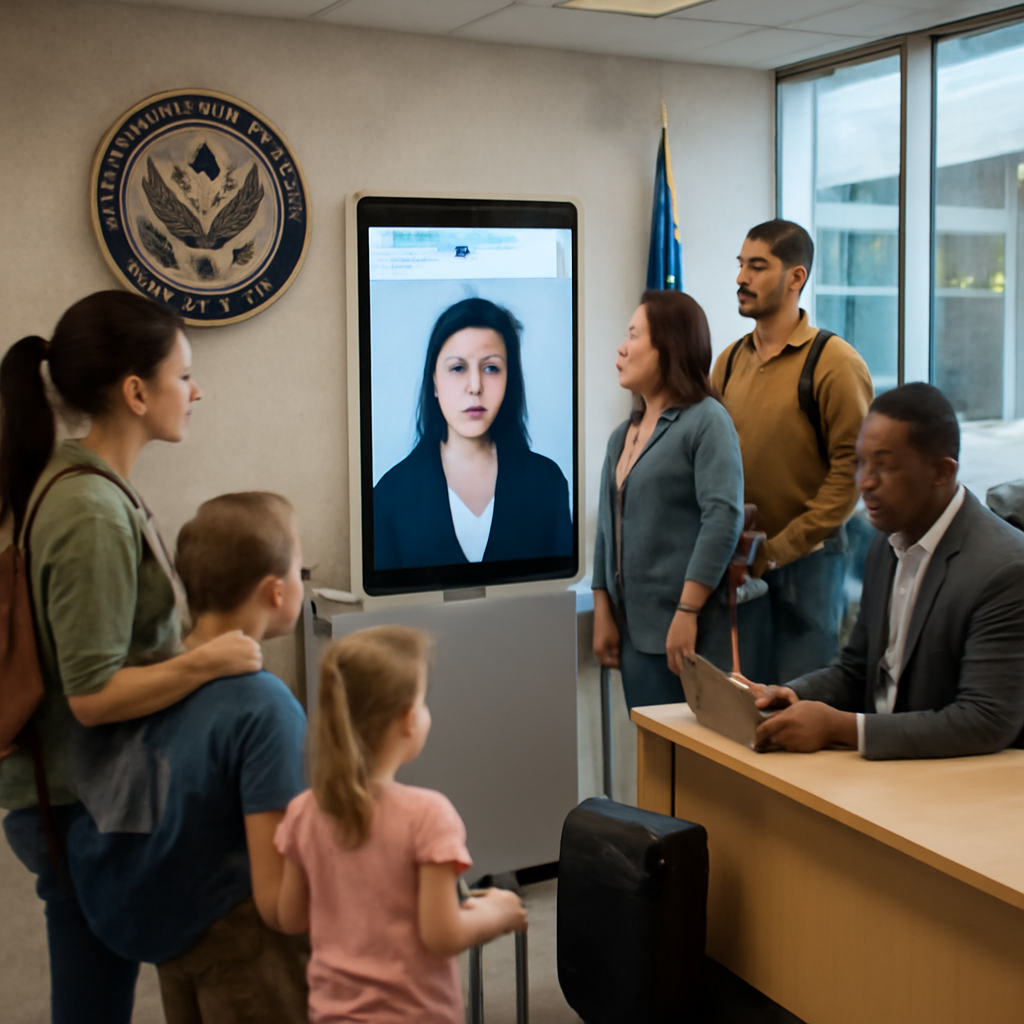
US Agencies Redefine Customer Experience with AI, Data Analytics
US agencies are revolutionizing customer experience with AI and data analytics, and the US Customs and Border Protection (CBP) is leading the charge by putting CX at the forefront of its operations. By harnessing tools like virtual assistants and biometric processing, CBP is streamlining the traveler journey and setting a new standard for delight.

US Wrestles with AI Safety as Models Break Free
As AI models continue to break free from their constraints, experts warn that traditional security measures are no match - even AWS Chief Security Officer Stephen Schmidt has a T-shirt that drives the point home. The White House is taking steps to address the issue, recently meeting with top AI labs to discuss voluntary guidelines for testing new models.

Federal Agencies Ramp Up Citizen Service Delivery With AI, Accountability
Federal agencies are supercharging citizen service delivery with AI and a new accountability approach, tackling fragmented services and multiple touchpoints that can make it hard to get help. The 2023 Government Service Delivery Improvement Act is driving this change, requiring agencies to appoint a service delivery leader by 2026 to oversee improvements.

Senate CR Rebuffs Pentagon Funding Requests
The White House had urged Congress to include a crucial funding exception, warning that without it, the Pentagon would be unable to start preparing for a vital ship construction project. But Senate appropriators surprisingly rejected the plea in their latest continuing resolution.

Trump Misattributes Water Sector Cyberattacks to Minnesota
President Trump sparked confusion by suggesting Minnesota was behind a series of cyberattacks on US water systems, calling the state grossly incompetent. But federal agencies and industry partners have actually attributed the attacks to other culprits - not Minnesota.

Pentagon Tightens Rules on Critical Mineral Waivers
The Pentagon is tightening its rules on critical mineral waivers, following President Trump's executive order aimed at securing America's defense supply chains and prioritizing domestic acquisition of critical materials. This move closes a loophole that previously allowed the Pentagon to bypass restrictions on buying strategic materials from certain countries.

CISA Warns of Targeted Cyberattacks on US Water Utilities
CISA is sounding the alarm: if your water utility's programmable logic controllers are exposed to the internet, you're a prime target for cyberattacks - so take action now and remove them from public exposure to safeguard your operations.

US Quantum Ambitions Hindered by Complex Supply Chain Challenges
The US quantum ambitions are facing a major roadblock: a complex supply chain that's anything but straightforward. It's not just one supply chain, but multiple intertwined ones, making it a challenging puzzle to solve.

Clayton Confirmed as National Intelligence Director
Jay Clayton has been confirmed as the National Intelligence Director, vowing to tackle the tough task of steadying an intelligence community in turmoil, with a clear-eyed focus on the critical link between national security and economic stability. As the new head of the Office of the Director of National Intelligence, Clayton will oversee the nation's 18 intelligence agencies and serve as President Trump's top intelligence adviser.

US Bans Imported Advanced Robots Citing Security Risks
The US has effectively banned the import of foreign-made advanced robots, citing national security risks, in a bid to safeguard its economy, military, and homeland. This move comes as the government recognizes the crucial role advanced robots will play in shaping America's future.

US Lawmakers Slow Reconciliation Spending Momentum
The House's version of the reconciliation bill is likely to leave the Pentagon with a significantly smaller budget than requested, with less than 20% of the $350 billion sought actually being delivered. This shortfall has sparked skepticism among Senate lawmakers about the bill's chances of advancing.

US Weighs Ukraine Patriot Production Amid Global Demand
Raytheon is kicking off a structured review to produce Patriot interceptors in Ukraine after the US granted a license, with the company following the US government's lead on the project. The effort is just getting underway, according to Tom Laliberty, Raytheon's president of land and air defense systems.

US Lawmakers Warn of Pentagon Budget Gridlock
US lawmakers are facing a budget gridlock that's putting the Pentagon's funding at risk, with Senator John Kennedy warning that a National Defense Authorization Act (NDAA) bill may not be passed anytime soon. Instead, a continuing resolution to maintain current-year funding levels seems more likely.
CISA Warns of Actively Exploited SharePoint Vulnerabilities
The US Cybersecurity and Infrastructure Security Agency (CISA) has warned of three SharePoint vulnerabilities, including CVE-2026-32201, CVE-2026-45659, and CVE-2026-56164, that are being actively exploited by attackers. These flaws, affecting on-premises SharePoint Server installations, pose a significant threat, with one remote code execution flaw rated 8.8 in severity.

US County Pays $1M to Cyber Extortionists Amid Data Leak Threat
A US county recently made a shocking decision to pay $1 million to cyber extortionists, despite lacking concrete proof that the hackers had deleted the stolen data, after a month-long negotiation that began with a hefty demand of $3 million. The extortion group, Kairos, had threatened to leak sensitive information, prompting the county to make a counteroffer that was ultimately outweighed by the threat.
US Government Entity Pays $1 Million to Thwart Data Leak
A US government entity was forced to pay a hefty $1 million ransom to prevent a massive data leak, after a group called Kairos threatened to release 1.6 million files unless their demand was met. The payment was the culmination of a month-long negotiation that began with a $3 million opening demand.