Tag: security operations
42 articles

Anthropic Overhauls Cyber Verification Program
Anthropic is shaking up its approach to cybersecurity with a major overhaul of its Cyber Verification Program, combining it with Project Glasswing to supercharge security efforts. The move follows a successful six-month trial that helped partners uncover over 129,000 verified software vulnerabilities.

CISOs Redirect Budgets to AI Amid Flat Cyber Spending
To stay ahead of cyber threats, savvy organizations are shifting their security budgets towards AI, with 69% of security executives planning to prioritize AI for new investments. By aligning AI security investments with business goals and upskilling their teams, these forward-thinking companies can effectively manage risk while driving innovation.

AI Adoption Overwhelms Security Operations with Rising False Alerts
The surge in AI adoption is sending shockwaves through security operations, with AI-related alerts skyrocketing 685% in just a few months - and overwhelming teams with false alarms. This tidal wave of activity is clogging up systems, with nearly 73,000 AI-related alerts pouring in out of 16.9 million total SOC alerts.

Cybersecurity Shifts Focus to Human Judgment
As AI takes over the technical heavy lifting in cybersecurity, such as pattern recognition and analysis, human judgment is becoming increasingly crucial in making critical decisions that require experience and contextual understanding. The focus is shifting from technical analysis to informed decision-making, making human expertise more valuable than ever.

AI Adoption Surges in Security Operations
With cyber threats escalating and bad actors already leveraging AI, a surge in AI adoption is underway in security operations, driven by the urgent need to stay ahead. The stark reality: teams are drowning in alerts, with an average of 100+ daily, and struggling to keep pace with the sheer volume.

Security Teams Face New Urgency in AI-Enhanced Threat Landscape
The AI-enhanced threat landscape is shrinking the window of time security teams have to act, as advanced models empower attackers to discover vulnerabilities, generate exploit code, and exploit weaknesses faster than ever before. This new urgency demands a fresh approach to threat detection and response.

AI Compresses Exploit Timelines, Exposes Prioritization Flaws
The arrival of AI models like Anthropic's Mythos is compressing exploit timelines, shrinking the window to patch vulnerabilities from weeks to just days or even hours. This acceleration exposes flaws in traditional prioritization methods, where only a handful of findings truly matter - out of 50,000, only a dozen make the cut.

SIEM Gaps Expose 40% of Attacks
A whopping 40% of attacks slip through undetected due to glaring gaps in Security Information and Event Management (SIEM) systems, leaving organizations alarmingly exposed.

Evaluating AI in Security Operations Requires New Framework
When evaluating AI in security operations, it's crucial to determine if it can deliver accurate verdicts across various scenarios and attack surfaces - and surprisingly, verdict quality only improves dramatically once a certain threshold of relevant data, such as identity and context, is reached. Below that threshold, no amount of fine-tuning can compensate.

Security Teams Must Adapt as AI Agents Disrupt Traditional Playbook
The era of predictable enterprise security is over: AI agents are autonomously accessing production data, forcing security teams to rethink everything they thought they knew. With AI agents blurring the lines between sanctioned and unsanctioned activity, traditional security playbooks are no longer effective.

Threat Management Fails to Keep Pace with Visibility Gains
Most organizations are drowning in threat intelligence, with an average of 14 distinct feeds, yet struggle to turn that visibility into action, with 61% unable to identify which vulnerabilities are most likely to be exploited. As a result, security teams waste 42% of their time on low-priority risks, highlighting a critical gap between threat awareness and effective management.

AI-Powered Attacks Exacerbate Alert Fatigue in Cybersecurity Teams
Cybersecurity teams are drowning in data, but struggling to turn it into action - and AI-powered attacks are making alert fatigue worse. With AI-powered attacks topping the list of concerns for 41% of cybersecurity leaders, it's clear that teams need a new approach to stay ahead.

Anonymized Infrastructure Exposes Reactive Security Gaps
Despite having access to a flood of IP data, security teams are struggling to turn it into actionable insights, with a staggering 94% of security incidents involving anonymized infrastructure that exposes reactive security gaps. The sheer volume of data is creating a clarity crisis, with analysts overwhelmed by signals but lacking the context needed to respond effectively.

CISOs Tackle AI-Driven Code Sprawl
The line, "I spent the weekend burning through Claude tokens," set the tone for a discussion on the risks and opportunities of AI-driven code sprawl, a pressing concern for CISOs. How can security leaders maintain control when AI puts code-writing capabilities in every employee's hands?

Security Insider Exposes New Hire's Chaotic Tactics
A security insider recounts a tense confrontation with a new colleague over a departing workstation, revealing a chaotic approach to security protocols. The staffer's casual exit with a PC under their arm sparks a heated debate about data safety and responsibility.

Wazuh Cloud Tackles Security Ops Complexity With AI-Driven Analysis
Tired of drowning in security ops complexity? Wazuh Cloud simplifies threat detection and response with AI-driven analysis, freeing you from infrastructure headaches and empowering you to stay ahead of evolving threats like ransomware and supply chain attacks.

AI Phishing Overwhelms SOCs, Exposing Gaps in Alert Triage
AI has transformed phishing from a numbers game into a volume machine, allowing attackers to churn out convincing lures in minutes and flood security teams with a tidal wave of alerts to sift through. This overwhelming surge is exposing gaps in alert triage, putting Tier 1 analysts to the test.

SOCs Struggle to Unlock AI Value Amid Fragmented Architecture
Despite aggressive AI adoption, with surging growth in tools like large language models and AI co-pilots, a mere 10% of Security Operations Centers (SOCs) report that AI has delivered excellent value to their operations. Most SOCs are left wondering if their AI investments are truly paying off.

Cybersecurity Teams Must Leverage AI to Counter Accelerating Threats
Relying on human-driven security processes is no longer enough to keep up with the rapidly evolving threat landscape. To stay ahead, cybersecurity teams must harness the power of AI to counter the accelerating threats that are now being fueled by artificial intelligence and machine learning.

SIEM Helps MSPs Filter Out Noise, Accelerate Threat Detection
MSPs are drowning in a sea of security alerts, but the real challenge is cutting through the noise to identify genuine threats. When endpoint, identity, cloud, and network sensors operate in isolation, duplicate alerts and blind spots create an incomplete picture, making it tough to prioritize and respond to potential threats.

Torq Bolsters AI-Powered Security with Jit Context Graph Acquisition
Torq supercharges its AI-powered security with the acquisition of Jit's innovative context graph technology, enabling real-time understanding of business relationships between assets and alerts. This game-changing integration helps Torq deliver smarter, more effective security solutions.

AI Overload: SOCs Struggle to Keep Pace with Alert Backlog
The harsh reality is that security operations centers (SOCs) are drowning in a sea of alerts, with a typical workload of 120-150 alerts per day, which translates to 40-50 analyst-hours of work - far exceeding the capacity of most teams. This means many alerts are left uninvestigated or pushed to the next shift, leaving SOCs vulnerable to threats.

Low-Severity Alerts Expose Hidden Threats in Enterprise Security
Don't let low-severity alerts fly under the radar - nearly 1% of confirmed incidents come from these seemingly minor warnings, translating to around one missed breach per week for a typical enterprise. This small but significant gap in enterprise security can have big consequences.
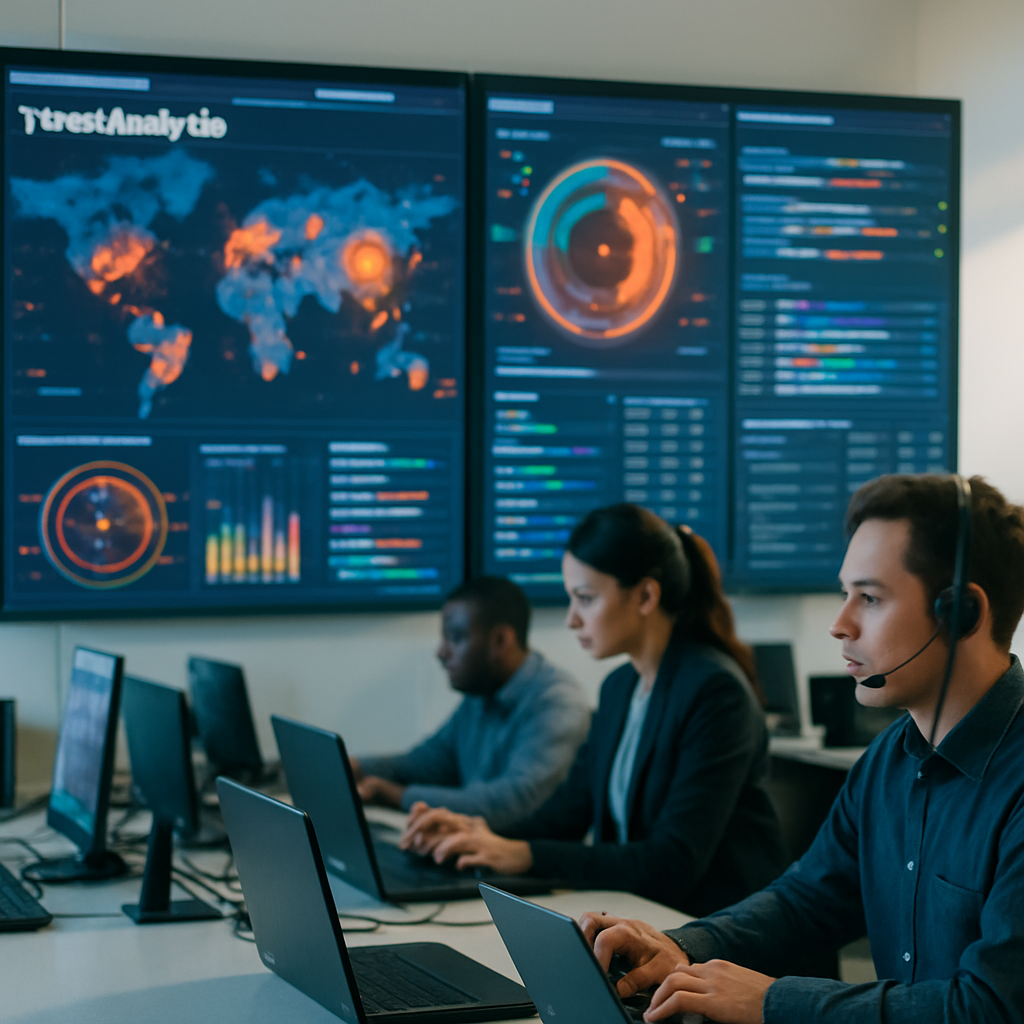
CISA Taps AI Automation to Bolster Threat Analysis Capabilities
With AI automation, CISA analysts can quickly sift through threats, cutting through the noise to focus on what matters most. This tech boost has supercharged their Security Operations Unit, enabling rapid, real-time assessments that help prevent threats from unfolding.