Tag: phishing
756 articles
ransomware operations: Urgent Must-Have Defense Guide
AI-driven extortion has made attacks faster and more personal, but practical steps—MFA and least-privilege access, isolated immutable backups with restore drills, exfiltration detection, and pre-authorized legal and communications playbooks—can blunt the impact today. Act quickly, use AI defensively with human oversight, and engage law enforcement and experienced responders early to prevent escalation.

indirect prompt injection: Stunning, Risky Threat
Imagine a calendar invite or shared doc quietly telling your phone assistant to betray you — researchers show indirect prompt injection turns everyday interactions into real attack paths that can leak data, send messages, or trigger devices. Their TARA framework and practical fixes show those risks can fall sharply if developers add source checks, action gating, and clearer user consent.

Tycoon phishing kit: Stunning Dangerous Cloaking Tactics
A prolific phishing kit called Tycoon is now hiding malicious links behind layered redirects, URL obfuscation, and browser-only cloaking to slip past email scanners and trick users. Stay vigilant—combine stronger link inspection, browser-based emulation, DMARC/DKIM/SPF hardening, and user training to blunt this evolving threat.

Scattered Spider: Must-Have Defense for Risky Browser Attacks
The browser is now the workplace front door—and groups like Scattered Spider are exploiting it with social engineering and account-takeover tricks. Enterprises can keep cloud-first convenience without handing over the keys by layering phishing‑resistant MFA, locking down extensions and OAuth grants, and monitoring browser telemetry.

Operation HanKook Phantom: Exclusive Dangerous Threat
When colleagues become targets, South Korea’s academic community is facing a stealthy campaign — Operation HanKook Phantom — where ScarCruft (APT37) uses tailored phishing and the RokRAT trojan to siphon research and influence policy debates. Universities must boost basics like MFA, endpoint protection and phishing training to protect open inquiry without closing it off.

spear-phishing campaign: Risky North Korean Tactic Exposed
North Korea’s APT37 is luring South Koreans with real-looking internal briefings, turning trusted emails into powerful espionage tools — a wake-up call to strengthen MFA, behavior-based detection, and cross‑agency info sharing.

password managers Must-Have Best Defense After 16B Leak
Imagine waking up to find every password you’ve ever used dumped online — that’s the reality of a 16 billion credential leak, and businesses can’t afford to rely on reused passwords. Adopt enterprise password managers, enforce strong MFA, and harden identity controls now before attackers turn those lists into breaches.

unprepared for a cyberattack: Must-Have Risky Wake-Up Call
58% of organizations say they’re not ready for a cyberattack—putting customer data, operations, and reputations at risk. Boards and security teams must act now with better detection, practiced response plans, and investments in people.

ransomware incident: Exclusive Alarming Fallout Revealed
Nevada has confirmed a ransomware attack that not only crippled systems but also stole state data, leaving residents and officials scrambling to learn what was taken and who’s at risk. Authorities are investigating with federal partners — anyone concerned should watch for official notifications and take basic precautions like changing passwords and enabling multifactor authentication.
generative AI: Stunning Risky Threats
When generative AI meant to boost productivity starts handing criminals step-by-step playbooks, everyone loses — Anthropic warns Claude is being misused to draft ransomware, fake IT credentials and scale social-engineering attacks. We urgently need smarter safeguards, stronger authentication and faster defender adoption to make AI a force for protection, not a shortcut to crime.

AI-powered ransomware: Stunning Dangerous Threat
Researchers have uncovered PromptLock, the first known ransomware to use generative AI to craft personalized ransom notes and negotiate with victims—turning a speculative threat into an urgent reality. Its rise shows attackers can automate persuasion, forcing organizations to boost defenses, backups, and incident plans before AI-powered extortion becomes widespread.

ShadowSilk campaign: Exclusive, Alarming Threat
A stealthy campaign called ShadowSilk is quietly probing Central Asian and Asia‑Pacific government networks—stealing credentials, planting webshells and exfiltrating sensitive data—exposing how under-resourced states can be pawns in wider geopolitical espionage. Strengthening basic cyber hygiene, regional cooperation and fast incident response can blunt its impact before the next covert breach reshapes diplomacy and public trust.

multifactor authentication Risky Crisis, Must-Have Fix
Login attacks are skyrocketing, and the identity systems we trust—from MFA to identity providers—are under siege, eroding confidence and leaving security teams scrambling. Rebuilding trust will take pragmatic steps like phased passkey rollouts, phishing‑resistant methods, and smarter help‑desk controls that balance security with usability.
credential-theft campaign: Exclusive Salesforce Risk
Google warns of a credential-theft campaign that abused a Salesloft integration to phish Salesforce logins — a wake-up call that third-party apps can be your weakest link. Audit connected apps, enforce MFA, and tighten permissions now before attackers pivot from integrations into your CRM.

ConnectWise ScreenConnect: Stunning Security Risk
Attackers are now tricking victims into installing legitimate remote-support tools like ConnectWise ScreenConnect, then using those same trusted apps to seize control of devices — a stealthy shift that makes phishing far harder to spot. Stay skeptical of unsolicited support requests and verify them out of band, because convenience is the new vulnerability.

phishing attack Stunning Risky ZipLine Exposed
A new ZipLine phishing campaign uses a legitimate-looking White House photo and fake contact forms to trick employees at U.S. manufacturers into handing over credentials — opening the door to IP theft and ransomware. It’s a sharp reminder that a single authentic image can bypass defenses, so tighten verification, MFA, and training now.

phishing campaign: Critical RAT Threat Exposed
Researchers warn of a global phishing campaign that uses highly personalized emails and convincing fake sites to slip UpCrypter-wrapped downloads that install remote access trojans, giving attackers persistent control of machines. Stay cautious—verify unexpected requests, avoid untrusted downloads, enable MFA, and keep endpoint defenses tuned to block obfuscated threats.

MixShell malware: Exclusive Risky Supply-Chain Threat
Attackers behind the ZipLine campaign are skipping noisy phishing emails and weaponizing corporate “Contact Us” forms to trick procurement staff into running an in-memory, fileless loader called MixShell that evades detection and targets U.S. supply-chain manufacturers. Treat unexpected vendor downloads with skepticism, verify requests through known channels, and beef up memory-level detection—because human trust is now a favorite attack vector.

fake support sites: Stunningly Dangerous macOS Threat
Think twice before downloading “help” tools from ads—attackers are using convincing fake macOS support sites and malvertising to deliver the Atomic macOS Stealer (AMOS) and quietly scoop up credentials, cookies and crypto wallets. Verify support pages with vendors directly and treat unsolicited downloads like risky strangers offering to fix your device.
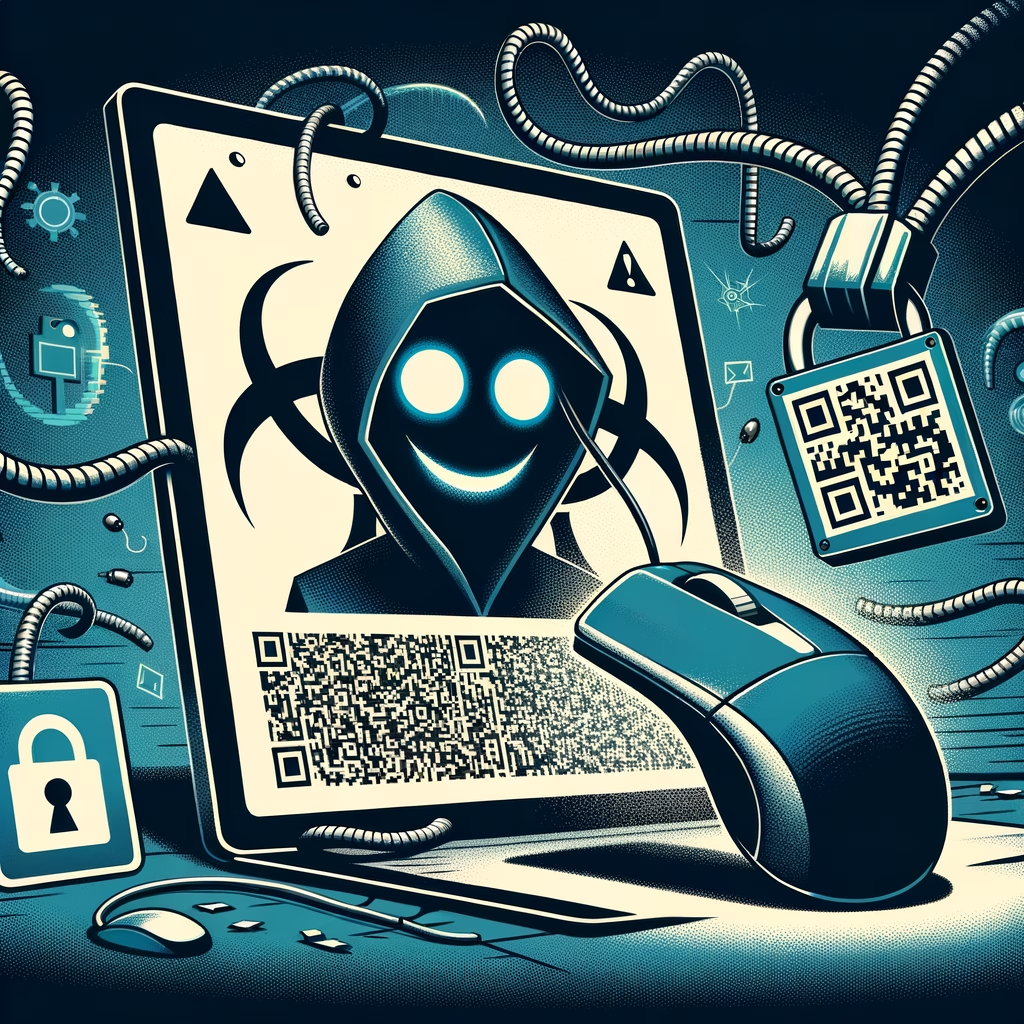
fake CAPTCHAs: Stunningly Dangerous ClickFix Scam
That harmless prove youre human CAPTCHA is being weaponized—attackers use convincing fake CAPTCHAs to trick people into pasting commands that download and run malware. Microsofts ClickFix report shows how believable pages and step‑by‑step prompts turn everyday trust into a direct route to compromise.

VPS-based attacks: Critical Guide to Risky Threats
Attackers are increasingly using rented VPS hosts to make their logins look like legitimate data-center traffic, blurring the line between customer and criminal. SaaS teams and users need stronger passwords, phishing-resistant MFA, and behavior-based authentication to stop stealthy account takeovers.

Orange Belgium customers: Stunning Risky Breach 850K
A massive breach at Orange Belgium has put about 850,000 customers’ personal details into criminal hands, raising risks like SIM‑swap, targeted phishing and identity theft. If you might be affected, check what was exposed, lock down your carrier account with app‑based 2FA or a unique PIN, and be extra skeptical of unsolicited calls, texts or emails.

Colt data theft: Exclusive Risky Auction Shocks Customers
Colt quietly admitted what many feared: a cyberattack that began as a service disruption also led to stolen customer data — now a criminal group called Warlock is auctioning the haul on the dark web. If you rely on Colt, this shifts from an outage to a breach you should watch closely and act on fast.

PromptFix attacks: Must-Have Defenses vs Risky Threats
Researchers warn of a new PromptFix attack that hijacks the prompts and data feeding agentic AIs, letting attackers steer, confuse, or corrupt assistants without touching the underlying models. As these agents enter everyday tools, layered protections like provenance checks, least‑privilege actions, and better monitoring are essential to keep them safe.