Tag: microsoft
781 articles

zero-day vulnerabilities: Urgent Critical Patch Alert
Don’t wait: Microsoft’s Patch Tuesday fixed 80+ vulnerabilities, including two publicly disclosed zero-days with exploit details already circulating. Prioritize scanning, testing, and deploying patches now — and apply mitigations where needed — before attackers get the upper hand.

crypto phishing Shocking Supply-Chain Nightmare
One phishing click that reset a maintainer’s 2FA let attackers slip backdoors into at least 18 popular npm packages — including debug and chalk — turning trusted libraries into supply-chain landmines. It’s a wake-up call: human error can ripple through the entire ecosystem, so stronger authentication, multi-person publishing, and tighter dependency hygiene can’t wait.

political fundraising emails: Must-Have Best Practices
When Gmail’s filters started sending more GOP fundraising messages to spam, regulators and campaigns cried bias — but email experts say delivery problems usually come down to technical hygiene (bad authentication, high-volume blasts, low engagement) rather than political intent. The real takeaway: campaigns can fix inbox placement by cleaning up sending practices while platforms work to be transparent and fair.

search engine poisoning: Stunning Dangerous Threat
Imagine trusted search results quietly steering you to shady gambling sites — ESET’s researchers uncovered GhostRedirector, a China-aligned crew that hijacks internet-facing Windows servers with Potato-family exploits and stealth malware to poison search rankings for profit. This subtle, long-running tactic shows why monitoring server integrity, patching privilege-escalation flaws, and watching for sudden ranking anomalies are now essential defenses against invisible manipulation.

Microsoft Outlook backdoor: Exclusive Dangerous Threat
A new Outlook backdoor called NotDoor quietly watches for trigger words inside incoming mail, letting APT28 gain stealthy, long-term access to companies across NATO countries. Defenders should harden endpoints, disable unnecessary VBA, and share threat intelligence to detect and disrupt these low-noise, high-impact intrusions.

Extended Security Update: Costly Must-Have for Enterprises
As Windows 10 leaves free support on October 14, enterprises face a stark choice — rush costly upgrades, buy Extended Security Updates that could push bills toward $7.3 billion, or accept higher cyber risk. Now’s the time for CIOs to prioritize high-risk devices and treat the end-of-life deadline as a financial as well as technical decision.

VBA-based backdoor: Stunning Risky Outlook Threat
Think your inbox is safe? Researchers warn APT28 has deployed a VBA-based Outlook backdoor called NotDoor that hides in macros to harvest emails and stay persistent, so it’s time to tighten macro policies, add telemetry, and treat your mail client as part of the attack surface.
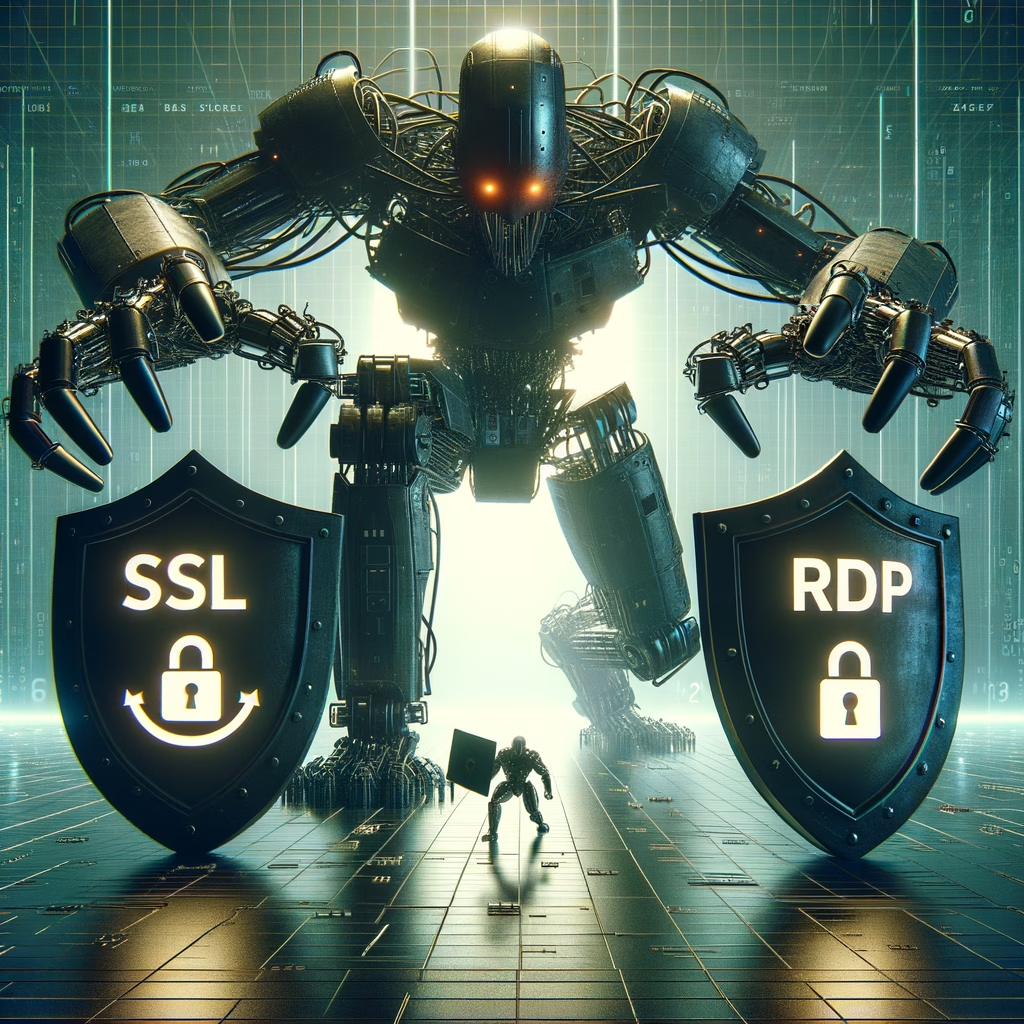
SSL VPN Urgent: Must-Have Best Defenses
Imagine someone pounding on invisible locks: a massive brute‑force campaign recently blasted SSL VPNs and RDP hosts with relentless login attempts, showing how one weak credential can lead to ransomware or data theft. If you run remote access services, enable MFA, rate‑limit logins, and segment networks now to stop attackers before they get in.

signed Windows kernel driver: Stunning Risky Backdoor
When a Microsoft‑signed WatchDog driver (amsdk.sys) was abused to neuter endpoint defenses and plant ValleyRAT, it proved that a valid signature isn’t a guarantee of safety. This Silver Fox campaign underscores why organizations must stop trusting signatures alone and add behavior‑based controls and tighter vetting for privileged drivers.

move away from Microsoft: Must-Have Best Shift
Would a government serious about frugality really write a £9bn cheque to a single software vendor? A Register poll finds 93% of readers want the UK public sector to move away from defaulting to Microsoft — a clear prompt to rethink procurement, competition and digital independence.

signed driver Dangerous: Stunning ValleyRAT Risk
Imagine a trusted vendor’s driver used as a battering ram—Silver Fox has been abusing Microsoft‑signed kernel drivers to slip past endpoint defenses and install the ValleyRAT backdoor for stealthy, long‑term access and data theft. Tighten driver policies, add kernel‑level telemetry, and vet supply chains before digital trust becomes the next attack surface.

Scattered Spider: Must-Have Defense for Risky Browser Attacks
The browser is now the workplace front door—and groups like Scattered Spider are exploiting it with social engineering and account-takeover tricks. Enterprises can keep cloud-first convenience without handing over the keys by layering phishing‑resistant MFA, locking down extensions and OAuth grants, and monitoring browser telemetry.

watering-hole technique: Exclusive Risky Exposed
When nation‑state actors like APT29 weaponize familiar conveniences — such as “Sign in with Microsoft” flows and popular websites — a routine visit can hand over credentials and session tokens at scale. Amazon’s disclosure shows watering‑hole attacks have evolved, so teams and users should treat federated logins and consent prompts with fresh skepticism and stronger protections.

Cozy Bear Exposed: Risky OAuth Attack — Must-Have Alert
AWS says it disrupted a Cozy Bear (APT29) campaign that used fake websites and OAuth consent tricks to coax Microsoft users into granting access to mail, calendars and other data. The episode is a reminder that convenient features like single sign‑on can be repurposed for stealthy espionage — and why cloud providers are increasingly acting as front‑line defenders.

delete backups: Stunning Risky Cloud Deletion Alert
Imagine losing not just your systems but the backups you counted on—attackers are now exfiltrating data and deleting snapshots in cloud environments like Azure, turning recoveries into impossible puzzles. Treat backups as crown jewels: lock them down with least-privilege access, immutability, offline copies, and strong identity controls before it’s too late.

custom silicon Must-Have for Best Cloud Security
Microsoft’s Azure team is betting big on custom silicon and open-source Roots of Trust to give customers stronger, auditable hardware-backed assurances that their code and data run in tamper-resistant environments. It’s a bold move toward transparency and tougher defenses — but success will hinge on rigorous review, trustworthy manufacturing, and clear safeguards against new concentration risks.

Electronics supply chains Must-Have Shield: Best Defense
When a specialist like Data I/O is knocked offline by ransomware, production lines and device launches can grind to a halt—reminding tech companies to tighten supplier security, demand transparency, and build redundancy before the next outage.

fake CAPTCHAs: Stunningly Dangerous ClickFix Scam
That harmless prove youre human CAPTCHA is being weaponized—attackers use convincing fake CAPTCHAs to trick people into pasting commands that download and run malware. Microsofts ClickFix report shows how believable pages and step‑by‑step prompts turn everyday trust into a direct route to compromise.

post-quantum cryptography: Must-Have Roadmap, Risky
Imagine the locks protecting the world’s data facing a burglar armed with quantum physics — Microsoft is aiming to stay ahead by rolling out quantum‑safe protections across its products from 2029 and completing the switch by 2033. The plan pairs careful testing, hybrid cryptography and developer guidance to help shield users while the industry moves to post‑quantum standards.

exploit code Exclusive: Risky Leak Spurs Policy Shift
After a SharePoint zero-day was weaponized, Microsoft quietly stopped sharing proof-of-concept exploit code with some Chinese firms — a pragmatic but politically fraught move that highlights the uneasy trade-off between helping defenders and giving attackers a roadmap. The incident makes clear we need faster patching, tighter disclosure controls, and better international norms to protect users without splintering cooperation.

M365 Copilot Exclusive Risk Alert: Critical Silence
Imagine someone fixed a door in your house without telling you it was open—would you sleep easier? Microsoft’s quiet patch to an M365 Copilot security bypass, applied without a CVE or public advisory, has left IT teams scrambling for visibility, compliance proof, and clear guidance.

Windows Recovery Environment: Must-Have Critical Fix
If you’ve ever been stranded by a stalled boot or a recovery loop, you’re not alone — Microsoft just released an out-of-band patch to fix a Windows Recovery Environment bug that could prevent repairs. Install the update right away and verify your recovery tools and backups so a fix doesn’t leave you unable to recover when it counts.

reducing cyber risk: Must-Have Culture for Best Defense
Technology can only take you so far—attackers now target people and culture, not just systems. Building a stronger security culture with clear policies, consistent training, and aligned incentives is the simplest, most effective way to cut cyber risk.

MOVEit Transfer Stunning $8.5M Risky Settlement
Nuance agreed to pay $8.5 million to settle a class-action tied to the massive MOVEit supply‑chain breach — even while not admitting fault — a stark reminder that one vendor’s vulnerability can saddle many downstream companies with legal and financial fallout. Think of it as a wake-up call: tighten third‑party security, patch fast, and treat vendor risk as a boardroom priority before a breach becomes someone else’s bill.