Tag: espionage
238 articles

Google Threat Intelligence: Exclusive Risky 393-Day Breach
Google says China-linked attackers have quietly lived inside many enterprise networks since March — an average of 393 days — installing persistent backdoors and exfiltrating sensitive IP. The takeaway: tighten access, boost detection, and treat long dwell times as an urgent business and security priority.

Nimbus Manticore: Exclusive Risky Supply-Chain Threat
A stealthy, Iran-linked cyber actor called Nimbus Manticore is quietly shifting from remote spying to targeting European aerospace, telecom and defense suppliers — and its patient, surgical intrusions threaten intellectual property, supply chains and national security unless industry and governments boost defenses and share threats quickly.

Iran-backed hackers: Exclusive Dangerous Espionage
Think that job email was real? Researchers warn Iran‑linked hackers are using fake recruitment pages to deliver MiniJunk backdoors and MiniBrowse stealers to European aerospace and related sectors, so organizations and applicants should harden hiring workflows and treat unsolicited offers with caution.

Gamaredon and Turla: Stunning Dangerous Alliance
New research shows Russian state-linked groups Gamaredon and Turla are sharing malware and techniques to scale espionage against Ukrainian government, military and aid organizations — a troubling coordination that widens Moscow’s reach while making defense and attribution much harder.

Silent Courier: Must-Have Secure Portal
MI6’s new Tor portal, Silent Courier, offers step-by-step guidance to help overseas sources contact the agency anonymously — a smart, modern shortcut that could surface lifesaving leads. But putting recruitment on the dark web also sparks tough questions about verification, misuse and source safety.

SnakeDisk worm: Stunning Risky Thai-Targeted Threat
A China-aligned group called Mustang Panda has paired an updated TONESHELL backdoor with a USB worm named SnakeDisk that only activates for Thailand-based devices to drop a persistent Yokai backdoor — a surgical, geographically targeted campaign that ups the stakes for anyone who plugs in removable media. Stay cautious with USB drives and tighten removable-media policies: this is a reminder that one careless plug can invite long-term access.

military ID cards: Exclusive Risky AI Forgeries
North Korean-linked hackers are using ChatGPT and image AI to forge photorealistic military IDs and craft highly convincing spear-phishing lures that can fool even seasoned professionals. It’s a wake-up call: stronger verification, cryptographic signing and vigilant cyber-hygiene are now essential to stop AI-enabled deception.

fake military ID: Risky Stunning AI Forgery Threat
Researchers say North Korean operatives used ChatGPT to craft a convincing fake South Korean military ID, showing how generative AI can supercharge social-engineering and produce forgeries that easily fool human reviewers. It’s a wake-up call: organizations need stronger cryptographic identity checks, smarter detection tools, and better staff training so polished prose no longer equals trust.

fileless malware: Devastating Exclusive Threat
Researchers say a Chinese-linked APT used fileless malware to hide in a Philippine military contractor’s memory, quietly siphoning sensitive data while evading traditional detection. The breach is a wake-up call to move beyond signature-based defenses, tighten access controls, and shore up the defense supply chain.

cyber espionage campaigns: Stunning Risk to US Talks
As 2025 trade talks begin, a House committee warns China-linked APT41 is targeting U.S. negotiators to harvest intelligence that could skew deals. The advisory urges urgent cybersecurity fixes and smarter diplomatic steps to protect fragile trust at the bargaining table.

Salt Typhoon: Exclusive, Dangerous Domain Network
Imagine attackers quietly living in your network for years — Salt Typhoon used dozens of rotating, innocent-looking domains since 2020 to stay hidden, steal intelligence, and frustrate takedowns. Defenders now need continuous monitoring, smarter DNS controls, and cross-sector cooperation to spot and evict these patient spies.
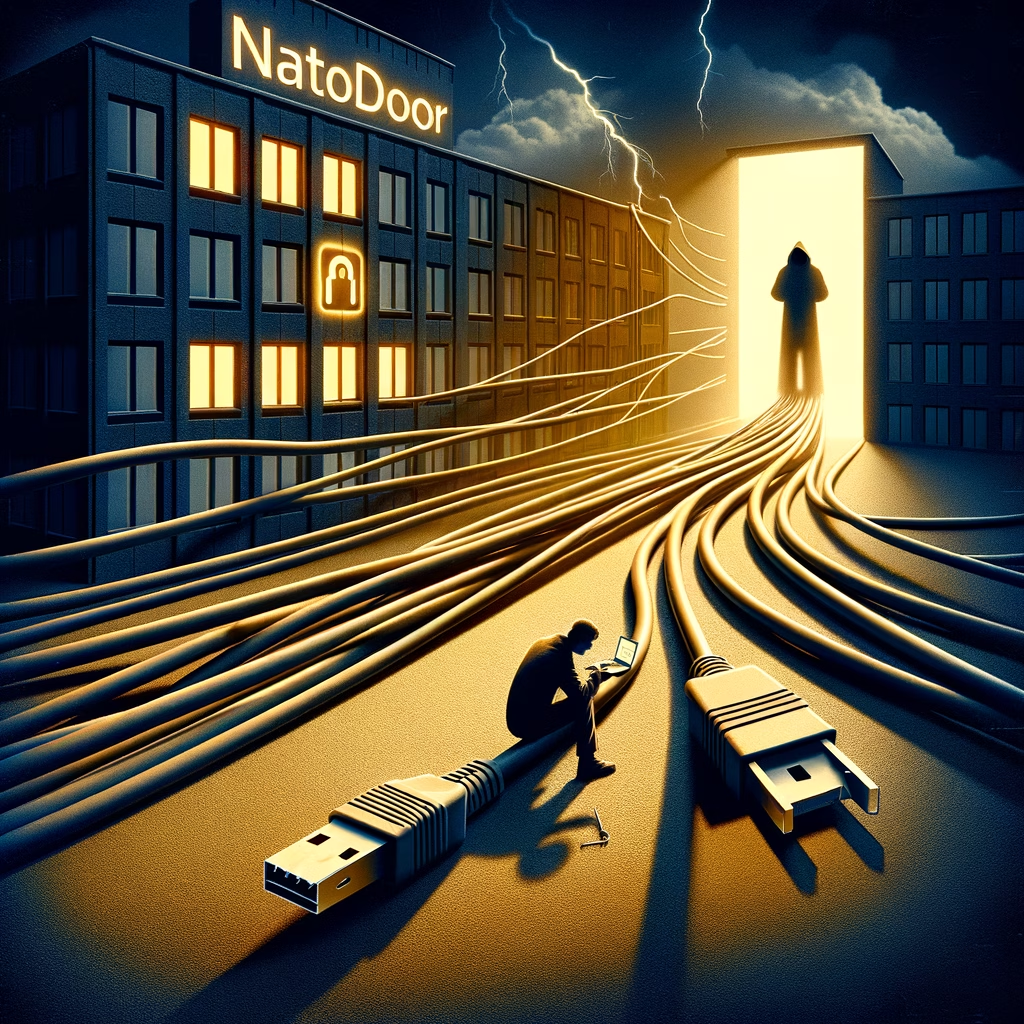
Microsoft Outlook backdoor: Exclusive Dangerous Threat
A new Outlook backdoor called NotDoor quietly watches for trigger words inside incoming mail, letting APT28 gain stealthy, long-term access to companies across NATO countries. Defenders should harden endpoints, disable unnecessary VBA, and share threat intelligence to detect and disrupt these low-noise, high-impact intrusions.

Cisco vulnerability: Stunning, Risky Threat to Grid
A $10 million reward for tips about alleged Russian operatives sheds light on a startling reality: a seven‑year‑old Cisco flaw — still unpatched in many legacy systems — is giving attackers a persistent backdoor into critical U.S. infrastructure. It’s a wake‑up call for operators and policymakers to finally prioritize upgrades, patching, and smarter defenses before the next outage or worse.

VBA-based backdoor: Stunning Risky Outlook Threat
Think your inbox is safe? Researchers warn APT28 has deployed a VBA-based Outlook backdoor called NotDoor that hides in macros to harvest emails and stay persistent, so it’s time to tighten macro policies, add telemetry, and treat your mail client as part of the attack surface.

watering-hole technique: Exclusive Risky Exposed
When nation‑state actors like APT29 weaponize familiar conveniences — such as “Sign in with Microsoft” flows and popular websites — a routine visit can hand over credentials and session tokens at scale. Amazon’s disclosure shows watering‑hole attacks have evolved, so teams and users should treat federated logins and consent prompts with fresh skepticism and stronger protections.

Operation HanKook Phantom: Exclusive Dangerous Threat
When colleagues become targets, South Korea’s academic community is facing a stealthy campaign — Operation HanKook Phantom — where ScarCruft (APT37) uses tailored phishing and the RokRAT trojan to siphon research and influence policy debates. Universities must boost basics like MFA, endpoint protection and phishing training to protect open inquiry without closing it off.

Cozy Bear Exposed: Risky OAuth Attack — Must-Have Alert
AWS says it disrupted a Cozy Bear (APT29) campaign that used fake websites and OAuth consent tricks to coax Microsoft users into granting access to mail, calendars and other data. The episode is a reminder that convenient features like single sign‑on can be repurposed for stealthy espionage — and why cloud providers are increasingly acting as front‑line defenders.

spear-phishing campaign: Risky North Korean Tactic Exposed
North Korea’s APT37 is luring South Koreans with real-looking internal briefings, turning trusted emails into powerful espionage tools — a wake-up call to strengthen MFA, behavior-based detection, and cross‑agency info sharing.

Salt Typhoon: Stunning, Alarming Telecom Privacy Breach
The FBI warns that a years‑long Chinese cyberespionage campaign called “Salt Typhoon” infiltrated global telecom infrastructure and quietly harvested communications and metadata tied to millions of Americans. It’s a wake‑up call — expect tougher industry fixes and policy moves, plus simple steps you can take now to protect your accounts and privacy.

foreign agents: Stunning, Risky Threat to U.S. IP
A blunt DCSA warning reveals how state-backed actors—mostly linked to China—exploit agents, front companies and open research networks to siphon U.S. intellectual property and defense know‑how. We must sharpen vetting, export controls and cyber defenses while protecting the openness that fuels American innovation.

Salt Typhoon Stunning Risks to Global Security
When commercial cloud and hosting services start looking like spy tools, who do you trust—and how do you protect yourself? Recent attributions tie parts of China’s tech ecosystem to the “Salt Typhoon” campaigns, showing how misconfigured or abused legitimate services can quietly power large-scale espionage and why stronger transparency, vetting and cross-border cooperation are urgently needed.

ShadowSilk campaign: Exclusive, Alarming Threat
A stealthy campaign called ShadowSilk is quietly probing Central Asian and Asia‑Pacific government networks—stealing credentials, planting webshells and exfiltrating sensitive data—exposing how under-resourced states can be pawns in wider geopolitical espionage. Strengthening basic cyber hygiene, regional cooperation and fast incident response can blunt its impact before the next covert breach reshapes diplomacy and public trust.

web hijacking: Stunning Diplomatic Threat
Imagine being a diplomat and not knowing your web traffic is being silently rerouted—Google has warned of a suspected state-backed web hijacking campaign hitting foreign ministries and diplomats across Asia. This stealthy interception can steal credentials, deploy malware, and influence negotiations, so stronger encryption, hardened captive‑portal workflows, and robust MFA are now mission‑critical.

Cisco legacy flaw: Stunning Risky Exploits Exposed
Years after Cisco patched CVE-2018-0171, state-backed hackers are still exploiting the old Smart Install flaw to slip into networks that assumed retired gear was safe — a sharp reminder that “end-of-life” isn’t the same as “out of harm’s way.” Inventory your devices, disable legacy management features, and prioritize fixes or replacements before an old router becomes someone else’s backdoor.