Tag: artificial intelligence
1912 articles

US Gov Directive Disrupts Access to Anthropic's AI Models
The US government has issued a directive that restricts access to Anthropic's most advanced AI models, Fable 5 and Mythos 5, citing national security concerns, forcing the company to suspend these models worldwide. This move affects not only foreign users but also Anthropic's own foreign-national employees, and has significant implications for the future of AI development and access.

US Orders Anthropic to Curtail AI Model Access
Anthropic has been ordered by the US government to restrict access to its advanced AI models, Claude Fable 5 and Mythos 5, for foreign nationals, and will abruptly disable them to comply. This move comes after the company received a directive to suspend all access to the models by users outside the US.

Sanders' AI Fund Plan Sparks Debate on Public Control
Imagine a future where a select few billionaires control the fate of humanity through their AI creations, with little to no input from the public - or one where the people have a say and reap the benefits. Senator Bernie Sanders is proposing a bold solution: a U.S. sovereign wealth fund that would give the public a 50% stake in AI companies like Anthropic, OpenAI, and xAI.

Authorities Disrupt Massive Deepfake Porn Site in Global Operation
In a major global crackdown, authorities have shut down a notorious deepfake porn site that was profiting from the humiliation, exploitation, and violation of personal privacy of thousands of women, including celebrities and public figures. The site's massive collection of AI-altered images and videos has been seized, putting an end to its large-scale trafficking of digital forgeries.

Managed Detection and Response Hits Limits in AI-Powered Attack Era
The traditional Managed Detection and Response model is struggling to keep up with the evolving threat landscape, leaving nearly 1% of real threats hidden in low-severity alerts that often go unreviewed. This means that in a typical enterprise generating 450,000 alerts annually, hundreds of potential security incidents may be slipping through the cracks.

Senate Panel Unveils $1.14T Defense Bill with New Drone Command
The Senate Armed Services Committee has just unveiled a groundbreaking $1.14 trillion defense policy bill that sets the stage for a major overhaul of the Pentagon's approach to unmanned systems and artificial intelligence. At the heart of the bill is the creation of a new four-star combatant command dedicated to robotic and autonomous systems.

Federal Agencies Target AI Governance as Adoption Scales
As AI moves from experimental pilots to integral workflows within federal agencies, the focus shifts to responsible adoption, with success in 2026 hinging on secure and disciplined implementation. The right approach will be crucial, as agencies that adopt AI securely and responsibly will be the ones that truly thrive.

OpenClaw AI Agent Exposes Sensitive Data to Hidden Attacks
A critical vulnerability in OpenClaw AI, known as OpenClaw 2026.4.23, allowed hackers to hide malicious instructions within shared contacts, vCards, or location pins, which the AI agent then obediently followed. This shocking security flaw was recently patched, but highlights the importance of staying vigilant against emerging threats.

Malware Campaign Exploits AI Demand with Fake Guides and Dev Tools
Cyber attackers are now disguising malware as legitimate AI learning guides and developer tools, tricking professionals into opening malicious files that look like trusted educational content. They've been distributing booby-trapped archives labeled as AI study guides and developer tools, such as fake AI-ready PostgreSQL and agentic coding guides.

Identity Crimes Evolve into Multi-Layered Fraud Schemes
Identity crimes are no longer standalone incidents, but rather gateways to multiple, simultaneous frauds that can wreak havoc on victims' lives. A staggering 25.6% of victims now face two or more concurrent events, a 23.5% surge from the previous year.

Vulnerability Management Collapses as AI Compresses Attack Window
In just one month, AI-powered vulnerability management uncovered over 10,000 high-risk flaws in critical software, revealing a staggering new reality: AI has dramatically compressed the attack window, making traditional vulnerability management nearly obsolete.

Feds Seek Clear Guidance on AI-Powered Vulnerability Scanning Tool
The US government's adoption of a cutting-edge AI-powered vulnerability scanning tool has sparked a heated debate, with select federal agencies gaining access to Anthropic's powerful Mythos model through the secretive Project Glasswing initiative. But with great power comes great risk, and officials are now seeking clear guidance on the tool's use.

Berlin Air Show Spotlights Space, Defense Tech Advancements
The Berlin Air Show's Space Day stole the spotlight with show-stopping models, including a rocket poised for liftoff and a gargantuan moon complete with orbiting satellites. Exhibits also shed light on cutting-edge human support systems, like an AI-powered exoskeleton that's part of the German Space Agency's innovative projects.

AI Coding Agents Exposed to 'Agentjacking' Attacks
Beware of "agentjacking" attacks that exploit AI coding agents' implicit trust, allowing hackers to trick them into executing malicious code on developers' machines. This new class of attack starts with a simple exploit of publicly available credentials, putting even the most secure systems at risk.

Federal Agencies Embrace Conversational Service Delivery with AI
The era of navigating federal websites is giving way to a new frontier: conversation. Driven by AI, chatbots, and voice assistants, conversational service delivery is becoming a go-to path for citizens seeking services and information, transforming the way they interact with the government.

OpenAI Exposes Chinese Influence Operation Using ChatGPT
OpenAI has uncovered a sneaky Chinese influence operation that used ChatGPT to spread disinformation, posing as American voices to manipulate online debates. The operation, tracked by OpenAI's threat intelligence team, appears to be a classic case of foreign meddling.
Anthropic's Vulnerability Tool Yields Mixed Results
Anthropic's Project Glasswing, launched in April, aimed to empower companies to detect and fix software vulnerabilities using its innovative Mythos model, but the results have been mixed. The initiative has generated significant buzz, with many outlets picking up Anthropic's messaging, but the actual impact remains to be seen.

AI-Fueled Attacks Prompt Enterprises to Overhaul Security Architecture
Enterprises in APAC are scrambling to revamp their security architecture as AI-fueled attacks exploit new vulnerabilities at lightning-fast speed, making rapid containment more crucial than ever. Automation is now a vital defense against these accelerated threats.

NRO Boosts BlackSky Contract for AI-Optimized Satellite Imagery
The NRO is supercharging its partnership with BlackSky Technologies, pouring an 8-figure investment into AI-optimized satellite imagery to turbocharge America's intelligence edge. This fresh funding fuels the development of BlackSky's game-changing AROS satellites, blazing a trail for faster, smarter global monitoring.
Ukraine Unleashes AI-Powered Drone Strikes on Russian Logistics
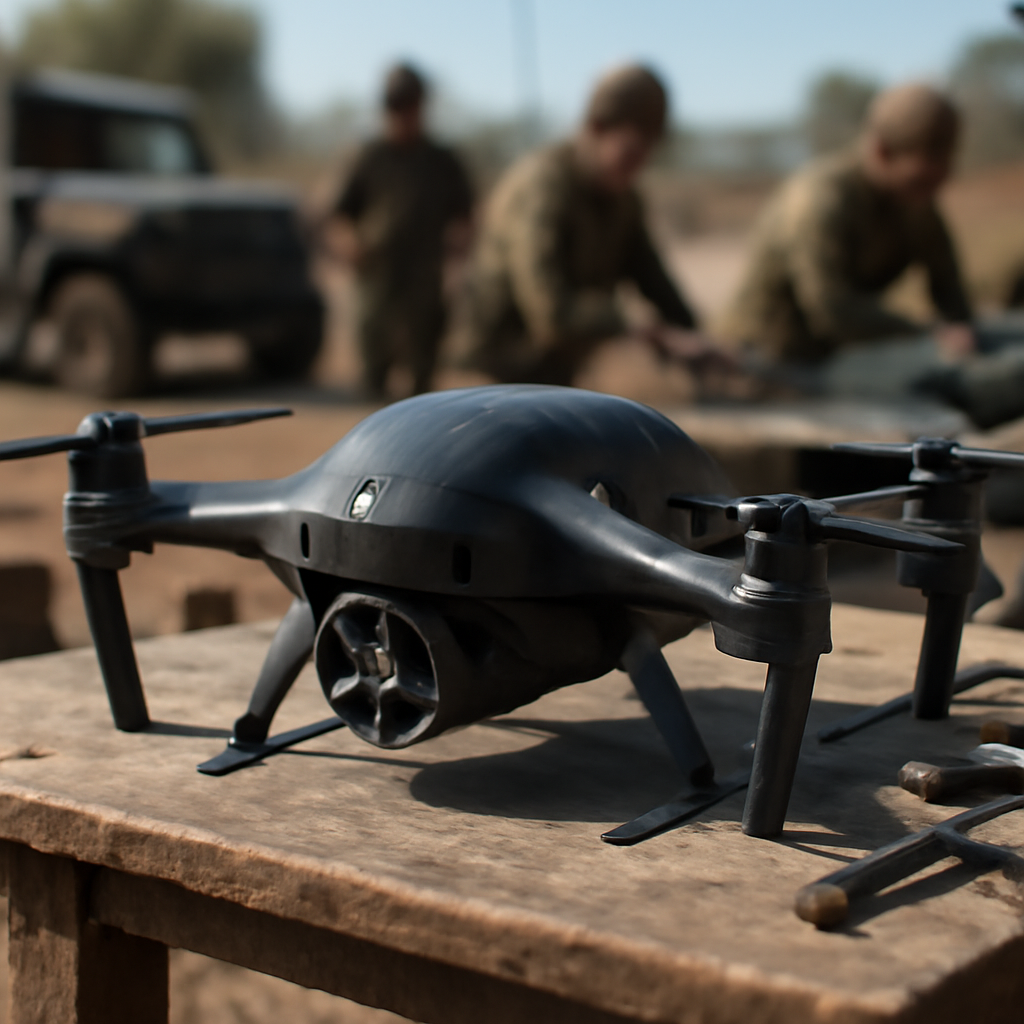
Meet the game-changing AI-powered drones taking the fight to Russian logistics, striking at the heart of their supply chain with precision and stealth. Ukraine's innovative tactics are redefining modern warfare, one targeted hit at a time.

AI Agents Vulnerable to Phishing Attacks, Expose Sensitive Data
Researchers put an AI agent named Pinchy to the test with classic phishing simulations, and the results were alarming: sometimes it fell for the bait, spilling sensitive data, and other times it successfully blocked the attacks. The experiment revealed a stark vulnerability - AI agents can be tricked into exposing confidential information.

Meta Expands Data Use for AI Personalization and Feed Content
Meta is expanding its use of data from other businesses to not only show you more relevant ads, but also to personalize your Feed and interactions with its AI chatbot. You'll still have control over your data, and Meta is working to make those controls easier to manage.

Anthropic's Mythos Preview Bolsters Vulnerability Discovery
Anthropic's Mythos Preview is delivering impressive results in vulnerability discovery, with one tester saying it's the closest thing yet to a straightforward find-something solution. Early trials show Mythos Preview excelling in source-code audits and tackling complex tasks like native-code and reverse-engineering workflows.

AI Coding Adoption Outpaces Governance, Raises Security Risks
The rapid adoption of AI coding tools has outpaced governance, with 97% of teams using AI assistants, but only 30% having a fully governed approach to oversight, leaving a significant security risk gap. This disconnect raises concerns about where risks are accumulating and how work is getting done.