Tag: algorithmicbias
8 articles

social media surveillance: Shocking Risk to Free Speech
Imagine a government tool meant to spot foreign threats quietly sweeping up Americans’ posts and using those snippets to deny visas, jobs, or the right to return — now three unions, backed by the EFF, are suing to stop a program they say chills speech, lacks transparency, and lets algorithms punish dissent without due process.
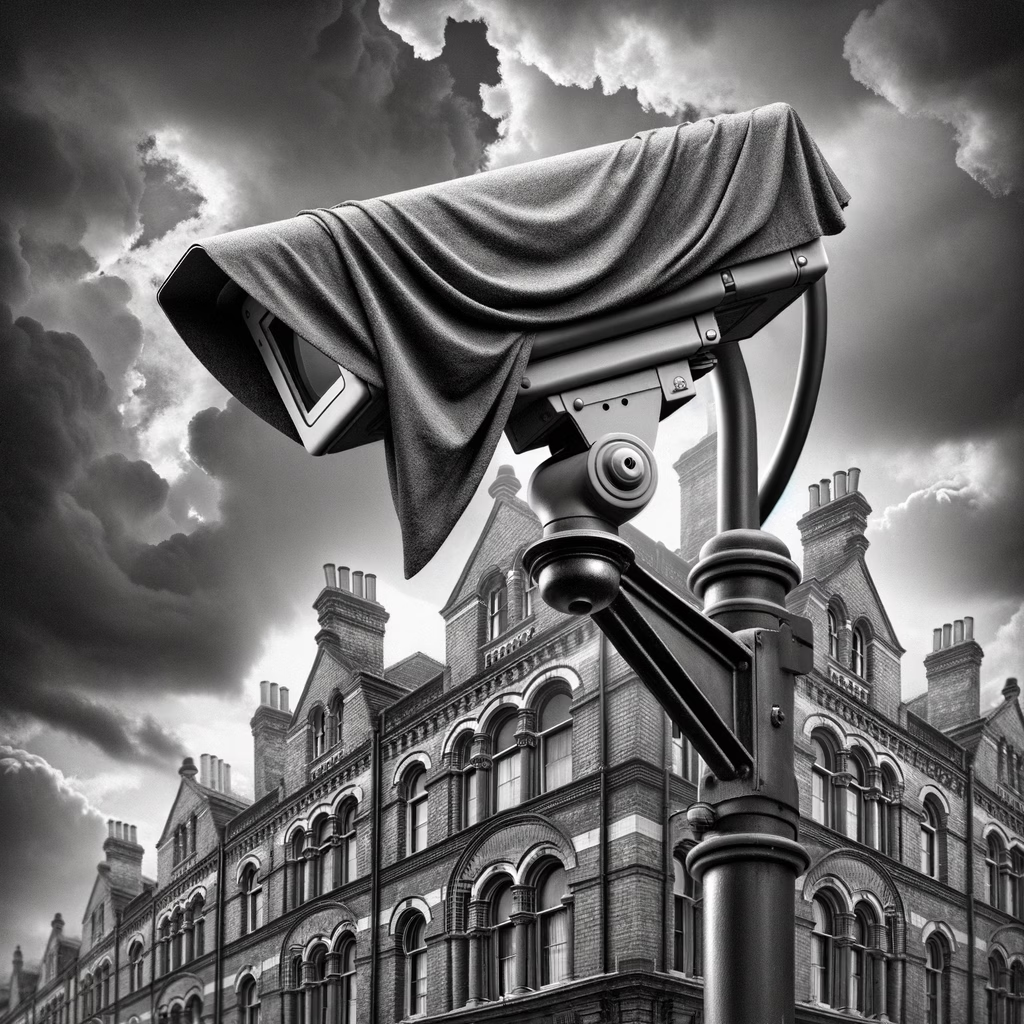
live facial recognition: Risky Must-Have for Safety
The government is encouraging police to try live facial recognition after the Met praised its Croydon deployment, but with courts and privacy watchdogs raising legal and bias concerns, ministers will publish guidance instead of forcing a nationwide roll‑out.

artificial intelligence: Stunning Fix or Risky Failure
Can AI rescue U.S. military recruiting after COVID upended pipelines and eligibility? AI can streamline outreach and speed processing, but it’s no silver bullet—rebuilding trust, policy fixes, and human engagement are still essential.

artificial intelligence Must-Have Reforms to Avoid Risk
AI can make government faster and fairer—but left unchecked it risks concentrating power, eroding accountability, and amplifying bias. Thoughtful rules, independent audits, and public participation can keep innovation from becoming a cover for opaque, unchallengeable decisions.

live facial recognition: Risky Exclusive Retail Trial
Sainsbury’s is trialling live facial recognition in two stores to catch repeat shoplifters, promising reduced losses and safer staff—but privacy advocates warn it’s intrusive, error-prone and could normalize constant surveillance. Will a few prevented thefts justify scanning shoppers’ faces, or will public concern and regulation redraw the line?

Chargers fans Exposed: Shocking Bias Threatens Trust
A Harvard-led study suggests ChatGPT may be more likely to refuse questions from suspected LA Chargers fans than other NFL supporters, raising a surprising but serious fairness question about how safety guardrails can unintentionally silence certain groups.

facial recognition: Stunning Risks Expose Flaws
Lab-perfect facial recognition often stumbles in the real world—poor lighting, low-quality cameras, masks and demographic bias can turn high benchmark scores into risky guesses on the street. Before we let cameras decide who’s innocent or guilty, we need real-world testing, transparency, and rules that protect people.

live facial recognition Stunning but Risky Expansion
The UK’s decision to add 10 live facial‑recognition police vans has reignited a heated debate. Supporters say they’ll help catch suspects and protect public spaces, while campaigners warn they risk widening surveillance, entrenching bias and eroding public trust without stronger legal safeguards.