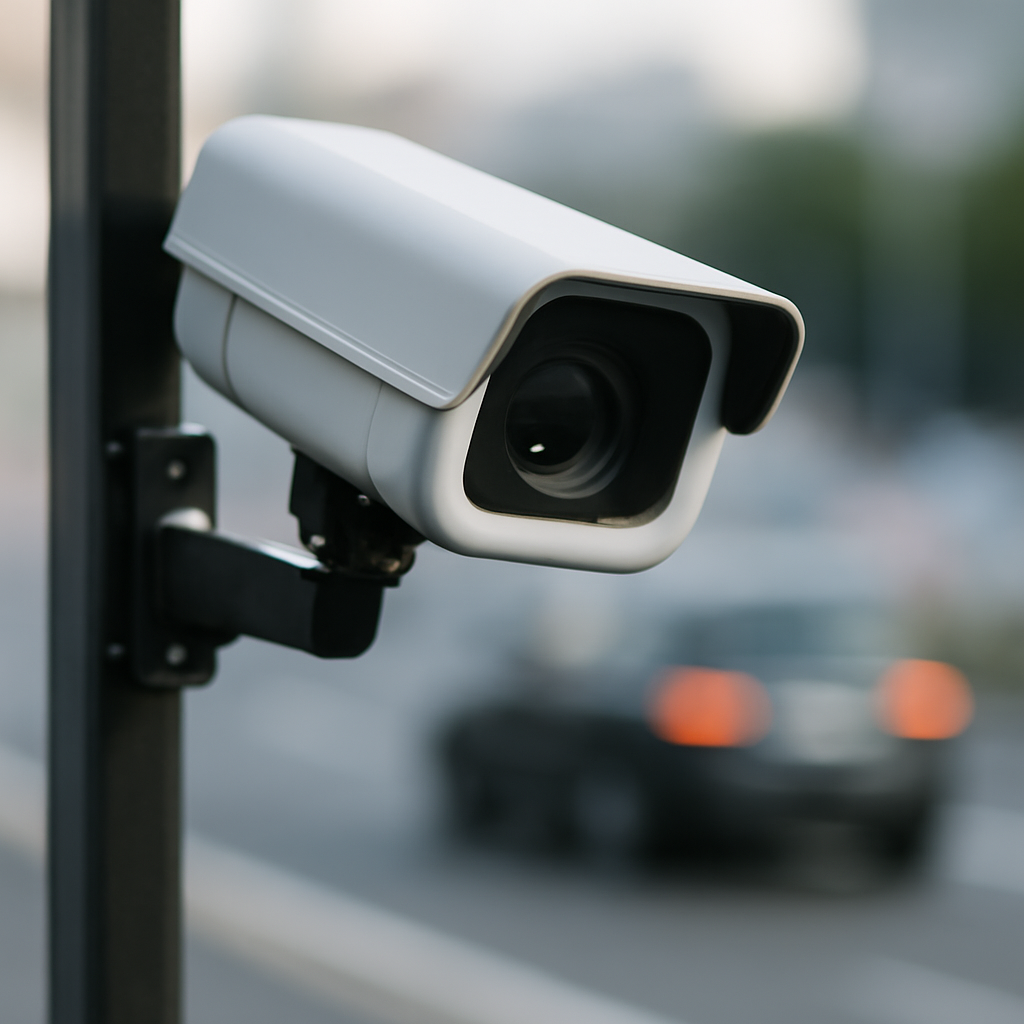
"Yes, it’s bad that more companies are collecting this level of surveillance data," the blog post states, and then points to a concrete example: Leonardo, a surveillance company, wants to add sensors to automatic license plate readers (ALPRs) to sweep up unique identifiers from mobile phones, wearables, and other Bluetooth-enabled devices in passing cars.
Leonardo’s SignalTrace: an add‑on for ALPRs
The technology is called SignalTrace. According to the post, Leonardo proposes adding sensors to existing ALPR cameras so that, in addition to capturing license plates, the devices would also collect unique Bluetooth identifiers broadcast by devices inside the vehicle. The company’s stated aim, as described, is to augment plate-based tracking with device-level data.
From tracking cars to tracking people
ALPR cameras today are described as devices focused on tracking cars. SignalTrace would change that focus: the post says it would "turn ALPR cameras from devices focused on tracking cars to ones that can more readily track the location of particular people." By coupling plate reads with persistent device identifiers, the system would let operators link a vehicle sighting to the presence — and later movements — of specific Bluetooth‑enabled devices.

Audit-ready is a season. It shouldn't be.
Evidence in spreadsheets, controls drifting between audits, frameworks multiplying on flat headcount. Nubivance runs continuous compliance on Rapid7 Cyber GRC - SOC 2, HIPAA, ISO 27001, PCI, CMMC.
End the scrambleWhat data SignalTrace would collect
The sensors are intended to sweep up "unique identifiers of mobile phones, wearables, and other Bluetooth-enabled devices." The post makes clear the scope: these are identifiers emitted by the devices themselves, not merely a count of devices in a car. That distinction matters because persistent identifiers can be used to follow an individual device across multiple camera reads.
ALPRs are already widespread across the U.S.
The post emphasizes that automatic license plate readers have "become a commonly deployed technology all across the U.S." It frames SignalTrace not as a theoretical concept but as an augmentation that could be applied to an existing, widely distributed sensor network. In short: the infrastructure to which SignalTrace would attach is already broadly present.
What this means for law enforcement, drivers, and privacy-conscious individuals
- Law enforcement: The post says SignalTrace could potentially let law enforcement "identify specific drivers or passengers" by linking Bluetooth identifiers to vehicle sightings — moving ALPRs from vehicle-centric to person‑centric tracking tools.
- Drivers and passengers: Individuals in vehicles that pass an ALPR fitted with SignalTrace could have the identifiers of their mobile phones or wearables collected without any change to driving behavior; the system targets Bluetooth-enabled devices present in the car.
- Privacy-conscious individuals: The post contrasts this proposed expansion of sensor capability with another reality — it notes that "all of this pales in comparison to the type and quantity of data our smartphones already collect about us," framing SignalTrace as an additional layer rather than the sole source of personal location data.
Conclusion
The blog post lays out a clear, tight claim: Leonardo wants to add SignalTrace sensors to ALPRs so cameras can collect Bluetooth identifiers from devices inside passing vehicles, potentially enabling more direct identification of people rather than merely vehicles. It also places that claim against a broader datum — that ALPRs are already commonly deployed across the U.S. — and a final comparison: our smartphones already collect large amounts of data. The immediate, concrete questions left on the record are procedural and consequential: whether SignalTrace will be widely deployed on existing ALPR networks, how operators would use the device‑level data, and what rules or limits would govern its use. The post frames those as the stakes without reporting decisions or policies that would resolve them.
https://www.schneier.com/blog/archives/2026/06/enhanced-license-plate-tracking.html