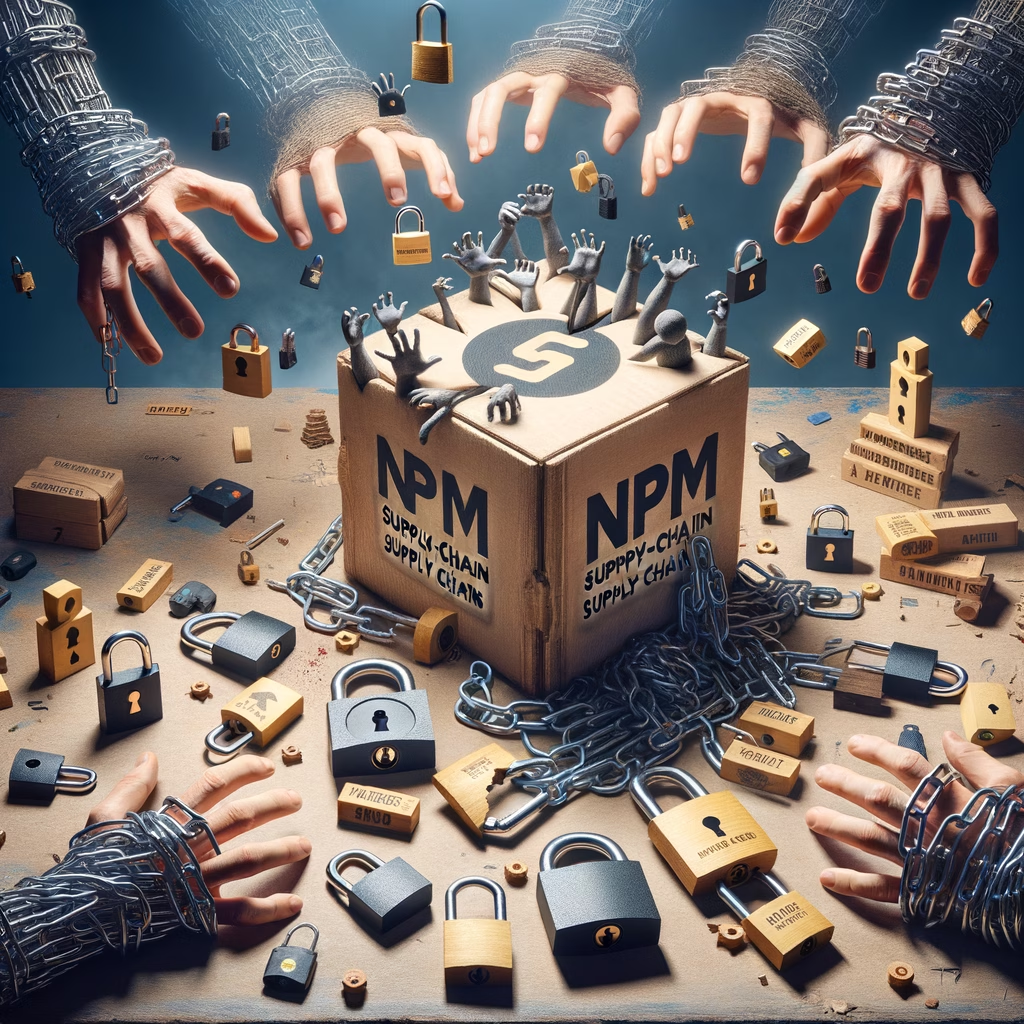
Last week’s near-miss in the npm ecosystem showed how quickly a coordinated, vigilant community can blunt a potentially devastating supply chain attack. What began as suspicious package publishes to the npm registry — typosquatted names and possibly hijacked maintainers’ accounts — might have delivered backdoors or disruptive payloads into thousands of downstream JavaScript projects. Thanks to rapid detection, cross-platform communication, and decisive takedowns, the incident was contained before it could ripple widely through the modern web.
Why this incident mattered
npm (Node Package Manager) sits at the heart of JavaScript development. Millions of packages are publicly available, and most projects pull in transitive dependencies they seldom inspect. That convenience creates a huge attack surface: a single compromised package can, within hours, affect countless applications and their users. The mechanics of this event were all too familiar — attackers publish malicious packages mimicking legitimate names (typosquatting) or take control of trusted packages through credential theft or social engineering. If such packages are installed even indirectly, they can introduce hard-to-spot, wide-reaching compromises.
Supply chain attack: how open source averted disaster
The decisive factor this time was the open source community’s speed and coordination. Detection emerged from multiple channels: automated monitoring flagged anomalous publishes, vigilant maintainers spotted unexpected changes, and security researchers shared indicators of compromise across GitHub, social media, and private channels. Registry teams and platform operators acted quickly to revoke credentials, remove malicious packages, and notify affected users.
Key elements that helped contain the attack:
– Cross-platform information sharing: public issue trackers, advisories, and private alerts compressed the time from discovery to mitigation.
– Automation and monitoring: dependency scanners and registry safeguards flagged risky packages before they propagated widely.
– Active maintainer communities: engaged maintainers and organizations could revoke access and publish clean releases rapidly.
Those factors combined to make what could have been a historic supply chain attack into a contained incident — but success was partial, and the episode exposes persistent weaknesses.
What this reveals about current supply chains
The incident lays bare structural problems in modern package ecosystems. First, these systems favor ease of contribution over stringent provenance checks. Lower barriers encourage innovation but also make impersonation and credential compromise easier. Second, many smaller projects lack the resources to maintain robust automated defenses or to audit deep dependency trees. Third, attackers are incentivized to evolve: social engineering, stolen credentials, and payloads that activate only under narrow conditions can slip past static scanners and superficial reviews.
Stakeholder perspectives
– Technologists: They’ll point to improvements — better tooling for dependency scanning, stronger registry policies, and faster incident response playbooks. But they’ll also warn that attackers can weaponize scale and subtlety, and that zero‑trust principles are not yet universal in development practices.
– Policymakers: The episode is a prompt for standards and discussion. How much vetting should widely used components require? Should critical open source projects be subject to baseline security obligations? Any regulation must balance improved safety with the openness that drives innovation.
– Enterprises and users: Practical tradeoffs matter. Pinning dependencies reduces exposure but increases maintenance tasks. Managed platforms shift responsibility but do not eliminate systemic risk. Investing in supply-chain visibility and incident playbooks has become a business necessity.
Attackers adapt, too
Adversaries are learning from the community’s success. The swift, visible response raises the bar but also highlights weaker targets: less-watched packages, social channels that can be manipulated to compromise maintainers, and payloads engineered to morph after publication to evade static detection. Future attempts may be more targeted, less noisy, and designed to exploit human trust rather than purely technical flaws.
The paradox of open source defense
This near miss underscores a paradox: open source’s openness — community ownership, peer review, and transparent communication — is both the ecosystem’s greatest strength and its best defense. The very decentralization that can be exploited also enables rapid, distributed incident response. If the ecosystem had been closed or opaque, a malicious package might have propagated silently for much longer.
What needs to change
Relying on goodwill and volunteerism is not a sustainable defense. Registries, large consumers, and governments should continue to harden the supply chain by enforcing multi-factor authentication, requiring signed packages or provenance metadata, expanding automated vetting, and funding sustainment for critical projects. Education is equally important: maintainers and consumers need clearer guidance on dependency hygiene, credential safety, and incident response procedures.
Conclusion: treat the warning seriously
This episode should be a wake-up call, not a reassurance. The community’s rapid response turned what could have been a catastrophic supply chain attack into a warning shot — one that highlights both resilience and fragility. The question now is whether the industry will use this near miss to implement the systemic changes needed to make the next warning less likely to become a catastrophe.