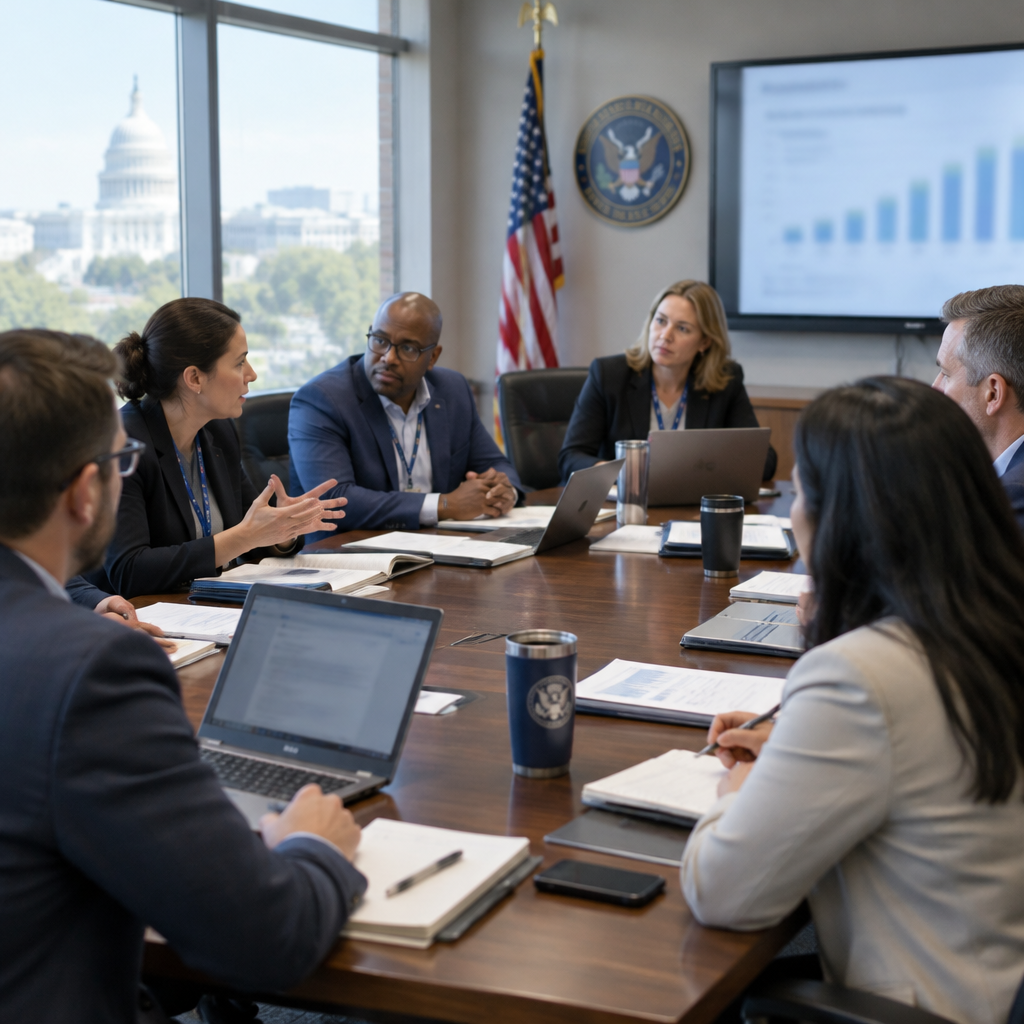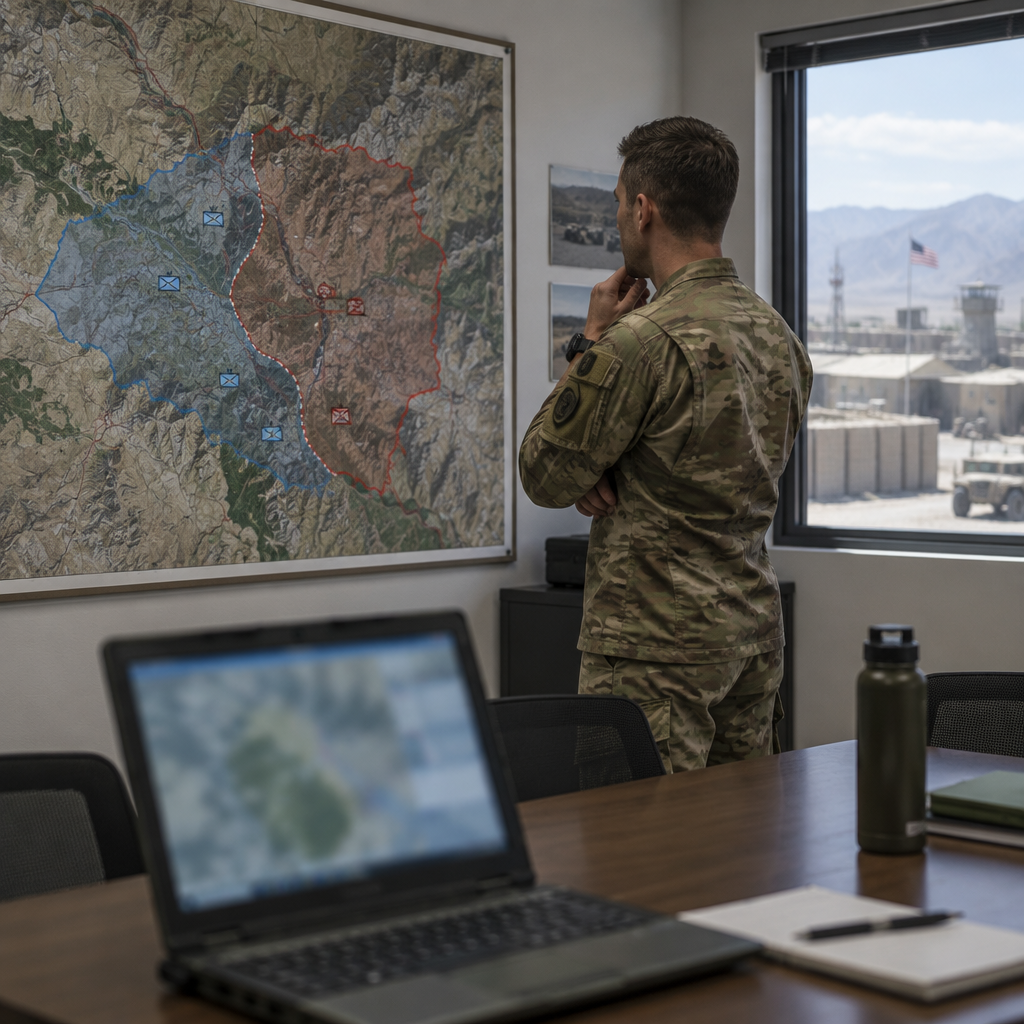
"For SI to be successful at the edge, you can’t just build a good model. You have to build the right model for the environment, the mission, and the operator who’s ultimately going to trust it and use it," said Bharat Patel, managing director for AI and data, defense portfolio, at Accenture Federal Services. That sentence frames the practical problem the Department faces when it moves super-intelligence (SI) from well-connected labs into contested, degraded, or disconnected battlefields.
What "the edge" means for a warfighter — definitions from the field
Accenture Federal Services staff define the edge not as a single technical topology but as a mission-dependent condition. Patel noted that "the edge means different things to different people" — it can be "a building overseas with on‑premises computing" or "a soldier in the field with a handheld device and limited connectivity." Cody Ferguson, principal architect for AI and data at Accenture Federal Services, emphasized that the edge exists "wherever the mission can no longer rely on traditional enterprise infrastructure" — the moment connectivity is degraded, denied, or disrupted, an enterprise-capable system becomes an edge problem.
Imagery, drones, and the limits of on-platform training
Most current edge activity centers on imagery collected by drones and other platforms, but Patel cautioned that "most of what’s happening at the edge right now is imagery-related" and that operational use of SI at scale remains limited. He explained the key technical distinction: during missions the systems are generally doing inference — applying a pre-trained model to new imagery — not training. Training, Patel said, is "a deliberate process that happens beforehand using dedicated compute and carefully curated data," and caching or local processing during a mission is not a substitute for formal retraining pipelines.

Audit-ready is a season. It shouldn't be.
Evidence in spreadsheets, controls drifting between audits, frameworks multiplying on flat headcount. Nubivance runs continuous compliance on Rapid7 Cyber GRC - SOC 2, HIPAA, ISO 27001, PCI, CMMC.
End the scrambleAgentic SI, LLMs, and surfacing what matters
Ferguson described agentic SI as a way to "multiply your army of data scientists" by using large language models (LLMs) to contextualize and prioritize insights. But he warned that "you can’t just feed that data to an LLM and expect it to surface the things you care about." Effective use requires “the right context and bounding” so the model focuses on historic indicators and unexpected signals alike. In operational terms, that means choosing models based on the specific data they are "best at processing and contextualizing" and constraining their search to the things operators have to act on under time pressure.
Trust, adversarial risk, and the lifecycle that builds confidence
Trust is the recurrent operational bottleneck in Patel and Ferguson’s view. Patel observed that faster SI outputs do not automatically translate into faster decisions if commanders must pause to validate recommendations. He tied trust to "testing, evaluation, and training" so operators understand "what the model does well, where it struggles, and how much confidence they should place in the output." Ferguson added that trust starts with provenance: "Where did the data come from? How was it collected? Has it been validated?" — questions that acquire heightened urgency in contested settings where adversaries could attempt data poisoning or model manipulation. Both argued that trust must be built throughout the lifecycle, not added as an afterthought.
What this means for AFWERX, DIU, In-Q-Tel, acquisition organizations, and warfighters
- AFWERX, DIU, In‑Q‑Tel: These organizations "play a critical role" by connecting the Department to companies that otherwise don’t navigate defense acquisition well; DIU, Patel said, has "made meaningful progress" by providing funding and lowering barriers between prototyping and operational use.
- Acquisition organizations and programs of record: Patel urged resourcing acquisition teams "earlier in the process" so they can shape requirements, plan for sustainment, run independent test and evaluation, and prepare capabilities for long‑term operational deployment rather than being brought in only after a prototype succeeds.
- Warfighters and commanders: Both Accenture leaders stressed that operators ultimately decide adoption. SI will be used when it "saves them time, helps them make a better decision, or gives them information they wouldn’t have had otherwise." If a capability requires infrastructure a unit lacks, Patel warned, "it’s going to fail no matter how impressive the demo was."
Patel and Ferguson converge on a practical diagnosis: SI’s technical promise is outpacing the institutional work required to make it operational. The hard tasks are not model design but the surrounding plumbing — data collection and labeling, lifecycle management, testing and accreditation, integration with constrained hardware, and training operators to understand model confidence and risk. As Patel put it, SI isn’t the hard part anymore; operationalizing it is.
For readers who want the source, the conversation appeared on Breaking Defense. Original story