"We're going to see an inject of new capability here in the very short term from JIATF 401, based on the latest and greatest in technology that's out there," Space Force Col. Brian Chatman said.
New counter-drone hardware headed for Cape Canaveral
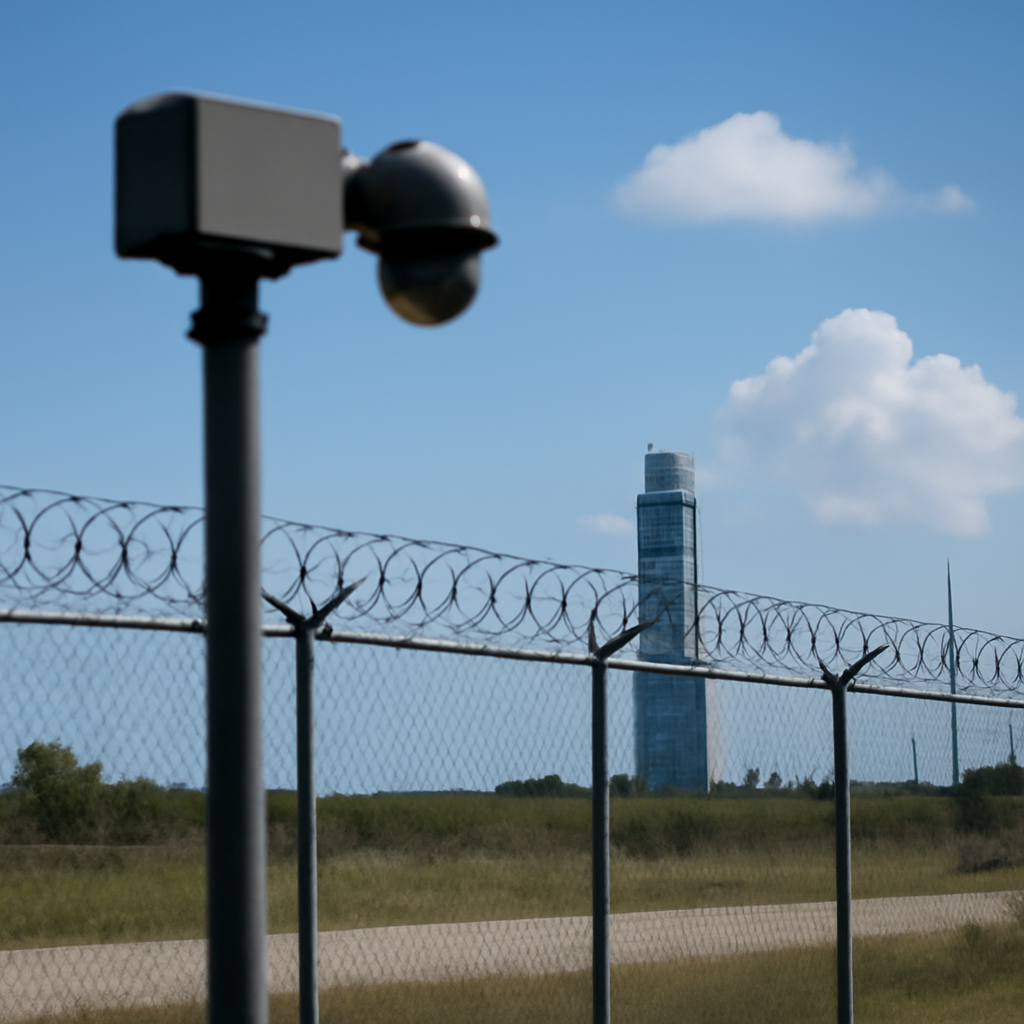
Cape Canaveral Space Force Station will receive additional defenses against small unmanned aircraft systems in the coming weeks, Col. Brian Chatman told Defense One. Chatman commands Space Launch Delta 45, the unit that oversees East Coast launch missions, and said Cape Canaveral is “top of [Joint Interagency Task Force 401’s] list” for new capability. He added the incoming systems “will be integrated in with everything we have today,” though neither Chatman nor a Space Launch Delta 45 spokesperson disclosed the specific technologies.
JIATF 401’s stated priorities and limits
The equipment will come from Joint Interagency Task Force 401, the Pentagon’s counterdrone task force. Lt. Col. Adam Scher, a JIATF 401 spokesperson, declined to discuss specific capabilities at particular locations but wrote that “our strategic installations are prioritized for c-UAS fielding.” Scher said the task force “work[s] in support of U.S. Northern Command and each of the Services to ensure their installations are protected from the illicit use of drones,” and cautioned that “there is no silver bullet” while the organization focuses on “accelerating the delivery of innovative capabilities at speed and scale.”

This site is the portfolio.
OSINTSights runs on Cloudflare Workers, D1, R2, and Vectorize, with an AI pipeline on Hetzner ARM. Nubivance designed, built, and operates it. We do the same for clients.
See what we buildWhy Cape Canaveral is a priority
The base is the nation’s busiest launch facility and central to broader launch plans. Cape Canaveral launched 109 rockets last year; its West Coast counterpart at Vandenberg Space Force Base supported 66. That tempo is being stressed by national objectives: the White House is pushing for 1,000 launches and re-entries by decade’s end, and Space Launch Delta 45 leaders view protection of launch facilities as a growing national-security priority.
Operational gaps: radars, small UAS, and infrastructure risks
Chatman described a specific sensor shortfall: current radars can see aircraft from a Cessna up to a 747, but not the smaller drones that pose an increasing risk. “It's great today that my radars can see a Cessna up to a 747,” he said, “but he needs to be able to detect a ‘747 down to a quadcopter.’” Independent analyses have highlighted other vulnerabilities. A June report from the Mitchell Institute for Aerospace Studies outlined potentially catastrophic scenarios—including mysterious explosions on the bridges that connect the cape to the mainland—that could put “East Coast launch operations at a halt.”
Private launch providers offering paid security upgrades
Security improvements are not coming only from the Pentagon. Chatman said one launch service provider has offered to fund an automated vehicle-scanning system to speed access to the base. He described the current inspection process as taking about 10 minutes to inspect and clear a truck; the proposed rapid-scan solution would allow a vehicle to drive through and receive a go/no-go determination in roughly 30 seconds. “This particular launch service provider is looking to cut a check to put that capability in because it increases their commitment, but also increases everyone else that has to have that inspection on their trucks on the throughput side of the house,” Chatman said.
Personnel shortfalls flagged by the Government Accountability Office
Technology alone will not cover all needs. A July Government Accountability Office report found that one-quarter of the jobs Space Force leaders say they need went unfilled in fiscal 2025, largely because the service could not track its personnel. One Space Launch delta official told GAO that “supporting increased space launch operations is becoming more challenging and unsustainable.” A Space Base delta official said a lack of funded civil-engineering positions is “leading to a higher risk of mission failure, and that the Space Force is taking risk against wartime readiness requirements and Joint Force needs.”
The GAO found that manning shortfalls forced one delta to close one of six fire stations in a squadron that could not “meet National Fire Protection Association safety standards.” The report said providing enough fire crew support for launches “leaves the remainder of the base vulnerable in case of an emergency.”
How the Space Force, the Air Force, and launch service providers are responding
- Space Force / Space Launch Delta 45: Advocating for additional personnel across Air Force support lines and integrating new c-UAS gear supplied by JIATF 401; Chatman said the mission “requires heavily on a partnership with the Air Force” for base operations support.
- Air Force (base operations support): Being asked to provide firefighters, security forces, and civil engineers to sustain increased launch operations, according to Chatman’s account of interservice coordination.
- Launch service providers: Moving beyond contractual operations to offer direct investment in base security and throughput technology—one provider has proposed funding an automated vehicle-scan system to reduce inspection times from about 10 minutes to roughly 30 seconds.
The incoming JIATF 401 hardware addresses an acute sensor and counter-UAS gap at a high-tempo launch hub. But the GAO’s staffing findings and the Mitchell Institute’s infrastructure warnings underline a simple reality: new devices will need to operate inside a base with enough trained personnel to use and sustain them. With new capability arriving “in the very short term,” the unresolved practical question is whether staffing and infrastructure investments will keep pace with both the technology and the White House’s ambitious launch goals.