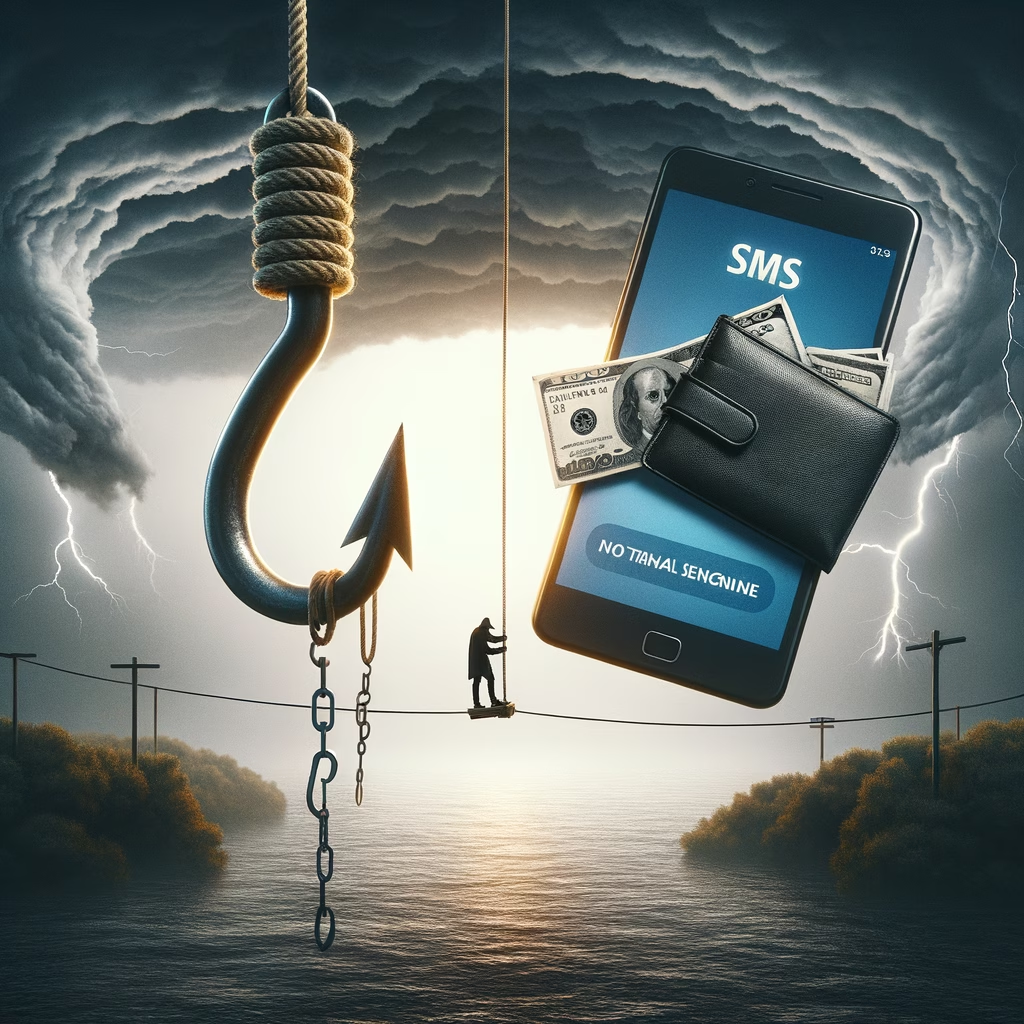
“I thought it was my package,” said a neighbor last week — and like millions of Americans she clicked a link in a terse, alarming text. What she got was not a carrier or a retailer but a machine-built trap designed to steal her card details and, increasingly, to move those details into mobile wallets where they are harder to detect and easier to monetize.
Security researchers tracking the recent surge in SMS phishing — often called “smishing” — say the campaigns now go beyond the old unpaid-toll or misdelivered-parcel ruse. China-based phishing groups that long peddled mass-text scams are offering turnkey phishing kits that let criminals spin up counterfeit e-commerce storefronts at scale and automatically convert harvested payment-card data into Apple Pay and Google Wallet credentials. At the same time, the SMS lures have broadened: victims are being baited with promises of unclaimed tax refunds or bonus mobile rewards points, not just overdue fees and packages .
That shift matters. Converting raw card numbers into tokenized mobile-wallet credentials gives fraudsters several advantages: it reduces friction for later purchases, can bypass some card-issuer fraud signals, and enables fraud that looks — at a glance — more legitimate on-device. The criminal innovation mirrors the legitimate commerce cycle: as consumers move to tap-to-pay and in-app checkout, attackers tailor their fraud to blend into that flow.
Background: a low-cost toolkit becomes an industry
Phishing kits are not new. For years, fraud-as-a-service providers have sold templates and scripts that clone bank login pages or checkout flows. What security analysts are now documenting is a new generation of kits optimized for short, convincing mobile landing pages and for the automated onboarding of credentials into mobile-wallet formats. These kits simplify infrastructure, spoof trusted brands, and are marketed to nontechnical actors who can send millions of SMS lures with minimal effort .
Operators couple these kits with SMS blasts that exploit human instincts: urgency, loss aversion, and the convenience of tapping a link on a phone. Recent campaigns impersonate tolling authorities (threatening fines), parcel carriers (delayed or redirected delivery), and — more alarmingly at this time of year — tax agencies and retail loyalty programs promising refunds or points. The result is a near-constant, rotating set of believable stories that keep click rates high and detection harder for recipients and defenders alike .
How the scams work in practice
- Victim receives a short, urgent SMS — e.g., a supposed unpaid toll, an unclaimed refund, or bonus loyalty points.
- Link directs the user to a mobile-optimized fake storefront or agency site that looks convincing on a phone screen.
- The site collects card data and personal information, then uses services or crafted procedures to convert those cards into mobile-wallet tokens for Apple Pay or Google Wallet, or immediately uses the cards to buy digital goods.
- Stolen credentials are funneled through resale markets or used directly for fraud that is more difficult to trace back to the original cardholder.
Technologists and threat analysts warn this combination — automated phishing kits plus wallet conversion — materially raises the bar for consumers trying to stay safe. Phishing pages that are fast, mobile-friendly, and brand-faithful are more persuasive, and tokenized credentials are a lucrative commodity for criminal resale. Analysts tracking these trends advise layered defenses: SMS filtering, message provenance verification, stronger authentication for wallet provisioning, and user education to verify through official apps or phone numbers rather than links in texts .
Policy and industry perspectives
Policymakers face difficult tradeoffs. Some responses are technical and operational: require carriers and messaging platforms to improve spoof-detection and to rate-limit bulk SMS from consumer-facing gateways; require router and IoT vendors to harden devices that can originate SMS; and push payment networks to flag or block abnormal tokenization events. Regulators can also press for stronger identity and advertising controls that make it harder to clone brand assets convincingly.
But regulation alone will not stop a global, commodified market for fraud. Enforcement against kit sellers — potentially across borders — can be slow and incomplete. That leaves consumers and businesses to adopt practical mitigations. Retailers can harden checkout verification; banks can monitor sudden wallet token provisioning as suspicious; and mobile-wallet vendors can require proof-of-possession measures that are harder for criminals to automate.
What users can do now
- Treat unexpected texts with skepticism: don’t click links in messages that demand immediate action. Use verified apps or official websites by typing the URL or calling known numbers.
- Enable payment notifications and monitor statements closely for suspicious activity. Set alerts for new card provisioning or large purchases.
- Harden devices: apply OS updates, use biometric or strong PIN protection for wallets, and limit which apps can add payment credentials.
- Report smishing to carriers and to the appropriate consumer-protection bodies so patterns can be tracked and blocked.
Adversaries will iterate as defenders respond. The commercialization of phishing kits makes this an unstable arms race: every defensive improvement begets an innovation on the other side. Analysts say the current wave is notable for scale and for the way attackers are engineering their fraud to match legitimate payment flows — a significant step beyond simple credential theft .
Why this matters beyond individual losses
When attackers move stolen card data into mobile wallets, the crime affects more than the cardholder’s immediate finances. It undermines trust in digital payments and loyalty programs, raises fraud costs for merchants and issuers, and can hurt consumers indirectly through higher fees or reduced fraud protection offerings. The holiday shopping season — when volumes spike and vigilance wanes — is precisely the window attackers target to amplify impact.
In the long run, the community that will be most effective comprises technical defenders, vigilant consumers, proactive merchants, and cross-border law enforcement working in concert. Public awareness campaigns that explain the new mechanics of wallet tokenization and show concrete steps to verify legitimate messages will help. So will industry actions to make tokenization and provisioning harder to abuse without sacrificing convenience for honest users.
These scams are a reminder that convenience and deception often share the same surface: a small, shiny button that says “Pay” or “Claim.” Will the systems that make digital life easier adapt fast enough to keep those buttons out of the hands of scammers?
Source: https://krebsonsecurity.com/2025/12/sms-phishers-pivot-to-points-taxes-fake-retailers/



