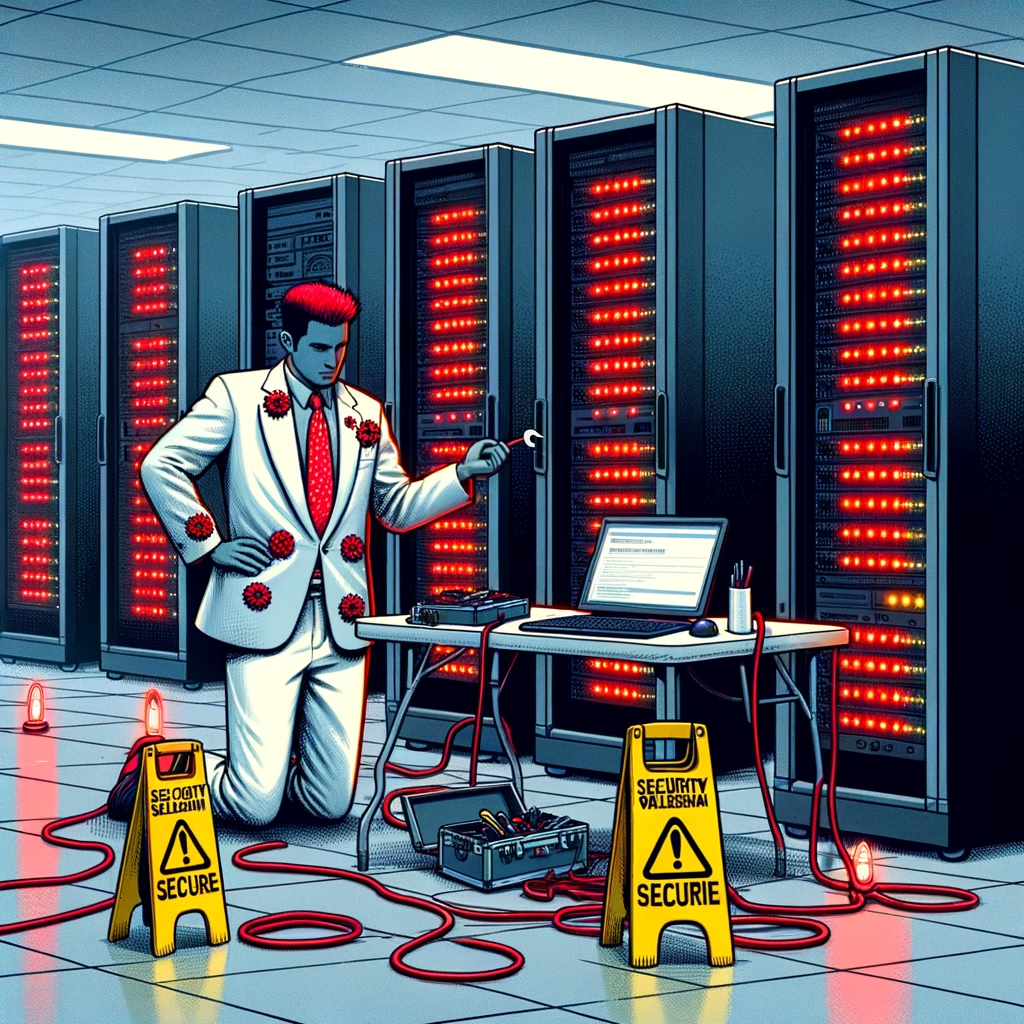
“How does a company entrusted with safeguarding digital assets end up undermining its own security infrastructure?” This question resonates sharply in the recent unraveling of a prominent security firm’s online presence, a collapse traced back to an unlikely hire—a used car salesman turned website manager. The incident has prompted a broader conversation about the consequences of misplaced trust in the tech domain and the vulnerabilities such decisions expose.
The firm in question, renowned for its cybersecurity consulting and digital defense solutions, recently experienced a website failure that left clients unable to access critical resources and stalled ongoing vulnerability assessments. According to insiders, the root cause was a hiring decision made not based on technical expertise but on salesmanship and persuasion skills—an approach that went disastrously wrong.

This episode recalls a troubling pattern chronicled in The Register’s “On Call” column, where organizational dysfunctions often stem from poor internal choices. The column highlighted an earlier cascade of issues, starting with a “dodgy lawyer” whose questionable guidance sowed confusion, followed by an “explosively angry HR person” whose mismanagement compounded the chaos. It was ultimately a whistleblower tech professional who stepped in to salvage the situation, risking their career to uphold the company’s technological integrity.
The decision to entrust website management to someone with a non-technical background—specifically, a former used car salesman—raises compelling questions about recruitment standards in cybersecurity firms. According to cybersecurity analyst Dr. Ellen Hayes of the Center for Digital Security, “Technical roles, especially those responsible for safeguarding a firm’s digital front door, demand rigorous vetting and demonstrated competence. A background in sales doesn’t translate into understanding web security protocols or infrastructure resilience.”
Compounding the issue, the website failure was not merely a technical glitch but a symptom of deeper organizational misalignment. Sources within the firm describe a culture where sales-driven metrics occasionally overshadow critical technical safeguards. “We noticed a shift in priorities over the last year,” said a former employee who requested anonymity. “The leadership wanted aggressive customer acquisition, sometimes at the expense of operational security.”
From a policy perspective, this incident underscores the fragility of digital trust when cybersecurity entities prioritize form over function. Policymakers have long advocated for stringent certifications and continuous education in cybersecurity roles to prevent such lapses. “This event should serve as a wake-up call,” remarked Maria Contreras, director of the National Cyber Workforce Alliance. “Organizations must align hiring practices with the specific demands of cybersecurity positions to protect not just their systems, but the broader digital ecosystem.”
Users affected by the outage expressed frustration not just over temporary service disruption but over the perceived negligence. Cybersecurity consultant Mark Randall emphasized, “Clients expect their security providers to lead by example. When those providers falter in basic operational integrity, it erodes confidence across the industry.”
Meanwhile, adversaries monitoring such failures may perceive these cracks as openings. The cyber threat landscape is unforgiving, and lapses—even if unintended—invite exploitation. This incident reminds the community that adversaries need only one vulnerability to compromise security, and internal missteps make those vulnerabilities more abundant.
In balancing this narrative, it is important to recognize the human element. Misjudgments in hiring and management decisions often stem from pressures to innovate, compete, and grow revenue streams. However, when core competencies are sidelined, the cost can be catastrophic.
Ultimately, this episode serves as a cautionary tale: in cybersecurity, technical proficiency is not optional, and organizational decisions must be guided by expertise as much as by strategy. As firms contemplate their talent acquisition and operational priorities, the question lingers—can the industry afford to gamble with security on the basis of charisma over capability?



