"We spend enormous amounts of money protecting the networks around our most important people. Then, at the end of the day, we send those people home." — the article
Connected consumer devices create a high-fidelity record of life
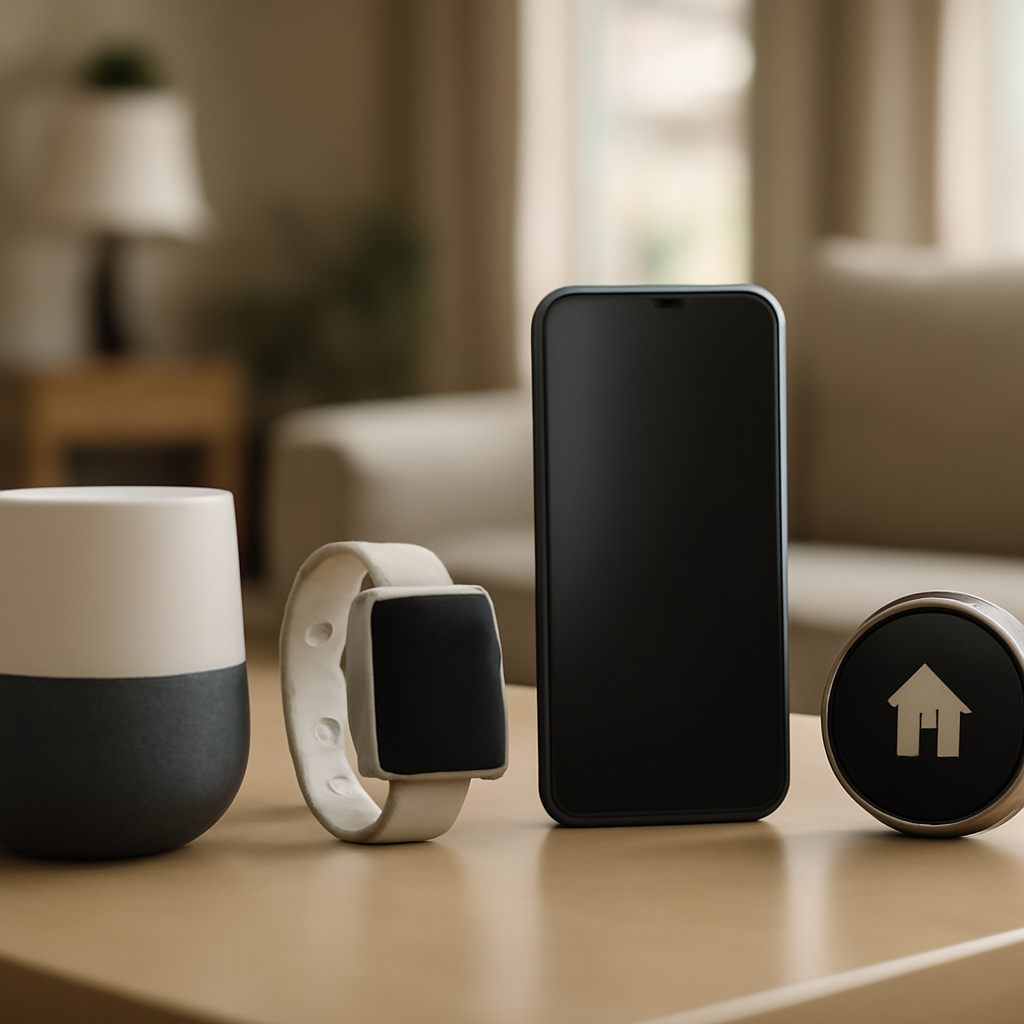
The assembled conveniences of modern life — a car that logs locations and records in-cabin audio, a watch that tracks heart rate and biorhythms, an AI assistant that reads calendars and messages, and a five‑year‑old router linking them all — form what the article calls "a high-fidelity record of a life." Very little of that information, the piece warns, remains exclusively inside national borders once it is collected. The risk is not only to individual privacy; for some people it becomes a question of national resilience.
Vehicle security and the BYD Shark 6 example
The story cites an ABC Four Corners investigation that "just this week" demonstrated a security researcher remotely manipulating a BYD Shark 6, including tracking its location and accessing its microphone. Vehicle telemetry, the article notes, routinely moves to a manufacturer's cloud where local laws can compel access — a dynamic that makes consent in Australia "worth only as much as the jurisdiction where the data comes to rest."

This site is the portfolio.
OSINTSights runs on Cloudflare Workers, D1, R2, and Vectorize, with an AI pipeline on Hetzner ARM. Nubivance designed, built, and operates it. We do the same for clients.
See what we buildLegal reform: the Privacy Amendment (Personal Data Protection) Bill 2026
The draft Privacy Amendment (Personal Data Protection) Bill 2026 — whose consultation closed on 18 September — is described as "the most substantial rework of Australian privacy law in a generation." The draft introduces a fair and reasonable test for collection, use and disclosure of personal information, tightens consent, and creates a right to have information erased by large digital platforms. It is explicitly framed against emerging technologies, including AI and wearables. But the article stresses two shortfalls: the bill focuses on data collection and leaves rules on overseas disclosure untouched; and privacy law by itself does not mandate technical measures such as isolating car brakes from an infotainment system or guaranteeing security updates for smart TVs.
Standards and origin-aware risk assessment: UN Regulations 155 and 156
To address technical security gaps, the article points to the government's consultation on adopting UN Regulations 155 and 156 as Australian Design Rules as "the key instrument," paired with origin‑aware risk assessment for critical connected technology. The piece emphasises that enforceable technical standards are required to ensure devices receive updates and that insecure components are appropriately isolated.
Supply-chain realities and government strategy on foreign suppliers
China is now the largest single source of new vehicles sold in Australia, accounting for a third of the market "this year and rising," the article reports. That concentration extends through modules, chipsets and cloud services inside products carrying European and Korean badges. As a result, the piece argues, banning suppliers from a single country is no longer viable; governments have instead moved to managing foreign ownership, control and influence "by assessing exposure, mandating standards and regulating access rather than presence — working with the manufacturers."
What this means for technologists, policymakers, and executives
- Technologists and security teams: Expect a push toward origin‑aware risk assessment and adoption of UN Regulations 155 and 156 as Australian Design Rules; technical standards will be the lever to enforce isolation and updates beyond privacy law alone.
- Policymakers and regulators: The draft Privacy Amendment Bill 2026 tightens consent and adds a right to erasure, but must still contend with cross‑border disclosure and the limits of data‑centric law when technical isolation and update mandates are required.
- Executives and high‑risk individuals (bank, telecom, energy and ASX 200 leaders): The Protective Security Policy Framework covers protections only in the workplace. At home, personal devices and routers remain largely outside that framework — a gap the article compares to the UK's National Cyber Security Centre services, which filter malicious sites for enrolled personal devices and alert users to account compromise.
The article also warns that technical fixes must not be replaced by blunt expansions of corporate control into household environments. A VPN, it notes, cannot determine whether a home router is compromised, patch a smart TV, isolate an insecure camera, or prevent credential theft via convincing phishing messages — and it shifts trust to the VPN provider, which "deserves far more scrutiny" when the user is a cabinet minister or ASX‑listed CEO.
Industry has a role alongside government, the piece argues: trusted consumer solutions that minimise data collection, manage retention, and mobilise a response to digital attacks. Just as communities add alarms and guards to police services, so too should digital protection be layered — data sharing off by default, plain statements of where data is processed and under whose law, and an end‑of‑support date printed on the box.
As more everyday devices carry information with strategic or economic value, the number of people whose personal digital security matters will expand. The policy and technical choices made now — from adopting international vehicle security rules to clarifying cross‑border disclosure — will determine whether those choices truly empower consumers, institutions and the state to protect the person, not just the network.
Source: Protect the person, not just the network — The Strategist (ASPI)