“Britain is serious about the transition to a Hybrid Navy with new, powerful drones at the heart of the Royal Navy.” — Luke Pollard MP
Exercise Neptune Reach off the south coast of England
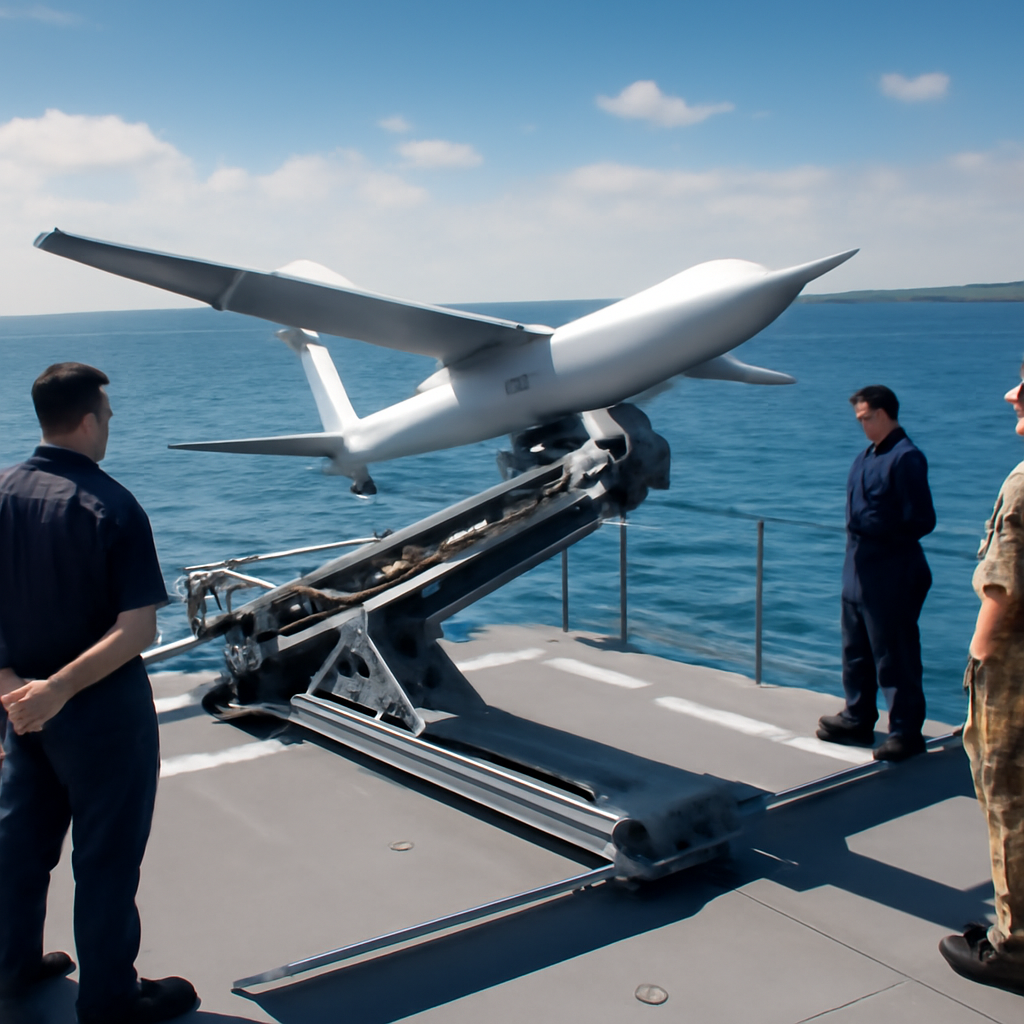
In a shore-to-sea step for the United Kingdom’s naval experiments, the Royal Navy launched a Nyan one-way effector from the experimentation ship XV Patrick Blackett during Exercise Neptune Reach. The catapult launcher was installed on the ship’s deck, operators programmed the drone to fly to a specific target, and the Nyan flew to that point autonomously while the ship was underway. Personnel involved included the Royal Navy’s 744 Naval Air Squadron, 26 Royal Artillery of the British Army, and the Royal Air Force.
Nyan’s design, cost and performance
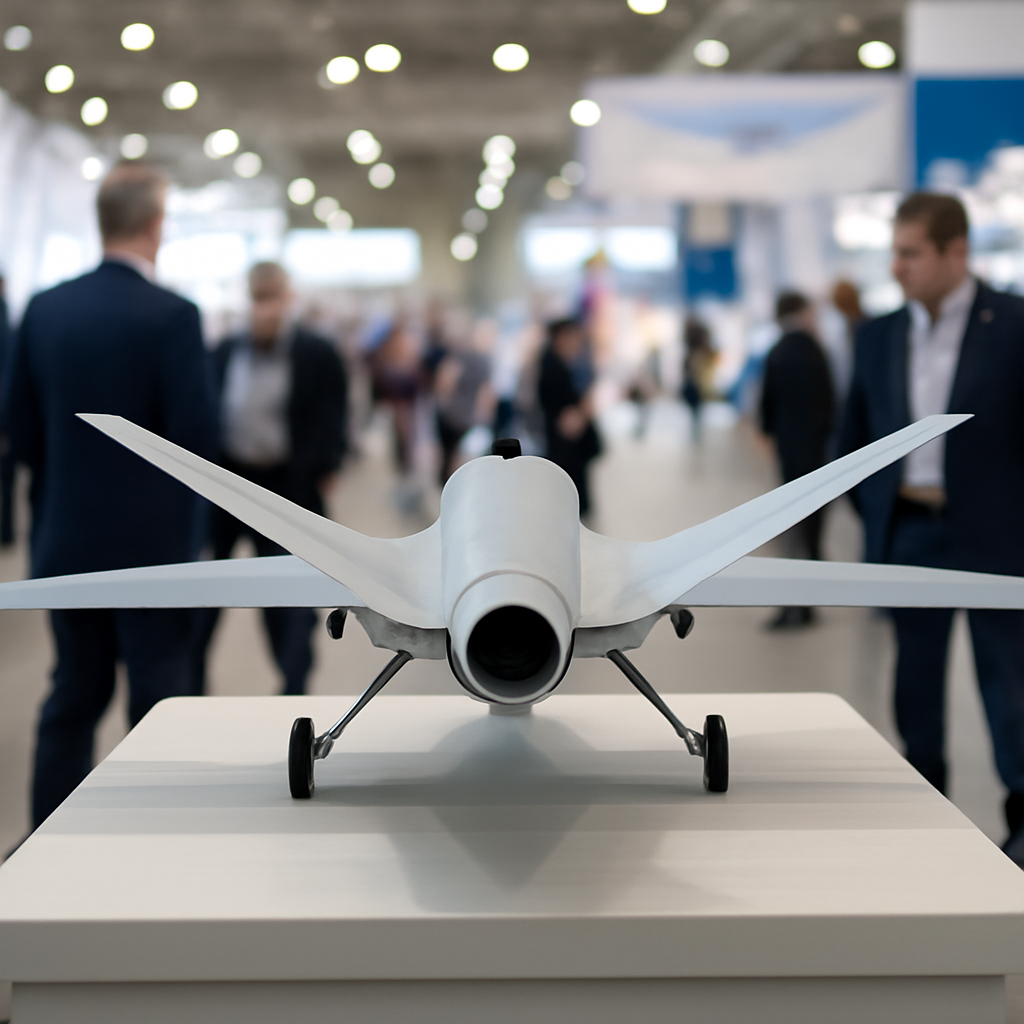
Developed from 2022 by Callen-Lenz, a subsidiary of BAE Systems, the Nyan is a jet-powered, single-use strike drone built mainly of carbon fiber and driven by a small turbojet engine. The manufacturer lists a unit cost of less than £100,000 (about $132,000), and Matt Foster, CEO of Callen-Lenz, said the system is already in quantity production with more than 1,000 units manufactured so far. The Nyan has a wingspan of roughly 9.5 feet, a reported range of more than 93 miles (150 kilometers) — which the Royal Navy’s coverage notes is a greater distance than the Harpoon anti-ship missile — and includes design features intended to reduce detectability, such as a stealthy exhaust nozzle.

Audit-ready is a season. It shouldn't be.
Evidence in spreadsheets, controls drifting between audits, frameworks multiplying on flat headcount. Nubivance runs continuous compliance on Rapid7 Cyber GRC - SOC 2, HIPAA, ISO 27001, PCI, CMMC.
End the scrambleProject Vantage, the Hybrid Navy and carrier trials
The maritime tests were one element of tri-service Project Vantage, an initiative focused on rapidly testing and delivering one-way effectors for the fleet and explicitly tied to the Ministry of Defence’s push toward a so-called Hybrid Navy. Lt. Cmdr. David Burton, the Maritime One-Way Effectors Capability Sponsor with the Royal Navy, said the trial “makes a significant step forward in delivering maritime one-way effectors at pace.”
The Defense Investment Plan released earlier in the week also flagged development of hybrid carrier air wings and noted future trials of jet-powered drones from the carriers. BAE Systems has outlined potential further Nyan trials aboard HMS Queen Elizabeth, and the review of carrier evolution in the Ministry of Defence’s last Strategic Defense Review described plans to pair crewed combat aircraft with autonomous collaborative platforms and expendable, single-use drones.
Operational history and production posture
The Nyan is not an experiment-only item: its introduction followed a sequence of land and combat employment. The drone made its combat debut in Ukrainian hands, was used in Exercise Spring Storm in Estonia in support of NATO allies, and was then adopted by the British Army’s Royal Artillery for operational service. Those land tests preceded the sea trials from XV Patrick Blackett; the maritime tests were explicitly intended to explore how the system could be operated from a moving ship.
Callen-Lenz’s production numbers and the system’s low per-unit cost reflect a deliberate procurement posture: Nyan is positioned as an affordable, tactical precision weapon designed for expendable use and mass employment rather than as a long-range, high-payload platform.
What this means for the Royal Navy, Callen-Lenz, and NATO allies
- Royal Navy: The trial advances integration under Project Vantage and supports the stated aim of a Hybrid Navy that mixes crewed platforms with uncrewed systems. The service has signalled the trials pave the way for further experimentation and potential wider deployment across the fleet, and the Defence Investment Plan foreshadows carrier-based jet-drone trials.
- Callen-Lenz / BAE Systems: With over 1,000 units made and a stated unit cost below £100,000, the manufacturer is positioned to supply quantities for experimentation and operational stockpiles; the company has also proposed adapting Nyan for other payloads or scaling it for greater range or endurance.
- NATO allies and Ukraine: Allies have already trained alongside the system in Estonia, and Ukraine’s combat use provides operational feedback. Those experiences will inform both tactics for massed, short-range strike and how allied forces coordinate use of one-way effectors in combined operations.
The Nyan sea launch is, by the Royal Navy’s lights, a material step toward a lower-cost, higher-tempo “hybrid” fleet that pairs crewed and uncrewed systems. Yet the platform itself remains a relatively modest strike tool — subsonic, with a likely small warhead and tactical reach — that is valuable primarily for affordability and mass employment. The trial demonstrates the practicality of launching low-cost autonomous strike systems from a moving ship and sets a clear path for further experiments: integrating these weapons into carrier air wings, testing carrier launches, and evaluating how quantity and autonomy change ship and fleet-level tactics.
Original story: TWZ — Royal Navy’s Sea Launch Of Combat-Proven Nyan Kamikaze Drone Points To Fleet’s ‘Hybrid’ Future