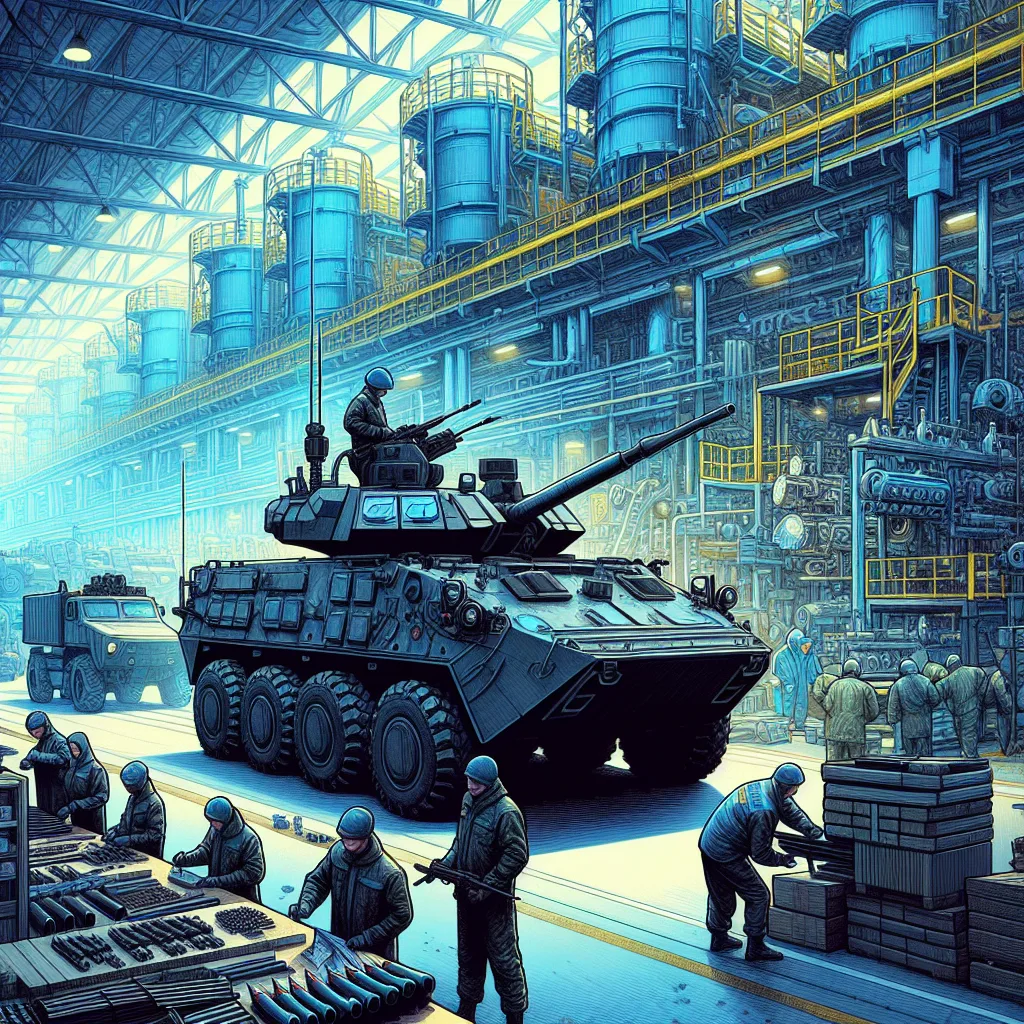
Roshel Launches Domestic Armored Vehicle Production Amid Ukraine’s Shifting Defense Landscape
Canadian armored vehicle manufacturer Roshel has taken a significant step toward elevating Ukraine’s defense manufacturing capabilities by commencing domestic production operations. The move, confirmed by Roshel CEO Roman Shimonov during the “Defending Ukraine’s Future” security and reconstruction conference, signals a deeper integration of advanced weaponry into the nation’s evolving security framework. With the production facility reportedly opened two months ago—though its precise location remains undisclosed—the development reflects both a response to heightened security imperatives and an effort to bolster local industry in the midst of ongoing geopolitical tensions.
During the conference, Mr. Shimonov underscored the importance of the new facility, noting that it represents not only a business expansion but also a strategic commitment to Ukraine’s defense sector. Ukraine’s state news agency Ukrinform has since verified these details, framing the initiative as part of a broader trend where local and international actors align their industrial assets with national security goals.
Historically, Ukraine has navigated a complex path in balancing external partnerships and domestic industrial capacity, particularly in the defense arena. Since the onset of regional conflicts and evolving global security dynamics in the early 2010s, the nation has steadily pursued greater self-reliance in defense production. This trend has been accelerated in recent years as Ukraine seeks to reduce its dependency on external arms suppliers while modernizing its military forces to address emerging threats.
The move by Roshel is significant in this broader context. Canadian expertise combined with on-the-ground production in Ukraine provides an intriguing blueprint for how international cooperation and domestic capability building can converge. Experts have noted that the blending of foreign technical proficiency with localized production benefits not just the military apparatus but also the economy as a whole by creating jobs, fostering innovation, and establishing a more resilient industrial base.
Roshel’s decision follows a global pattern where conflicts or the threat of emerging tensions force nations to reassess their supply chains and industrial protocols. Production on home soil can significantly reduce turnaround times for critical repairs and upgrades, and it embeds a level of sovereignty into operational readiness that is otherwise compromised by reliance on imports. Manufacturers like Roshel, with a background rooted in advanced armored vehicle technology, are well positioned to integrate best practices from North America while adapting these innovations to the specific terrains, operational doctrines, and logistical realities of Ukraine.
Within Ukraine, the start of production is being hailed as a critical gain in the country’s long-term strategy to modernize its defenses. The emphasis on domestic production parallels broader governmental reforms that seek to integrate local industries with national security objectives. Such efforts are part of an overarching plan to ensure that Ukraine remains agile in the face of rapidly evolving defense challenges, particularly in an era where technological sophistication and battlefield adaptability are increasingly vital.
Analysts from independent security research groups have emphasized the potential long-term benefits of integrating international know-how into locally based production lines. According to verified data from defence white papers published by NATO member states, the establishment of domestic production facilities aids in tailoring armored vehicles to meet specific national and environmental conditions. This level of customization can be pivotal in ensuring that vehicles perform optimally under varied combat scenarios—from urban engagements to extended operations in remote areas.
The strategic rationale behind Roshel’s production shift is multifaceted. On one level, it addresses immediate operational needs by providing Ukraine with a localized supply of critically needed equipment. On another, it is indicative of a trend where global supply chains are increasingly realigned toward domestic production facilities—a trend spurred by both logistical challenges and the imperative of maintaining technological superiority. In an environment where warfare often transcends conventional battlegrounds, ensuring a steady, rapid, and responsive supply chain has become as critical as the design and capabilities of the equipment itself.
Prominent defense experts, such as John R. Allen, a well-known strategist and former head of U.S. Central Command, have previously emphasized the importance of local production capabilities in modern military operations. As reported in recent analyses, domestic manufacturing ensures better control over quality, modification, and rapid scale-up when threats escalate. While Mr. Allen’s assessments were made in broader terms regarding defense manufacturing, the principles have clear resonance with Roshel’s decision to establish operations in Ukraine.
For Ukrainian policymakers, this development dovetails with ongoing shifts in national defense strategy. Ukrainian Government officials have long stressed the need for modernization, frequently citing the benefits of localized manufacturing. By investing in internal production capabilities, the nation can mitigate the risks of supply disruptions, which have become more acute given international political uncertainties and previous challenges in securing dependable sources of military equipment.
Beyond the immediate security benefits, there are notable economic ramifications. The emergence of a domestically based production facility signals potential spillover effects into ancillary sectors such as advanced materials, electronics, and logistics. Economic analysts at the Ukrainian Ministry of Economic Development have observed that such investments can catalyze broader industrial growth, ultimately contributing to job creation and ancillary technological innovations that benefit the civilian economy as well.
Yet, the initiative is not without its inherent challenges and multifaceted considerations. As Ukraine enhances its self-sufficiency in defense production, questions remain regarding the sustainability of supply chains for specialized components, the adaptability of existing labor forces to new technological demands, and the long-term integration of international standards into local practices. Industry specialists warn that rigorous quality control mechanisms must be continually refined to meet both operational and regulatory standards.
There is also an interesting diplomatic dimension at play. The establishment of Roshel’s facility on Ukrainian soil underscores the broader international commitment to Ukraine’s stability and resilience. In a region where alliances and strategic partnerships are continually recalibrated, a robust defense production base reflects not only military intent but also a deep-seated confidence in the enduring relationships between Ukraine and its Western allies. European defense bodies have, in multiple forums, highlighted such initiatives as examples of how transnational cooperation can yield tangible benefits on the ground.
Moreover, this development has the potential to recalibrate the competitive landscape for armored vehicle design and production in eastern Europe and beyond. The integration of Canadian manufacturing expertise with locally driven innovation may set new benchmarks for reliability, versatility, and operational effectiveness. This synthesis could well serve as a model for other nations facing similar security imperatives, thereby influencing future defense contracts and strategic procurement decisions across the region.
As the situation unfolds, stakeholders on all sides will be closely watching for signs of both success and potential challenges. Military operators, in particular, will be keen to see how the vehicles perform in rigorous field conditions over extended operational cycles. Should the vehicles meet or exceed performance expectations, they could pave the way for further investments in localized defense production and encourage international partnerships on a broader scale.
Looking ahead, several key indicators will be critical in determining the long-term impact of Roshel’s domestic production initiative in Ukraine. The pace at which the facility can scale up production, the ability to secure a steady supply of high-grade materials, and the evolving operational feedback from Ukrainian forces will all serve as important metrics for success. Furthermore, broader geopolitical shifts and budgetary considerations will influence whether this model of localized manufacturing is replicated in other sectors or countries.
In this context, defense analysts point to several questions that remain to be answered: Can Ukraine leverage this new production facility as a springboard for further technological innovation? Will enhanced domestic production capabilities translate into strategic advantages on future battlefields? And, crucially, can this initiative help insulate Ukraine from the uncertainties of global supply chains in times of elevated tension?
In conclusion, Roshel’s commencement of domestic armored vehicle production in Ukraine marks a noteworthy inflection point in the region’s defense narrative. It encapsulates the convergence of strategic necessity, economic ambition, and international partnership, all while underscoring the challenges and opportunities inherent in modern defense manufacturing. As Ukraine and its allies look to the future, the success of such initiatives will likely play a pivotal role in shaping not only military outcomes but the broader contours of security and stability in an increasingly unpredictable global landscape.
With each new chapter in this evolving story, the stakes remain high—and as history has often shown, the true measure of success may rest as much on industrial resilience as on battlefield triumphs.