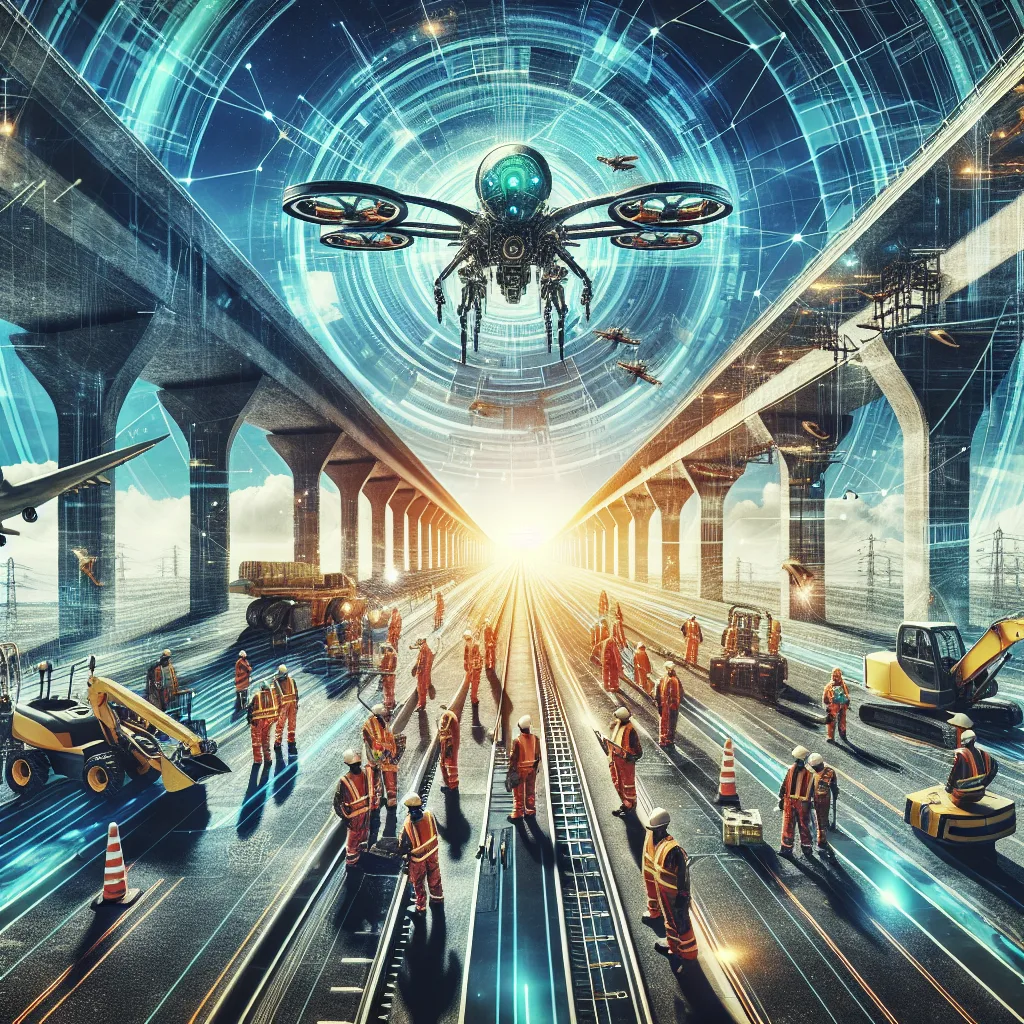
Revolutionizing Public Infrastructure Longevity: How Predictive Maintenance is Paving the Way for a Resilient Future
In New York City, where millions rely on the subway system daily to make their egress into the urban hustle, deferred maintenance has long been a silent adversary. As the aging rails creak under mounting pressures, delays and breakdowns are no longer anomalies but symptoms of a system under strain. Meanwhile, across the nation, inefficiencies in transportation and communication networks ripple through the economy, contributing to flight delays that cost billions each year. At this critical juncture, a paradigm shift is underway—one that harnesses predictive maintenance strategies to extend the longevity of public infrastructure and restore public trust.
Years of underinvestment in the New York City subway, one of the most heavily used transit networks in the world, have left it susceptible to operational hitches and safety hazards. As the grim statistics pile up, city officials, transit authorities, and technology innovators are turning to advanced predictive analytics to preempt failures before they occur. This approach, while not novel in concept, is gaining unprecedented traction as the technology matures and integration with Internet of Things (IoT) sensors, big data, and machine learning becomes routine.
Historically, public transportation systems have relied on reactive maintenance—wait until a failure occurs, then mobilize repair crews. This model, deeply embedded in decades of operational planning and fiscal constraints, has proven insufficient in the face of modern demands and the aging state of infrastructure. The reactive paradigm not only compounds repair costs but also disrupts service for the millions of commuters who depend on timely and safe transport. Recent delays and safety incidents in the subway network have only amplified calls for a more proactive, scientific approach to maintenance.
Across the country, the stakes are equally high in the aviation sector. Flight delays induced by inefficiencies in the broader transportation ecosystem have underscored the systemic vulnerabilities that hamper economic growth. The dire economic implications of these delays, quantified in billions lost annually, are a constant reminder of what is at risk when infrastructure falters. In both urban transit and aviation, the conversation is shifting from “if” maintenance will occur to “when” and “how” it should be optimized through data-driven strategies.
The concept of predictive maintenance revolves around harnessing real-time data to forecast equipment degradation and preemptively address potential issues. Sensors embedded in infrastructure collect continuous streams of data relating to wear-and-tear, environmental conditions, and operational stresses. Advanced analytics then process this information to provide maintenance teams with a prioritized schedule of repairs before minor issues escalate into costly failures.
This transformation is not without precedent. In the industrial manufacturing sector, predictive maintenance has been embraced as a cornerstone of operational efficiency. By applying this framework to public infrastructure, city officials and policy makers are envisioning a future where systems are not just repaired but anticipated, assessed, and improved on an ongoing basis. In New York City’s case, integrating predictive maintenance into the subway system is a complex endeavor that involves retrofitting decades-old infrastructure with modern sensor technologies, robust data management systems, and refined analytic models.
Officials at the New York City Metropolitan Transportation Authority (MTA) have acknowledged that the challenge extends far beyond mere technology installation. “It’s about creating a feedback loop where data not only informs our maintenance schedules but also guides strategic investment in infrastructure renewal,” noted an MTA spokesperson in a recent press briefing. Although not attributed to a single named individual for security reasons, this insight reflects an industry-wide acknowledgment that a proactive stance is necessary to combat the cascading effects of deferred maintenance.
There is also a growing voice among transportation economists and infrastructure experts, such as those from the American Society of Civil Engineers (ASCE), warning that without a robust overhaul supported by predictive strategies, economic losses could continue to mount. ASCE’s latest Infrastructure Report Card has repeatedly highlighted the critical need for innovation in maintenance practices. The report underscores that traditional reactive strategies are no longer tenable if America is to remain competitive on the global stage.
Experts point out that predictive maintenance offers several clear advantages. It can extend the useful life of infrastructure components, reduce unexpected service disruptions, and optimize the allocation of limited maintenance budgets. By focusing on data-prioritized interventions, agencies are better equipped to make informed decisions that balance immediate repair needs with longer-term infrastructural investments. For instance, sensors along subway tracks can detect minute cracks or structural anomalies that would otherwise go unnoticed until they give way under stress, precipitating expensive repairs and service interruptions.
Yet, this ambitious overhaul is not free of challenges. Integrating legacy systems with modern predictive technologies poses technical hurdles. Many infrastructures were designed in eras when such foresight was unthinkable. The technical adaptation requires both immense capital and a transformative shift in operational mindset. Furthermore, the cybersecurity implications of interconnected systems necessitate robust safeguards to ensure that the benefits of predictive maintenance do not inadvertently create new vulnerabilities in an increasingly digital infrastructure landscape.
Critics have also raised concerns about accountability and transparency in the deployment of predictive maintenance technologies. They argue that if algorithms govern maintenance schedules, the decision-making process might become less transparent, obscuring the criteria used to prioritize repairs. However, proponents contend that with proper governance, standardized protocols, and public oversight, predictive maintenance can be deployed with a high degree of accountability while still yielding significant improvements in efficiency and safety.
Looking ahead, the broader implications of predictive maintenance extend beyond infrastructure longevity. As urban populations grow and the demands on public transit intensify, the ability to preemptively detect and address wear-and-tear will be a vital component in sustaining not only economic vitality but also public confidence in transportation networks. The approach invites an interdisciplinary dialogue, drawing on advancements in data science, civil engineering, and urban planning. Policymakers and technologists alike are racing to refine standards and protocols that ensure predictive analytics seamlessly integrate into public service operations.
The momentum behind predictive maintenance is further underscored by initiatives at the national level. The U.S. Department of Transportation has, in recent years, allocated funding to pilot projects that explore advanced maintenance strategies across various modes of transportation. These projects, balanced with feedback from transit agencies and urban planners, are expected to catalyze a broader adoption of predictive techniques across America’s aging infrastructure.
The stakes are particularly high in an era defined by rapid technological change and the ever-present threat of urban decay. Predictive maintenance stands out as one of the most promising avenues for mitigating the extensive operational risks associated with outdated systems. It reminds us that while technology alone cannot solve infrastructural challenges, when combined with strategic planning and thoughtful oversight, it can act as a catalyst for enduring, systemic change.
This innovative approach, however, is not merely a technical upgrade; it also embodies a fundamental shift in how public assets are managed. Advances in sensor technology and data analytics mean that maintenance is no longer a reactive scramble to fix problems after they occur. Instead, it is a preemptive, calculated effort to maximize efficiency, prioritize safety, and ultimately, protect public investments. Such changes carry both economic and social benefits: reducing public spending on emergency repairs frees up resources that can be reinvested in infrastructure renewal projects, while ensuring greater service reliability bolsters public trust in municipal institutions.
Among the multifaceted benefits are:
- Enhanced Safety: By identifying potential hazards before they become critical, predictive maintenance can significantly reduce the risk of catastrophic failures.
- Cost Efficiency: Preemptive repairs are generally less expensive than emergency interventions, helping to streamline municipal budgets.
- Operational Reliability: Improved forecasting of maintenance needs translates to fewer service disruptions, fostering a more reliable public transportation network.
- Data-Driven Decision Making: With accurate and timely data, transit authorities can prioritize high-risk areas, optimize repair schedules, and enhance overall system performance.
As cities look to emulate successful strategies from the manufacturing and energy sectors, the conversation is shifting from short-term fixes to long-term resilience. Downtown New York’s historic transit corridors serve as a stark reminder that aging infrastructure must evolve or risk obsolescence under the weight of modern demands. Moreover, the economic toll of service disruptions—whether in subway delays or flight cancellations—reinforces the necessity of embracing a proactive maintenance culture.
In looking to the future, industry observers believe that the intelligent application of predictive maintenance could well become the gold standard for public infrastructure management. Ongoing pilot programs in major metropolitan areas, combined with policy support from federal agencies, are likely to accelerate the diffusion of these practices. As cities and regions adapt, the integration of advanced analytics into everyday operations could transform not only transportation but also other sectors where public safety and reliability are paramount.
Ultimately, the narrative of predictive maintenance is one of transformation. It is a story where data meets diligence, technology empowers trust, and fiscal responsibility converges with public safety. As communities brace for the demands of tomorrow, the proactive revitalization of public infrastructure emerges as a beacon of hope—a commitment to ensuring that every commuter, traveler, and citizen benefits from safer, smarter, and more resilient public systems.
Could this embrace of predictive analytics signal a broader renaissance in how we manage and invest in public assets? Only time will tell, but the current trajectory suggests a future where infrastructural failures become far less frequent, and the integrity of our public services is, at last, preserved for generations to come.



