"This story is interesting:" — a blog post on schneier.com
A Civic owner, an Amazon purchase, and Claude
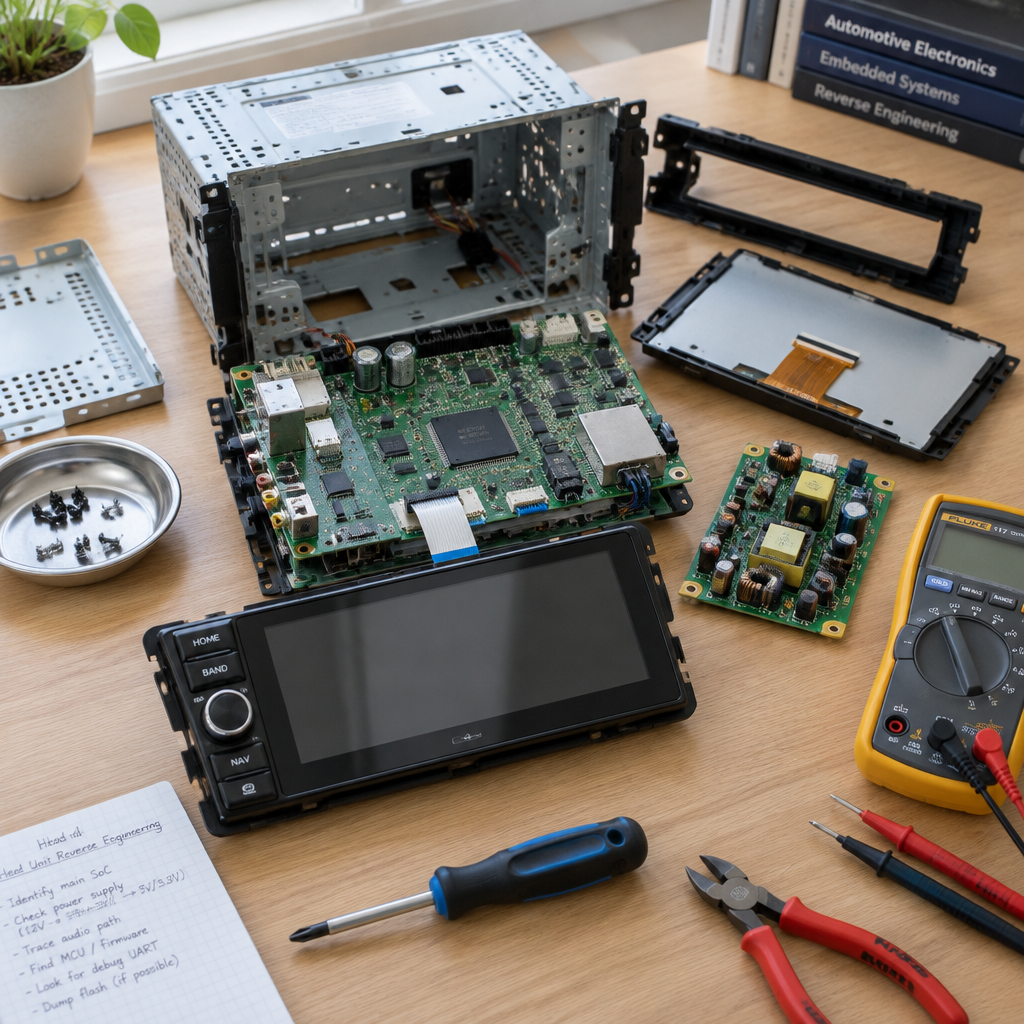
One Civic owner bought a cheap aftermarket head unit from Amazon and treated it "like it would a smart TV" by asking Claude to inspect its software, the blog post reports. What the owner and the AI found was a collection of pre-installed applications and services — described in the post as "bloatware—or spyware, if you’re being less charitable" — that raised questions about performance, privacy, and the security posture of inexpensive in-car electronics.
Preinstalled software cataloged: voice assistant, Baidu, call recorder, DAB client, Adobe Acrobat
The reverse-engineering effort reportedly turned up specific items sitting on the unit out of the box. Among them were a voice assistant that embeds WebView (an Android system component that lets apps display content off the web), Baidu location services, a call recorder, a DAB radio client that the post notes is "pretty much useless in the U.S.," and Adobe Acrobat, "presumably so your passenger can entertain themselves with PDFs on the go."

Audit-ready is a season. It shouldn't be.
Evidence in spreadsheets, controls drifting between audits, frameworks multiplying on flat headcount. Nubivance runs continuous compliance on Rapid7 Cyber GRC - SOC 2, HIPAA, ISO 27001, PCI, CMMC.
End the scrambleWebView consuming about a third of processing power, even idle
The post highlights a striking technical detail: the voice assistant's use of WebView "apparently always used about a third of processing power, even while idle, which isn’t great." The blog explains WebView as "an Android system component that lets apps display content off the web," and points to the constant CPU load as both a performance problem and a practical indicator of how embedded internet-capable components behave inside aftermarket automotive hardware.
Reverse-engineering with AI and what that reveals
The piece frames the discovery not only as an example of insecure or unnecessary software on a head unit, but also as a signal about tools and capability. The author writes that the episode "exposes all the insecurities in this piece of IoT software," and emphasizes the broader point that a "random person was able to do this reverse-engineering with the help of AI." The closing observation is candid: "Expect a lot more stories like this in the future."
What this means for technologists, end users, and procurement leaders
- Technologists and security teams: Watch for embedded WebView components and always-on network-capable assistants in aftermarket units; the reported constant CPU use is a clear telemetry signal that an app is active even when it should be idle.
- End users and drivers: Be aware that inexpensive head units may ship with location services (Baidu was found) and call recording functionality preinstalled, and that some bundled features (a DAB client) may be irrelevant in your region yet still consume resources.
- Procurement leaders and buyers: A low purchase price from a marketplace like Amazon does not guarantee a minimal or benign software footprint; bundled apps such as Adobe Acrobat appeared simply to provide passenger entertainment while also increasing the device's attack surface.
Two facts anchor the account: specific preinstalled components were enumerated, and an ordinary buyer, aided by an AI (Claude), produced the analysis. Together those facts make a narrow but pointed observation — inexpensive, internet-capable aftermarket auto parts can arrive with a surprising collection of active software, and increasingly accessible tools will make those software stacks visible to more people. For anyone who buys or supports such devices, the question left by the post is direct: if a random buyer can pull back the curtain so readily, what will professional researchers, regulators, or malicious actors find next?