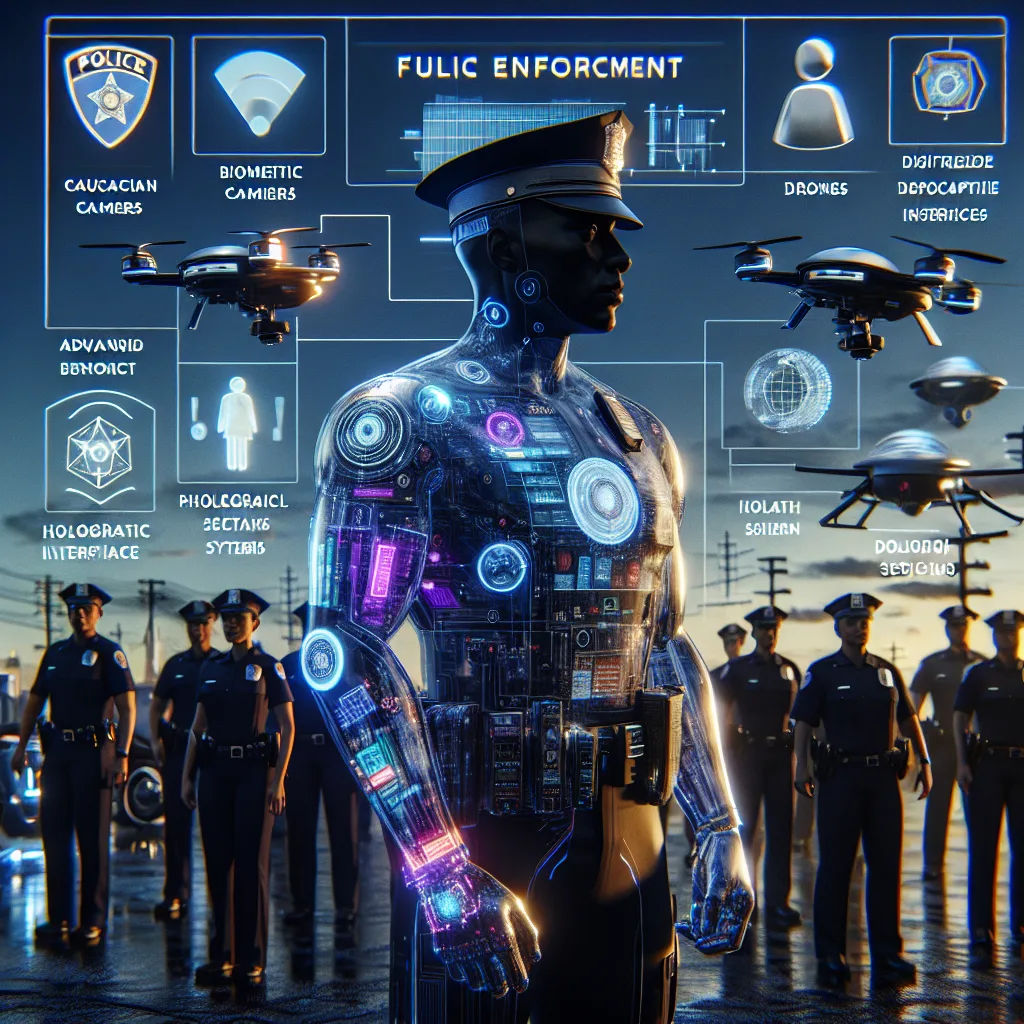
Future of Public Safety: Technology Takes Center Stage at Police Security Expo 2025
As law enforcement agencies gather at the Police Security Expo (PSE) 2025, a critical theme emerges: the urgent need for advanced tools to navigate the increasingly complex digital landscape. Investigators are under pressure to uncover intelligence in places where traditional methods are insufficient, from criminal activity on encrypted messaging apps to threats buried deep within vast amounts of online data. This year’s expo serves not just as a showcase for innovation but as a necessary response to the evolving nature of crime and public safety challenges.
The landscape of policing has changed dramatically over the past two decades, influenced by rapid technological advancements and evolving societal expectations. The rise of the internet, social media, and mobile communication has redefined how criminals operate. Law enforcement agencies, tasked with ensuring public safety, find themselves adapting to an environment where data-driven intelligence is paramount.
The PSE 2025 comes against this backdrop of urgency. With over 200 exhibitors and sessions led by industry experts, attendees are faced with a myriad of solutions designed to equip officers with the tools needed for modern policing. From artificial intelligence that predicts crime hotspots to advanced surveillance technologies capable of analyzing vast streams of data in real-time, the stakes could not be higher.
Currently, law enforcement faces unprecedented challenges stemming from cybercrime and organized crime syndicates utilizing sophisticated technology. Recent studies by organizations such as the International Association of Chiefs of Police highlight that over 70% of police departments report an increase in cyber-related incidents. As these statistics illustrate, traditional investigative techniques fall short when confronting the intricacies presented by encrypted communications and digital anonymity.
This growing complexity signals a pivotal moment for public trust. Citizens expect their police forces to safeguard their security without compromising privacy rights—a delicate balancing act that often sparks debate about surveillance and civil liberties. Agencies must tread carefully as they integrate new technologies while remaining transparent with the communities they serve.
Expert insights suggest several pathways forward that could ease this tension. For instance, Dr. Mark Trevorrow, a criminologist at George Washington University, emphasizes the importance of community engagement: “Policing strategies that incorporate public input can enhance trust while still leveraging technology for intelligence gathering.” This approach may help bridge gaps between law enforcement’s technological aspirations and community expectations.
Moreover, addressing issues surrounding data integrity and cybersecurity will remain crucial as agencies implement new systems. A report from the Federal Bureau of Investigation indicates that more than half of law enforcement agencies have experienced significant breaches in cybersecurity within the past year alone. In this light, discussions at PSE 2025 will likely focus not only on hardware and software innovations but also on fortifying existing systems against increasingly sophisticated threats.
Looking ahead, stakeholders must pay attention to policy shifts regarding technology usage in policing. Legislative frameworks will need to evolve to meet contemporary demands while safeguarding individual rights. As more technologies gain traction—from body cameras with AI analytics to predictive policing algorithms—the question arises: how do we legislate tools that may fundamentally alter the relationship between citizens and their police?
This year’s expo presents an opportunity not only to explore cutting-edge technology but also to ignite dialogue about its implications for society at large. As attendees reflect on innovative tools showcased throughout PSE 2025, one thing is certain—balancing efficiency in public safety with respect for civil liberties will define the future landscape of law enforcement.
In conclusion, as we witness technological advancements reshape public safety strategies at events like PSE 2025, it begs an important question: how do we embrace innovation while ensuring it serves all members of society? The choices made today will echo through future generations’ interactions with law enforcement—an enduring challenge grounded in trust.