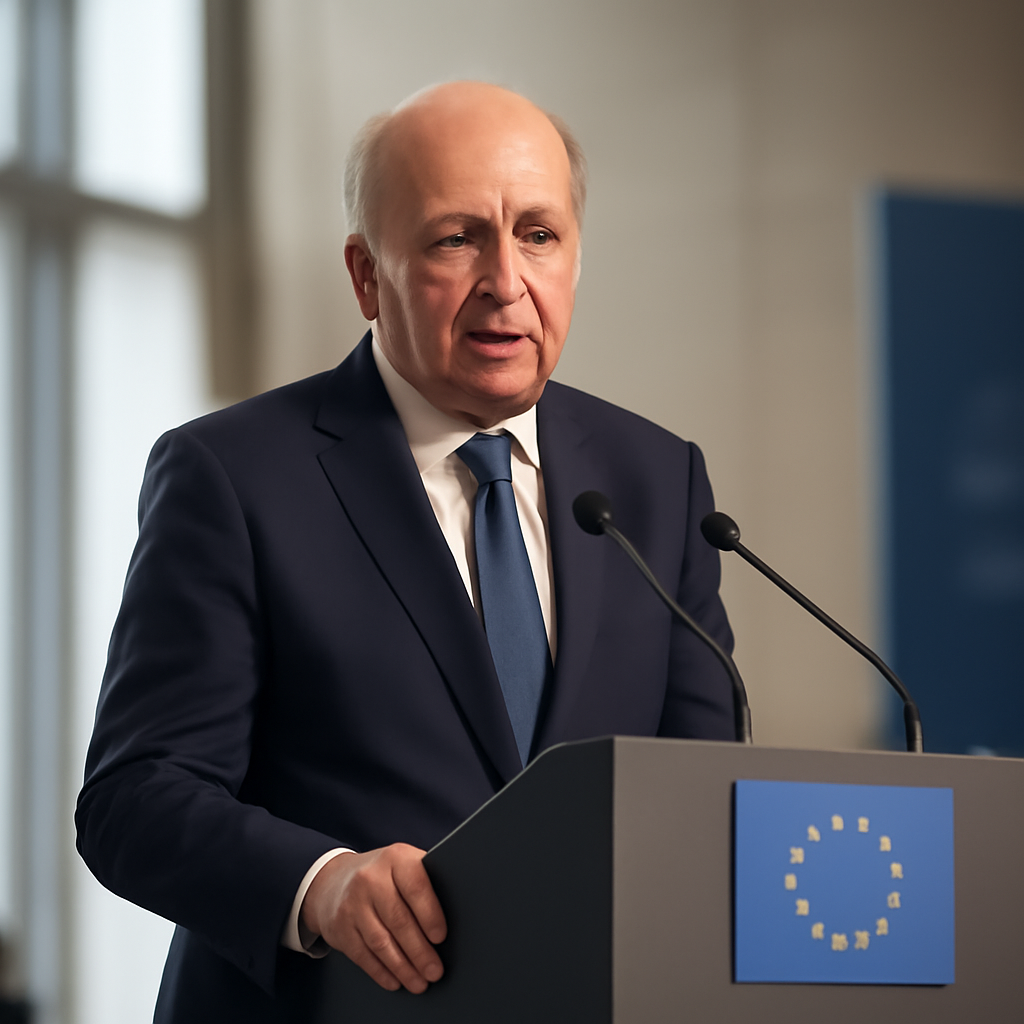
"We are actually like maybe 30 percent advanced in that process," Maj. Gen. Ireneusz Nowak said, summarizing a Polish air‑defense modernization that remains years from completion.
Maj. Gen. Ireneusz Nowak: highest nightly readiness and an 80% focus on air defense
Maj. Gen. Ireneusz Nowak, the operational commander for the Polish Armed Forces, described an Air Force operating at sustained, highest readiness on a nightly basis while it waits for planned modernization to finish. He said 80 percent of his service’s attention is focused on air defense, while the ground and air components of Poland’s integrated air defenses remain "three to four years away." The combination of sustained alert posture and incomplete capability integration is creating strain on both personnel and equipment, he told a Warsaw Security Forum panel.
From Visual Identification to Positive Identification: rules of engagement changed on Oct. 1
Beginning Oct. 1, the Polish Air Force suspended Visual Identification (VID) procedures — in which a pilot confirms an aircraft’s type, markings or nationality by sight — and moved to Positive Identification (PI) procedures. Under PI, pilots no longer need to close to visual range before engaging; instead they can act on radar data, information from other systems and intelligence, including reporting passed on by Ukraine. "So now we are much more flexible, much more responsive," Nowak said, describing the operational intent behind the procedural switch.

Audit-ready is a season. It shouldn't be.
Evidence in spreadsheets, controls drifting between audits, frameworks multiplying on flat headcount. Nubivance runs continuous compliance on Rapid7 Cyber GRC - SOC 2, HIPAA, ISO 27001, PCI, CMMC.
End the scrambleWeapons integration gaps: APKWS fuses and the F/A‑50GF timeline
Nowak identified concrete weaponization and certification gaps that limit shorter‑term options. He said the Polish Air Force planned to field Advanced Precision Kill Weapon System (APKWS) missiles on F‑16s as a near‑term counter to small unmanned aerial systems, but the effort "hasn’t happened yet" because his service "couldn’t get the fuses, which were utilized by the US Air Force, and were certified, because of business restrictions and limitations." Nowak added they are "waiting for the new type of the fuse."
He also raised the F/A‑50GF as "very promising as a drone hunter and a very good tool against current threats which the Russian Federation presents," and noted that Defense Minister Władysław Kosiniak‑Kamysz announced earlier this month that the aircraft has officially commenced combat duty. Still, Nowak said weapon integration challenges remain and estimated the F/A‑50GF "will be ready in maybe two years, fully operational."
Operational tradeoffs: shooting down cheap drones with fighters and the call for new weapons
Nowak acknowledged a blunt arithmetic problem: using multi‑role fighters to intercept low‑cost unmanned aerial vehicles produces a poor cost ratio for Poland. "We need to develop massive, responsive weapons systems capable to counter‑react the UAVs operations," he said. Norway’s Military Representative to NATO, Lt. Gen. Rolf Folland, underscored a related logistical reality: "We can’t just use all of our munitions in one blast. We have to repeat it over and over again." Together, those statements framed a short‑term reliance on expensive interceptors while pointing to a requirement for dedicated, scalable counter‑UAV capabilities.
What this means for the Polish Air Force, NATO, and Defense Procurement
- Polish Air Force personnel: Nightly highest readiness and a focus that Nowak quantifies at 80 percent on air defense imply sustained operational tempo and equipment wear, increasing pressure on pilots, maintainers and command-and-control systems until planned systems arrive.
- NATO allies and air planners: The shift from VID to PI and the acknowledgment that doctrines for air superiority are challenged — reflected in Folland’s warning about munitions pacing — require allied coordination on information sharing and ammunition management, particularly given intelligence links with Ukraine cited by Nowak.
- Defense procurement and integrators: Delays in fuse availability for APKWS and remaining weapon‑integration work on the F/A‑50GF illustrate how business restrictions, certification pathways and integration timelines directly shape operational capability and readiness calendars.
Conclusion
Poland’s air defenders are buying time with procedural change and round‑the‑clock readiness even as procurement and integration lag. The force is "maybe 30 percent" of the way through an envisioned integrated air‑defense posture, Nowak said, with full integration still years off and the F/A‑50GF—promised as a "very good tool"—not fully operational for perhaps two years. Meanwhile, a practical problem persists: chasing inexpensive drones with expensive fighters and constrained munitions stores is unsustainable, and Poland is explicitly waiting on new fuses and weapon integrations to alter that calculus. The immediate question in the skies over Poland is not theoretical: can the procedural and intelligence fixes hold until the hardware arrives?