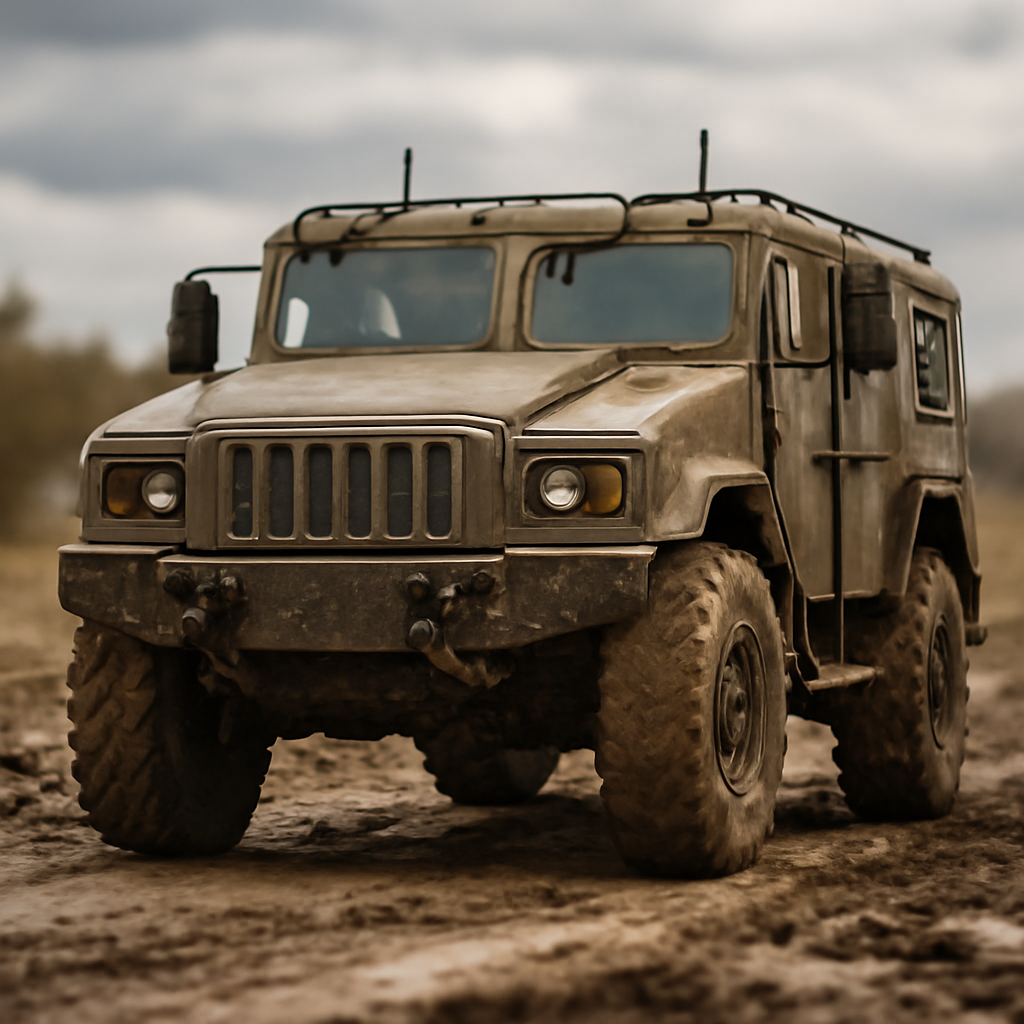
"The PLA has a long history of observing existing concepts and proven solutions from around the world," the china-defense.blogspot.com post observed, summarizing a pattern of purchase, evaluation, and outright replication that drives the People’s Liberation Army’s vehicle families.
PLA’s replication-and-expansion model
The article lays out a recurrent logic: the PLA watches what works elsewhere, tests it, and then asks a single question — does it work? If the answer is yes, the platform is not merely copied; it is absorbed, stretched into new roles, and replicated across procurement lines. The piece argues that the result is often a family of variants that share a chassis but diverge in mission: ambulance, logistics carrier, command post, communications node, fuel hauler, troop carrier, firefighting platform, and towing vehicle.
The Bv 206-inspired family as a textbook case
The blog identifies a Bv 206-inspired family as a clear example of this approach. Rather than a one-for-one clone, the original concept was internalized: "the original idea was not simply copied; it was absorbed into the system and expanded into every role that could justify having an articulated tracked chassis." The post even uses the phrase "knock-off Alvis Hagglunds BV206S" to indicate how recognizable the lineage appears in some Chinese designs.

Audit-ready is a season. It shouldn't be.
Evidence in spreadsheets, controls drifting between audits, frameworks multiplying on flat headcount. Nubivance runs continuous compliance on Rapid7 Cyber GRC - SOC 2, HIPAA, ISO 27001, PCI, CMMC.
End the scrambleAll-terrain tracked ambulance: design and intended use
Details from a PLA Daily report on the 22nd International Medical Instruments and Equipment Exhibition (March 26) are cited to describe a new generation of medical equipment. At that show, an all-terrain tracked ambulance was displayed for the first time. The vehicle uses a tracked dual-car body and is fitted with a satellite positioning system.
PLA Daily described the ambulance as capable of cross-country maneuver in desert, marshland, tidal land and snowfield, and as suitable for "rapid and safe transportation and on-the-way first-aid for the wounded from battlefield (disaster-stricken site)." In short, the tracked chassis was presented as a mobility solution intended to extend frontline medical evacuation into terrain that wheeled ambulances cannot reliably traverse.
"NBC" bioinstrumentation vehicle and field operation vehicle
Also shown was an "NBC" bioinstrumentation vehicle presented as a mobile and rapid bioinstrumentation technology platform. According to PLA Daily, it is intended for sudden epidemic outbreak response and anti-terrorism in peacetime, and for NBC medical rescue in wartime — in effect serving as a mobile lab for bioinstrumentation.
Separately, a field operation vehicle was described as having remote medical consultation capability. PLA Daily said it can link "forefront field medical agencies and rear hospitals" to carry out remote expert consultation, provide diagnosis and treatment guidance under emergency maneuver conditions, and support early-phase and special treatment of critically wounded from a distance by relying on the PLA's remote medical information network.
Operational employment: Peace Mission 2009, Wenchuan, Haiti, and UN missions
PLA Daily tied the new-generation equipment to specific deployments and exercises. The report names "Peace Mission 2009," the Wenchuan earthquake relief, the Haiti earthquake relief, and UN peacekeeping missions as instances where the PLA employed new medical equipment. The article concludes that such employment "enabled the further improvement of the medical support capability of the PLA in implementing diversified military actions."
What this means for military medical planners, disaster relief coordinators, and procurement officers
- Military medical planners: The PLA’s preference for adaptable chassis implies planners will continue to favor platforms that can host multiple mission modules — evacuation, lab, communications — rather than single-purpose vehicles.
- Disaster relief coordinators: Tracked, satellite-enabled ambulances and mobile bioinstrumentation labs are presented as tools to extend response into terrain and scenarios where standard assets struggle, suggesting an operational emphasis on reach into difficult environments.
- Procurement officers: The pattern documented — evaluate, adapt, then proliferate variants to squeeze utility from a single design — indicates procurement will prioritize platforms with broad modularity and multiple budget lines to justify variants.
Conclusion: the article’s record is straightforward. The PLA will not merely acquire or mimic a successful vehicle; it will treat that vehicle as a seed. If it proves useful — as the blog post argues the Bv 206-inspired family has — it will spawn ambulances, labs, command nodes and more, each variant justified by terrain, mission, and budget lines. The examples from PLA Daily — a tracked dual-car ambulance with satellite positioning, a mobile NBC bioinstrumentation lab, and a field operation vehicle linked to a remote medical information network — show how that pattern moves from concept to display to operational use in exercises and disaster relief.