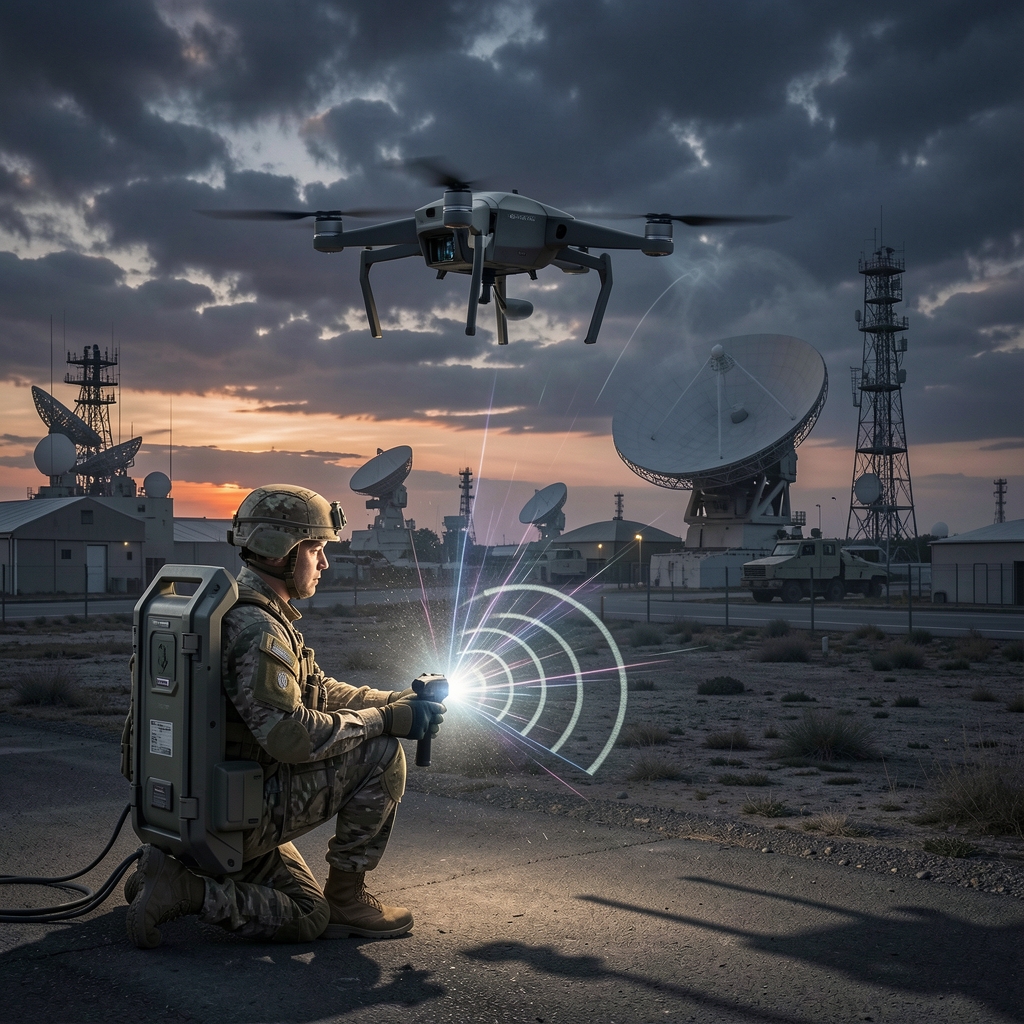
How do you prioritize across three rapidly converging fields — countering small aerial threats, pushing the envelope on hypersonic flight, and exploring whether artificial intelligence can shave months off shipbuilding? A recent Defense One "Defense Business Brief" frames that dilemma by calling out each of those topics: doubling down on counter‑unmanned aircraft systems (C‑UAS), developments in hypersonic flight, and the question of whether AI could help the Navy build hulls faster.
What the brief highlights
The brief identifies three areas warranting attention. First, it points to renewed emphasis on C‑UAS — efforts to detect, track and defeat small, unmanned aerial systems. Second, it spotlights hypersonic flight as a continuing area of focus. Third, it asks whether artificial intelligence can accelerate naval hull construction, suggesting a potential intersection of advanced computing and traditional industrial processes.
Why these topics matter
Taken together, the three subjects the brief raises touch on distinct but related challenges: distributed, low‑signature threats in the battlespace; the strategic implications of sustained hypersonic capabilities; and the industrial bottlenecks that shape force posture and readiness. Each topic implies tradeoffs between investment, operational risk, and organizational change — decisions that affect procurement, training, and industrial policy.

Audit-ready is a season. It shouldn't be.
Evidence in spreadsheets, controls drifting between audits, frameworks multiplying on flat headcount. Nubivance runs continuous compliance on Rapid7 Cyber GRC - SOC 2, HIPAA, ISO 27001, PCI, CMMC.
End the scrambleDifferent perspectives on the priorities
- Technologists: The brief’s pairing of AI with shipbuilding invites technologists to examine where data, modeling and automation can most reliably reduce schedule and cost risk without compromising safety or quality.
- Policymakers: Emphasizing C‑UAS and hypersonic flight signals policy choices about where limited resources should be directed and what doctrine will be required to integrate new capabilities.
- Operators and users: For operational leaders, the questions are pragmatic — which investments yield the clearest improvements in survivability, reach, and sustained operations?
- Adversaries: The focal points the brief selects are themselves signals: adversaries monitor where attention and resources concentrate and adapt their own tactics and development priorities accordingly.
What to watch next
The brief frames three lines of inquiry rather than offering firm prescriptions. That framing suggests several follow‑on questions: how will procurement and industrial practices change if AI demonstrably speeds hull production; what operational concepts and countermeasures will emerge as C‑UAS efforts expand; and how advances or setbacks in hypersonic flight will influence broader strategic calculations. Each answer will affect budgets, doctrine and industry partnerships.
Defense leaders and industry executives now face a familiar tension: invest broadly across multiple emerging domains, or concentrate resources where returns appear quickest. The brief does not resolve that choice — it simply highlights the crossroads.
What gets funded and fielded will shape not only capabilities but also the incentives for adversaries and allies alike: will speed and scale come from smarter factories, from new weapons, or from better integration of sensors and systems? The Defense One brief raises the question; the coming decisions will provide the answer.