"Pakistan’s mediation between Washington and Tehran was 'par excellence'," said Dr. Tughral Yamin, capturing the central claim of a recent podcast discussion about Islamabad's rising role in a shifting Middle East.
April 2026: Pakistan brokers a ceasefire between the United States and Iran
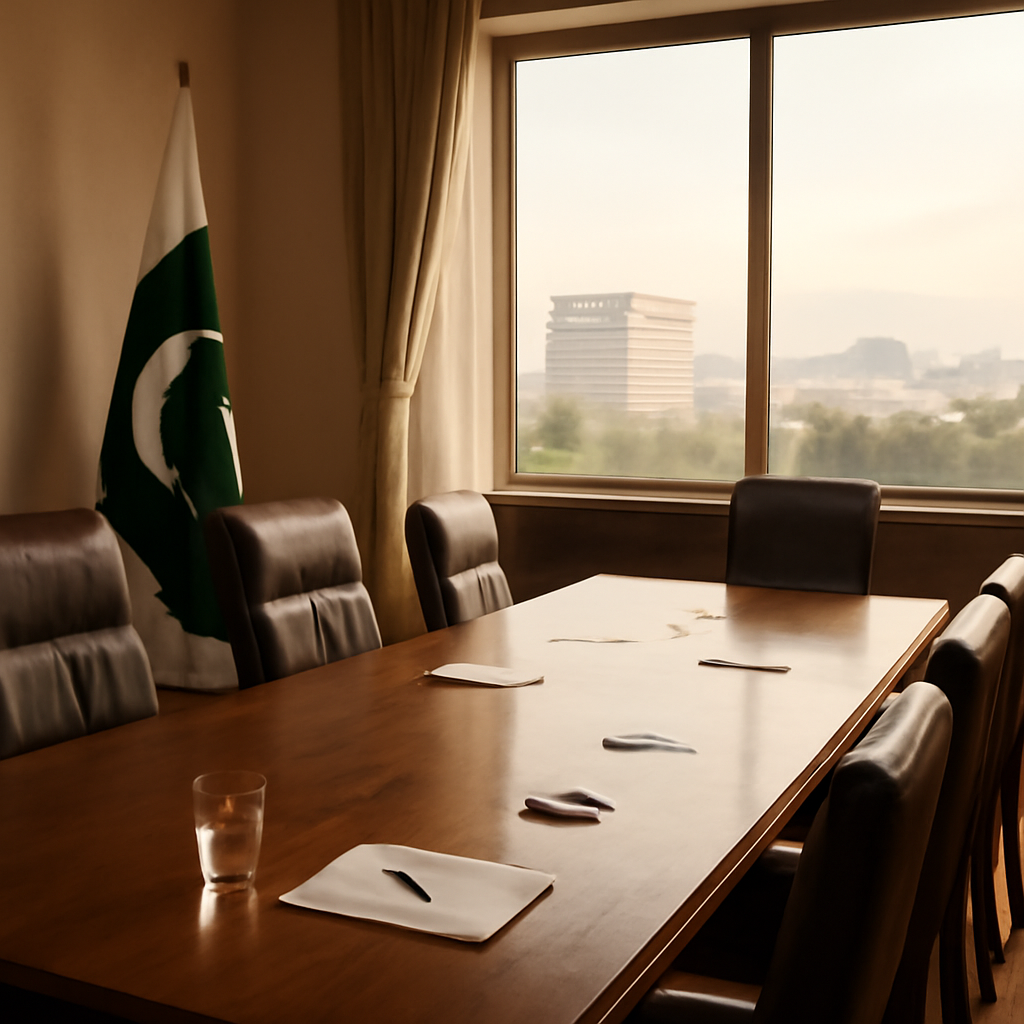
The conversation on Quwa’s Pulse Check podcast opened from a specific, consequential fact: in April 2026 Pakistan helped broker a ceasefire between the United States and Iran. That single diplomatic act placed Islamabad "at the centre of a war it normally watches from a distance," according to the podcast preview, and it provided the immediate context for host Bilal Khan's argument that Iran may be manoeuvring to become the Middle East’s leading power.
Bilal Khan pointed to tangible elements of Iranian leverage — control over the Strait of Hormuz, deliberate opacity about its nuclear program, and sustained influence in Lebanon — to sketch a picture of a state increasingly able to shape regional security calculations. He argued that Pakistan can no longer treat the Middle East as an occasional theatre of engagement and floated the idea that Pakistan might begin to think of itself "as a Middle Eastern power in its own right" to balance Tehran and Riyadh.
Dr. Tughral Yamin on Pakistan’s long-standing Middle East policy
Dr. Tughral Yamin pushed back on the idea that Pakistan lacks a coherent Middle East strategy. He described the mediation that led to the April ceasefire as "par excellence" and characterized Pakistan’s decision to step in as bold and rooted in national security concerns: a hostile power installed next door, he said, would leave Pakistan exposed in ways analogous to the post‑1979 aftermath in Afghanistan.
Yamin emphasized historical continuity: Pakistan’s constitution, he noted, commits the country to good relations with the wider Muslim world, and successive governments have acted on that pledge. He cited Pakistan’s track record of supplying trainers and advisors across the Gulf, pledged readiness to defend Mecca and Medina, and recalled military cooperation in past wars as evidence of long-term engagement rather than a sudden turn.

Audit-ready is a season. It shouldn't be.
Evidence in spreadsheets, controls drifting between audits, frameworks multiplying on flat headcount. Nubivance runs continuous compliance on Rapid7 Cyber GRC - SOC 2, HIPAA, ISO 27001, PCI, CMMC.
End the scrambleStrategic Mutual Defence Agreement with Saudi Arabia (September 2025) and expanding defence footprint
One concrete marker of Pakistan’s recent regional posture is the Strategic Mutual Defence Agreement with Saudi Arabia, signed in September 2025. Dr. Yamin framed Pakistan’s footprint as extending from that pact to "reported interest in Pakistani security guarantees as far as Lebanon and Libya." The podcast noted that Pakistan’s role in the region has been visible on multiple diplomatic fronts: relations with Iran were warming after the visit of former President Ebrahim Raisi, and ties with Washington drew attention when Field Marshal Asim Munir was hosted for a rare lunch at the White House.
That set of engagements creates an unusual balancing act: Islamabad was simultaneously mediating between Washington and Tehran while committed under a defence pact to defend Saudi Arabia, a principal regional rival of Iran. The podcast identified "how it holds those positions together" as a central question going forward.
Historical precedents: Baghdad Pact, CENTO, and the 1973 Arab‑Israeli War
Both host and guest anchored contemporary moves in history. Bilal Khan reminded listeners that Pakistan once sat within a regional security framework alongside Iran — through the Baghdad Pact and the Central Treaty Organization (CENTO) before 1979. Dr. Yamin drew on memory and ceremony as well: he recalled the 1973 Arab‑Israeli War, noting that "Pakistani pilots flew combat missions alongside Syrian and Egyptian forces" and cited the case of airman Sattar Alvi shooting down an Israeli aircraft as a tangible instance of past military solidarity.
Yamin also deployed an historical analogy: medical missions from the subcontinent to the Ottomans during the 1912 Balkan Wars, still remembered in Turkey, to argue that Tehran "will not soon forget who stood with it during the recent conflict." These references served to situate current diplomacy inside a longer pattern of state-to-state ties and reputational memory.
What this means for Pakistan, Iran, and Saudi Arabia
- Pakistan: Will be watched for its ability to sustain simultaneous roles — honest mediator between Washington and Tehran and security partner to Saudi Arabia — and for whether its recent diplomatic capital translates into longer-term leverage across the Middle East.
- Iran: Faces renewed scrutiny over ambitions to shape regional security, with its leverage in the Strait of Hormuz, influence in Lebanon, and posture on nuclear ambiguity forming the basis of rival assessments.
- Saudi Arabia: Now a formal defence partner of Pakistan under the September 2025 agreement, Riyadh’s calculations will include how far Pakistani guarantees might extend, including reported interest in Lebanon and Libya.
Pakistan’s recent moves—brokered ceasefire in April 2026, a defence pact with Saudi Arabia in September 2025, and overtures to both Washington and Tehran—create a strategic tightrope. As Bilal Khan suggested and Dr. Yamin affirmed, Islamabad is pursuing a long game rooted in constitutional commitments, historical ties, and economic links such as Gulf remittances "running to billions of dollars a year." The central test now is operational and political: can Pakistan maintain its claim to be an "honest broker" while upholding formal defence obligations and expanding its regional footprint? How it holds those positions together will shape both its standing and the balance among the region’s principal actors.