"His wife and son, however, immediately left the United States without him," U.S. prosecutors said.
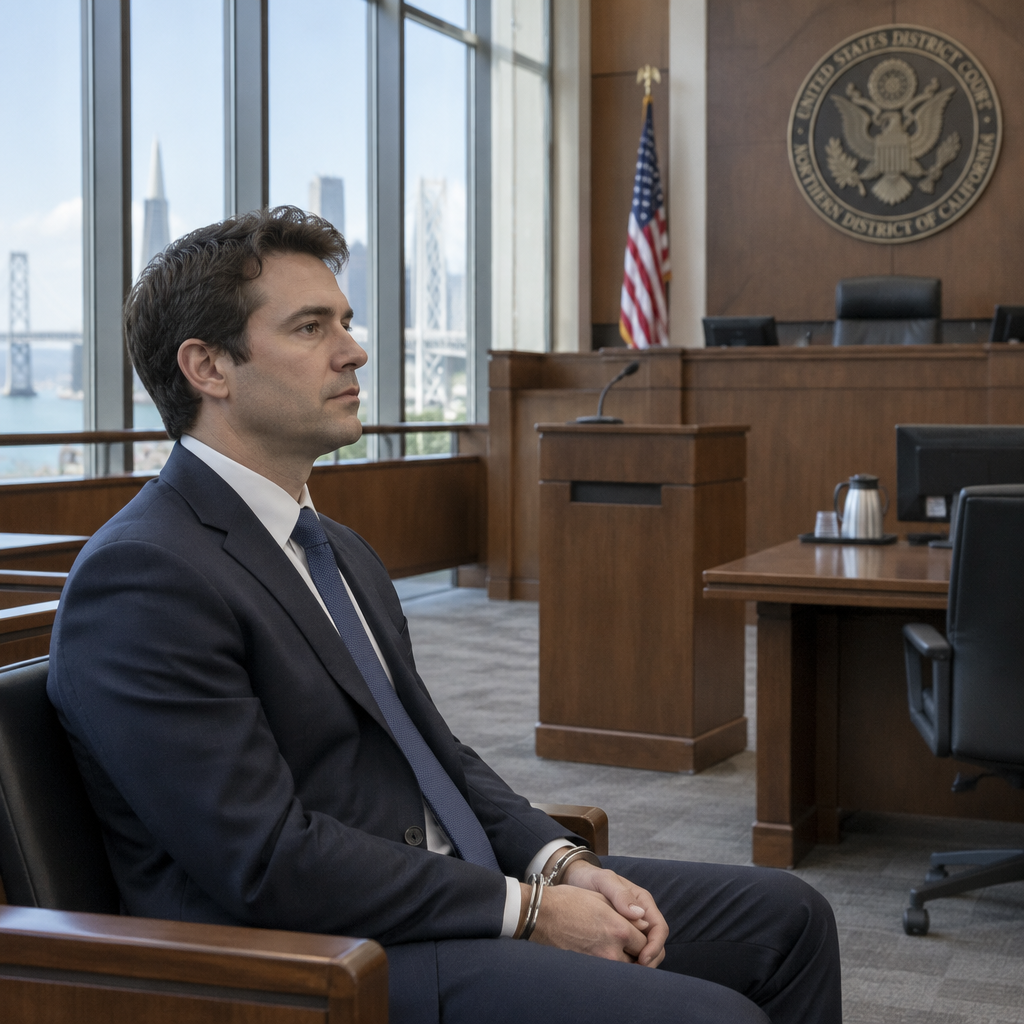
Abdulrahman Alfozan, a Saudi national and former OpenAI engineer, pleaded not guilty in San Francisco federal court on Friday to a criminal charge that he planted a covert audio recording device inside an executive conference room at OpenAI. The 35‑year‑old has been held without bail since his arrest on October 9, 2026; his next hearing is scheduled for November 17, 2026.
The charge: interception of oral communications
Late last month, a federal grand jury returned a single‑count indictment charging Alfozan with interception of oral communications. If convicted, the indictment notes he faces a maximum penalty of five years in prison, a $250,000 fine, and three years of supervised release. He entered a plea of not guilty during the court appearance reported by Bloomberg and CNBC.
Allegations about a "sophisticated recording device"
Prosecutors allege that Alfozan placed a "sophisticated recording device" in an executive OpenAI conference room in what they describe as an attempt to unlawfully record sensitive conversations. Court documents claim the defendant "took great pains to create bespoke, encrypted recording devices" specifically to capture meetings involving senior OpenAI personnel and executives. The language in filings frames the alleged conduct as both targeted at high‑level meetings and technologically customized to evade detection or interception.

Audit-ready is a season. It shouldn't be.
Evidence in spreadsheets, controls drifting between audits, frameworks multiplying on flat headcount. Nubivance runs continuous compliance on Rapid7 Cyber GRC - SOC 2, HIPAA, ISO 27001, PCI, CMMC.
End the scrambleArrest, detention, and the travel timeline
Federal authorities arrested Alfozan on October 9, 2026. According to prosecutors, the arrest occurred three days before he — together with his wife and son — were scheduled to fly from San Francisco to Riyadh on a one‑way ticket. Prosecutors say his family left the United States without him, departing about 36 hours after his arrest.
Court filings give a detailed sequence for those departures: Alfozan’s wife and son initially planned to fly to Jeddah on October 11 on a one‑way ticket "booked and paid for by the Saudi government." That Jeddah flight was canceled when, prosecutors say, a member of the Saudi military booked and paid for another one‑way, business‑class ticket to Doha, Qatar, dated October 10, 2026; the filings say they made that flight.
Alleged contacts with Saudi figures
In a subsequent court filing, prosecutors allege Alfozan was in frequent contact via WhatsApp with a member of the Saudi Royal Family. The filing also characterizes him as a flight risk, citing the timing of travel plans for him and his family and the payments and bookings described above.
How technologists, policymakers, and affected enterprises are likely to respond
- Technologists and security teams: The court record's emphasis on "bespoke, encrypted recording devices" and an alleged placement inside an executive conference room focuses attention on physical‑layer vulnerabilities and the possibility of purpose‑built, concealed hardware; teams are likely to reassess physical access controls and detection capabilities for meeting spaces.
- Policymakers and regulators: The filings' references to payments by a foreign government actor and alleged WhatsApp contact with a Saudi royal figure add a cross‑border dimension that regulators and investigators will watch closely as the criminal case proceeds.
- Affected enterprises and executives: The allegations that senior personnel and executives were the targets of surreptitious recording will concentrate legal and compliance reviews on meeting protocols, visitor and employee screening, and incident response procedures tied to suspected internal breaches.
Alfozan's not‑guilty plea sets the case on a court schedule that includes the November 17 hearing. As the indictment centers on one count of interception of oral communications and the filings describe both specialized recording technology and an international movement of family members shortly after the arrest, the coming pretrial proceedings will test how prosecutors translate those allegations into admissible evidence. For now, the public record shows a criminal case moving forward in federal court on a compact set of charges with detailed factual claims about devices, encrypted communications, and cross‑border travel.