OpenAI’s Daybreak reaches NATO
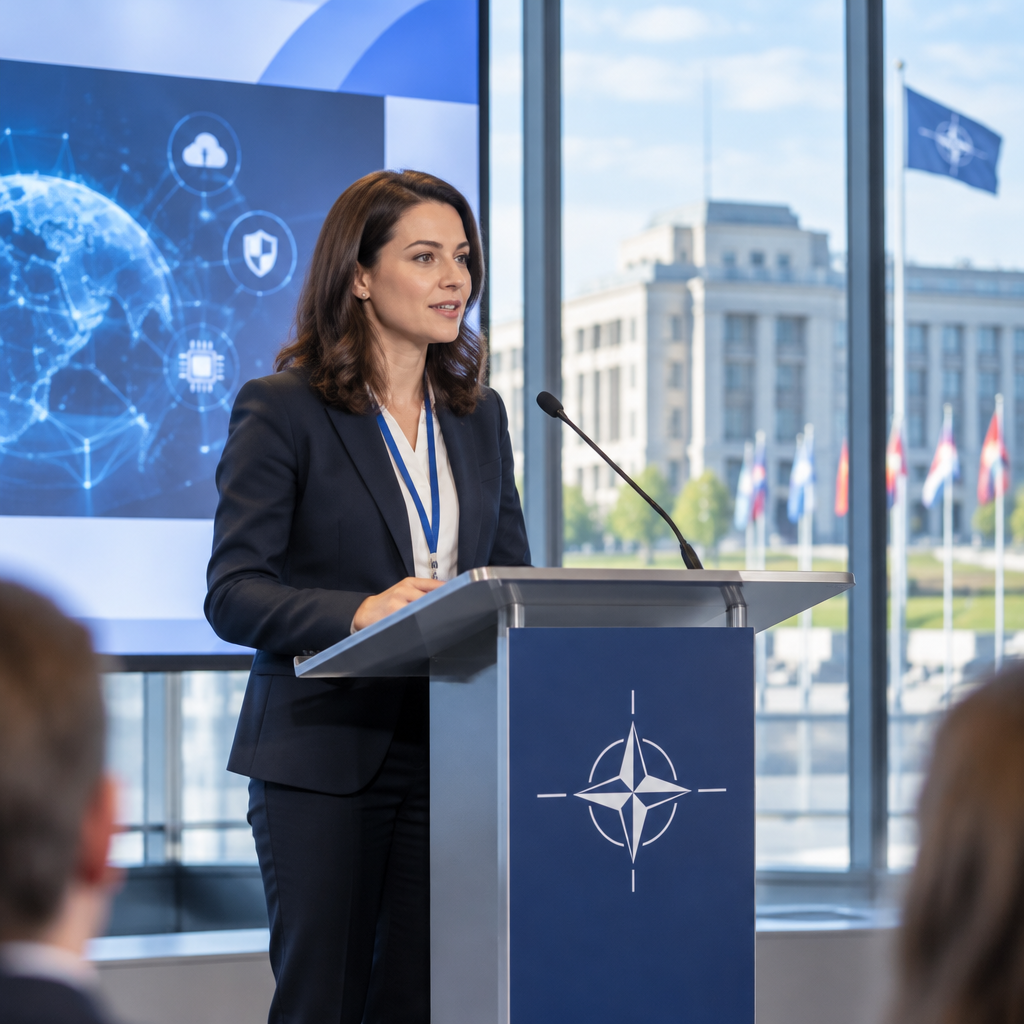
OpenAI announced at NATO Edge in Izmir that NATO governments will have access to the company’s most powerful AI models — the company’s Daybreak offering — to find and patch cyber vulnerabilities. Company executives made the disclosure during the alliance’s largest annual technology business event, where OpenAI framed Daybreak as an institutional capability for accredited partners, expanding an effort launched in May to give governments and institutions privileged access to its advanced models for vulnerability discovery.
Crossed Swords: NATO operators deploy AI agents in Tallinn
The move follows new NATO exercise practices introduced in Crossed Swords, a cyber wargame held in Tallinn earlier this month. NATO said participants in that exercise designed and deployed AI agents “working alongside them as operators.” The technical environment for Crossed Swords used on-premises AI and, for the first time in the exercise, OpenAI Daybreak. NATO’s description emphasized agentic AI cyber defense as a principal focus for the exercise.

The cyber insurance questionnaire just landed. Now what?
SOC 2, HIPAA, insurance renewals - someone has to own security strategy. Nubivance provides fractional CISO leadership without the full-time salary.
Get a security leadNATO Edge, contractors, and a $3 billion procurement push
NATO Edge brought more than 3,500 attendees and over 270 exhibitors to Izmir to discuss security, technology and business opportunities tied to growing defense commitments, the alliance said. A NATO official told the event that the NATO Communications and Information Agency (NCIA) will award more than $3 billion in contracts to industry by the end of 2027, with a heavy focus on cloud computing, space services, and artificial intelligence. NATO’s $3 billion in planned awards is explicitly additional to whatever NATO allies each spend on AI.
Why AI defenders argue for “find and fix first”
Executives and cybersecurity experts speaking at NATO Edge and in related NATO statements tied the OpenAI announcement to an oft-repeated defensive thesis: that the same technologies enabling more effective cyberattacks can also be leveraged to find and remediate vulnerabilities before attackers exploit them. The event context included repeated references to an uptick in Russian cyber attacks on NATO allies, and to warnings that AI could multiply the speed and scale at which actors — including Russian criminal groups, the source said — discover vulnerabilities and write more effective malware. OpenAI and other defenders have argued the best route is to use AI offensively for defense — to “find and fix” before attackers can weaponize flaws.
Anthropic, Daybreak, and a changing vendor landscape
OpenAI’s Daybreak is not the only program in this niche. The source notes that Anthropic launched Project Glasswing in April with a similar objective: give accredited customers access to advanced models to uncover vulnerabilities in critical software. The arrival of both Daybreak and Project Glasswing at NATO-relevant events signals an accelerating commercial trend of offering high-end model access to governments, militaries and other accredited institutions for security work.
What this means for NATO operators, OpenAI and Anthropic, and Russian criminal groups
- NATO operators: will now practice deploying AI agents in exercises and are being positioned to move faster from vulnerability discovery to remediation, using a blend of on-premises AI and hosted capabilities like Daybreak.
- OpenAI and Anthropic: are scaling institutional programs that give accredited customers access to their leading models; their offerings are being integrated into alliance exercises and into procurement trajectories emphasized by NCIA.
- Russian criminal groups: are named in NATO statements as actors whose capacity to exploit software vulnerabilities could increase with AI, which is driving the defensive emphasis to “collapse” the patch window.
OpenAI framed the requirement in blunt, operational terms: shorten the time between discovery and patching from months to minutes. NATO has already built that objective into exercise design and procurement planning — from the Crossed Swords wargame in Tallinn to the $3 billion-plus contracting push NCIA plans through 2027. The deployment of Daybreak to accredited NATO operators answers one immediate piece of that equation: access to more powerful models for vulnerability discovery. Whether that access, combined with on-premises systems and future procurement, will deliver the dramatic reductions in remediation time Sasha Baker urged remains the central, measurable test NATO and its industry partners now face.