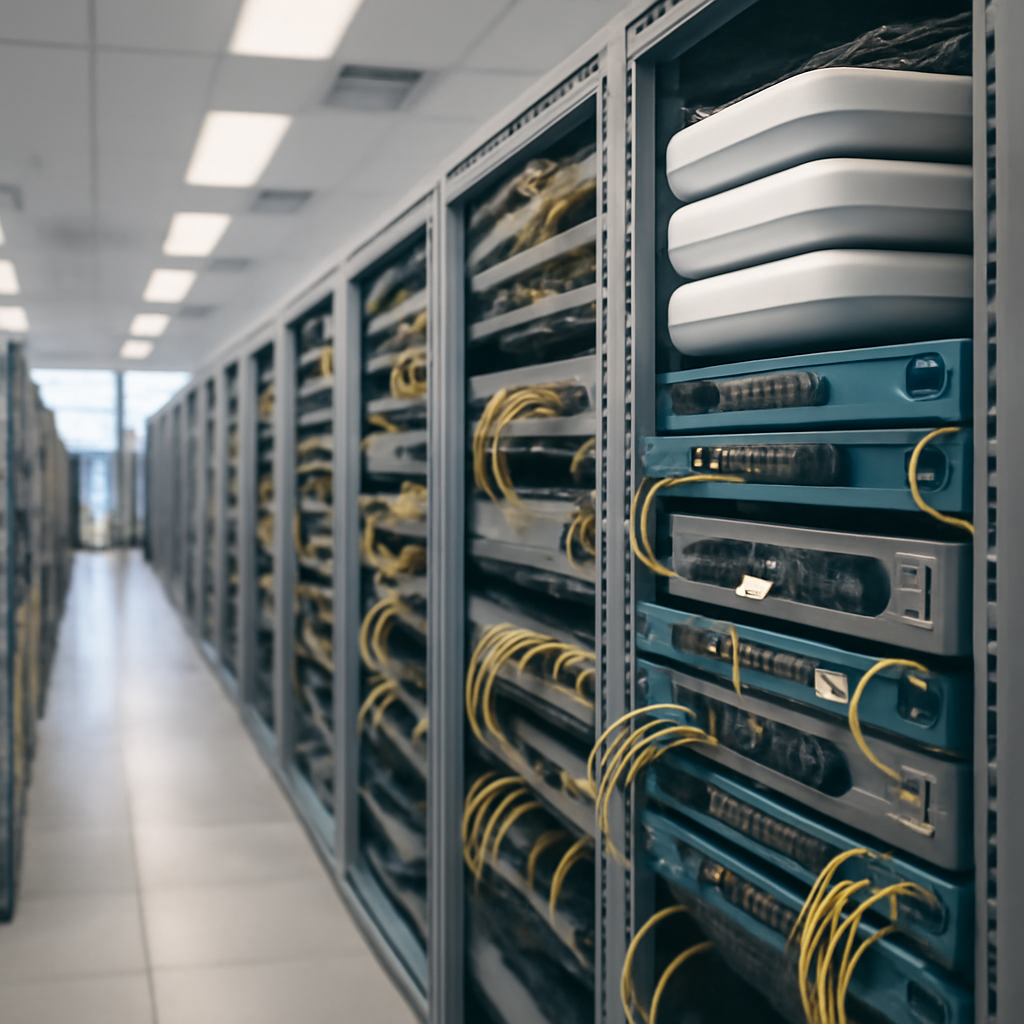
"Every attack leaves a trail across the network, from initial reconnaissance to lateral movement and data exfiltration," wrote HPE in a sponsored piece arguing that the network is not only the richest source of security intelligence but also the natural place to verify identity, apply consistent policy, and contain suspicious activity.
The network as a sensor and a defender
The central claim is straightforward: because the network connects every user, device, application, and workload, it can do double duty. It supplies visibility — the telemetry and patterns that reveal reconnaissance, lateral movement, and exfiltration — and it can enforce security close to the source of risk. Routers, switches, and access points, the article says, should not be passive plumbing but active cybersecurity defenders that "identify and prevent threats" rather than merely "routing and filtering traffic."
Perimeter dissolution and the unsustainability of tool sprawl
The piece stresses a contemporary problem: the traditional network perimeter has dissolved. Assets once confined to a headquarters LAN now sit across cloud environments, edge devices, and on-premises servers. The response many organizations adopt — bolting more security tools onto the infrastructure — runs into three frictions named in the source: rising license costs, overlapping or conflicting tools, and non-obvious gaps attackers can exploit. Fragmentation also creates organizational friction: different teams working at different speeds, slowing coordination and increasing cost.

This site is the portfolio.
OSINTSights runs on Cloudflare Workers, D1, R2, and Vectorize, with an AI pipeline on Hetzner ARM. Nubivance designed, built, and operates it. We do the same for clients.
See what we buildZero trust, micro-segmentation, and a NIST standard
Integrating security into the network is presented as a way to standardize enforcement. The article recommends encoding zero-trust principles into the network foundation and cites a specific standard: NIST SP 800-207. That approach shifts protection to the asset level instead of relying on a single perimeter-authentication model — the old "one authentication and you're in everywhere" VPN pattern that the source calls "flawed." Network-level measures like micro-segmentation are highlighted as practical tools: they close off parts of the network at a granular level to limit lateral movement and reduce an attack's blast radius.
AI, AIOps, and the race for pattern recognition
AI has two roles, according to the source. First, it is already part of network operations: machine learning drives AIOps systems that spot patterns, predict problems, and maintain performance. Second, those same pattern-recognition capabilities serve security — spotting anomalies that can be used to head off attacks before they escalate. The source warns that attackers also use AI; organizations that do not deploy AI-based defenses will be "on the back foot." Using AI to automate routine work is framed as a force multiplier for network and security teams, allowing human analysts to focus on complex incidents.
What this means for technologists, procurement leaders, and end users
- Technologists and security teams: expect to work more closely with network teams as a common fabric enables "collaborative security." Embedding device profiling, NAC, and centrally managed firewalls into network equipment is described as a route to real-time operational visibility and faster enforcement.
- Procurement and enterprise leaders: the article flags cost and complexity as drivers for change — rising license costs and tool overlap are incentives to prefer unified solutions that can "implement once run everywhere" rather than stitching multiple products together.
- End users and remote workers: entry points like Unified SASE are recommended to provide secure access "wherever they work," simplifying both networking and security for hybrid work patterns.
The piece closes with practical entry points for organizations ready to move: Unified SASE for secure, location-independent access; hybrid mesh firewalls for consistent policy across datacenters and cloud; universal zero-trust network architectures to cover every identity, device, and workload; and AIOps to improve visibility, accelerate troubleshooting, and automate operations. Each is presented not as an isolated product but as a gateway into a longer-term architecture that embeds security into the network fabric.
HPE frames the choice as a strategic one: standardize, gain agility, simplify enforcement, and shrink the blast radius when breaches occur. The final, unanswered operational question is tactical: which entry point matches an individual organization’s greatest source of risk — expanding zero trust, hybrid work, or AI-enabled threats — and how fast can teams stitch that entry point into a common fabric?