"It would be better to have a tough ending than a drawn-out state of limbo." — Federal Minister of Defence Boris Pistorius.
Germany's June 2026 pivot: F126 cancelled, MEKO A-200 chosen
In June 2026 Germany cancelled the F126 frigate programme and replaced it with an in-service MEKO A-200 design. The F126 had slipped years behind schedule after Damen warned it would not deliver the lead ship until 2032 instead of the originally planned 2028 date. The German defence ministry (BMVg) had already recorded roughly €2.3 billion in costs; projected negotiation outcomes and contractor changes pushed a six-ship bill toward €15.2 billion and above €18 billion once completed work and support agreements were accounted for. Negotiations to bring in a new lead contractor — Lürssen (NVL), now Rheinmetall-owned — did not produce a viable path to keep the programme running, prompting the ministry's decision to stand down the F126 and adopt the proven MEKO A-200.
The F126 by the numbers: scale, modularity, and fixed fit
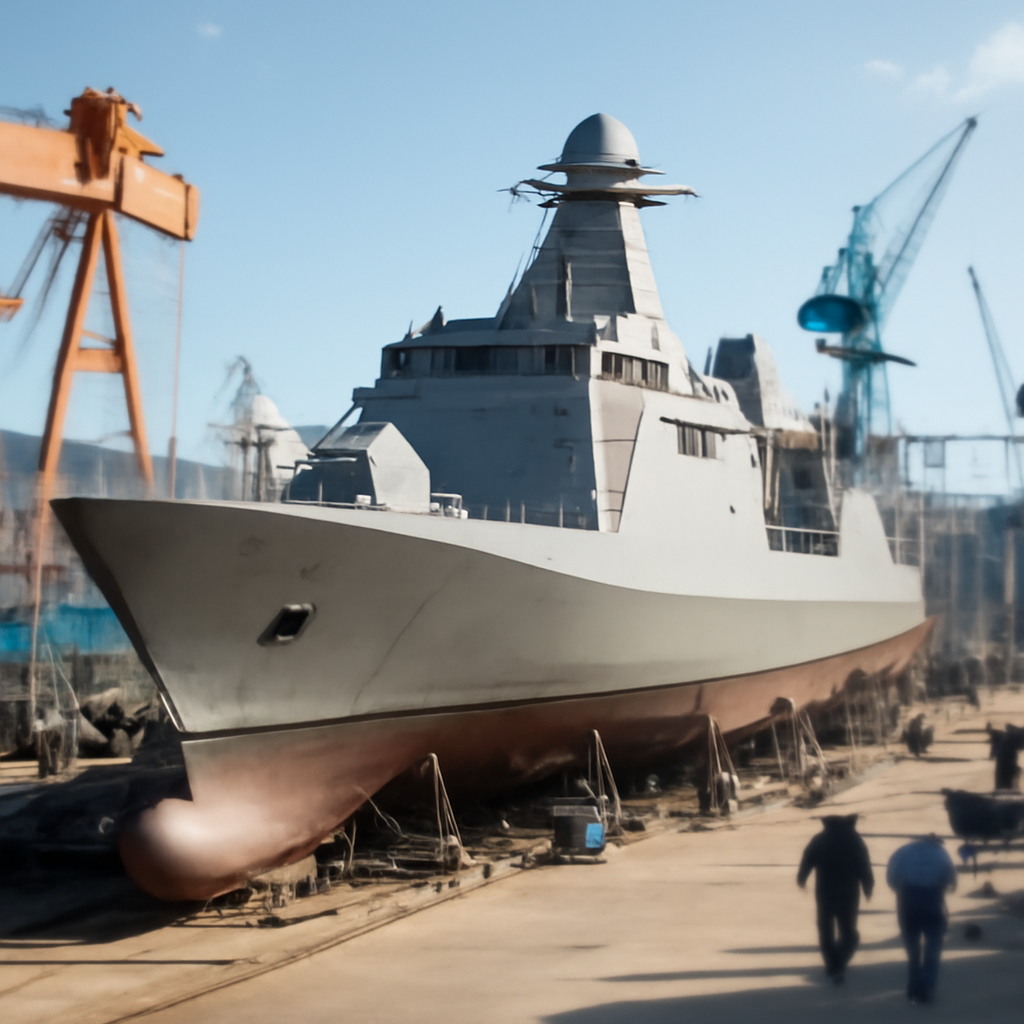
Planned as Germany's largest surface warship since the Second World War, the F126 (formerly MKS180) was a roughly 10,550‑ton anti‑submarine warfare frigate about 166 m long with a 21.7 m beam. It relied on a CODLAG (combined diesel‑electric and gas) propulsion arrangement, was designed for speeds beyond 26 knots, and a range exceeding 4,000 nautical miles. The platform targeted long forward deployments of up to two years with a core crew of roughly 110–130 and surge capacity to around 190 with mission specialists rotated every few months.
Modularity was central to the concept: interchangeable, containerised mission modules would reconfigure the ship for ASW (including a modular towed‑array sonar), anti‑surface warfare, mine countermeasures, or non‑combat missions such as counter‑piracy and detention tasks. Its fixed armament package — relative to the hull size — included a 127mm main gun capable of firing Vulcano extended‑range precision munitions, a Mk41 vertical launch system planned for ESSM Block 2, Naval Strike Missiles for anti‑ship roles, a RAM CIWS, space for two NH90 maritime helicopters plus uncrewed aircraft, and a Thales‑supplied radar and combat software suite.

The cyber insurance questionnaire just landed. Now what?
SOC 2, HIPAA, insurance renewals - someone has to own security strategy. Nubivance provides fractional CISO leadership without the full-time salary.
Get a security leadWhy navies are choosing cheaper, faster, proven designs
Germany is the third country to step back from an ambitious new large surface combatant in favour of an existing or less ambitious design, following shifts in the United States (Constellation‑class to a cutter‑based FF(X)) and Australia (Hunter‑class to Japan’s Mogami). The market trend emphasises four cost‑control levers: lighter or proven hull forms, adoption of commercial or re‑certified build standards, reuse of established subsystems, and phased delivery that defers non‑critical capabilities.
Designs cited as attractive under this logic include the European Patrol Corvette, Denmark’s Iver Huitfeldt, and Babcock’s Arrowhead 140. These platforms trade some top‑line ambition for speed of delivery, predictable unit costs, and the ability to scale quantity — important when procurement budgets must buy sensors and weapons as well as hulls.
Pakistan’s crossroads: ASFAT‑linked Jinnah vs commercial open architectures
Pakistan presents a near‑term test of the same choice. The Pakistan Navy has invested in the Babur‑class corvette and plans for the Jinnah‑class (AS3400) frigate built to costlier, proprietary standards associated with ASFAT. The navy now faces a strategic decision: continue scaling the ASFAT‑linked design to amortise sunk investment, or pivot to lower‑cost, commercial‑standard and open‑architecture approaches — exemplified by its Damen‑based Yarmouk OPVs — to free up budget for weapons and sensors.
That decision encapsulates the larger tradeoff driving recent cancellations: accept higher per‑hull costs to preserve a domestic or established design lineage, or adopt off‑the‑shelf, re‑certified platforms that reduce platform cost and buying lead time but shift competitive advantage toward suppliers able to underwrite volume and offsets.
How navies, defence industries, and procurement officials will respond
- Navies: Those needing rapid fleet expansion or immediate capability will favour in‑service designs that can be fielded quickly and allow budget to be concentrated on weapons and sensors.
- Defence industries: Shipbuilders with proven, exportable designs — and the capacity to offer financing or industrial offsets — stand to gain; the article argues Türkiye and South Korea are best positioned on price, scale and offsets, while EU yards remain competitive mainly where paired with financing.
- Procurement officials and finance ministries: Faced with sunk costs like Germany’s €2.3 billion and multibillion‑euro escalation risks, officials will increasingly weigh the political and fiscal cost of continuing troubled clean‑sheet programmes against the quicker, cheaper alternative of adopting proven designs.
Germany’s choice illustrates a broader inflection point: when ambition, modularity and national industrial policy collide with escalating schedules and bills, many states are electing to buy certainty. The unresolved questions are concrete — will navies like Pakistan choose to protect prior industrial commitments by continuing with ASFAT‑linked frigates, or will they shift to commercial‑standard designs to maximise missiles, sensors and numbers? The answer will shape shipbuilding markets and force structures for years to come.