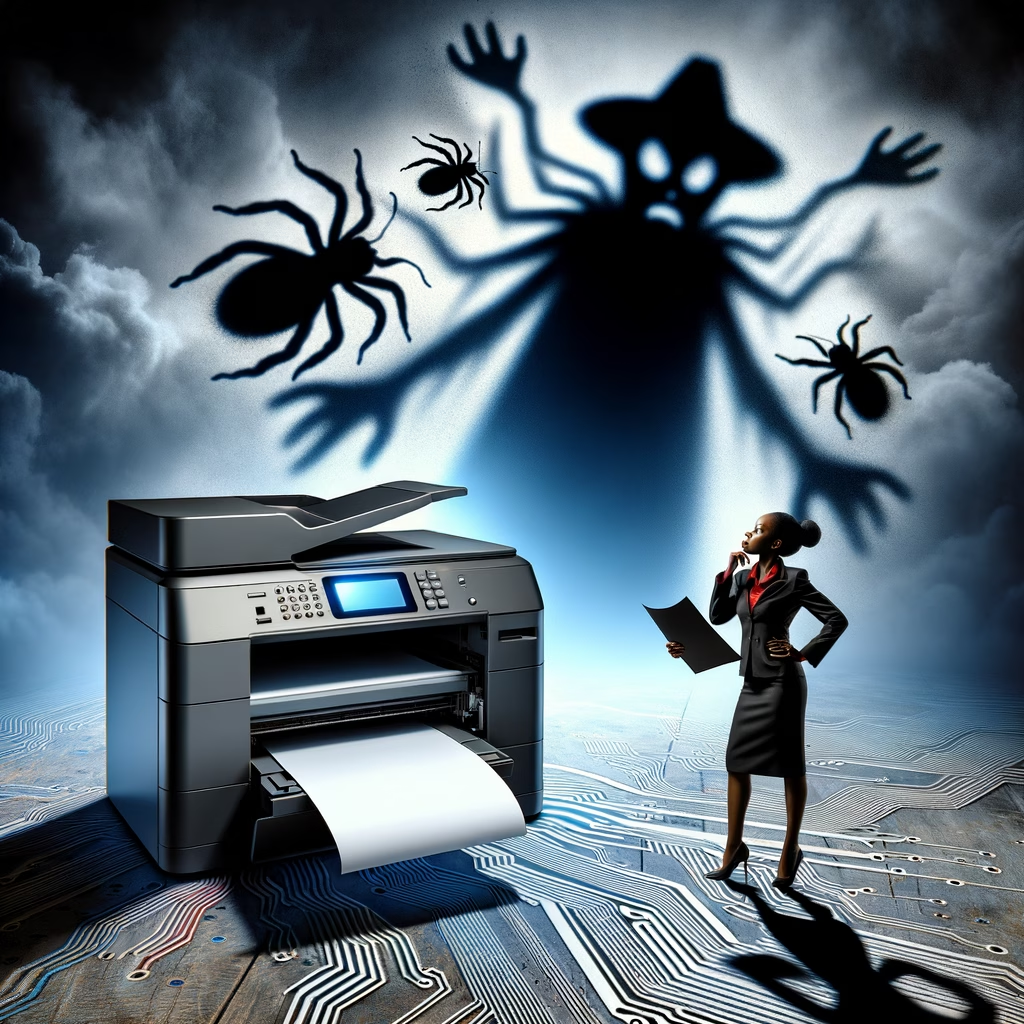
“How secure is the device you use every day but rarely think about?” This question is gaining urgency as new research exposes critical weaknesses in millions of multifunction printers (MFPs) worldwide. These once-benign office workhorses are now under scrutiny, revealing a growing attack surface that cybersecurity experts warn could be exploited to devastating effect.
A recent study by cybersecurity firm Armis has uncovered eight new vulnerabilities affecting a broad range of multifunction printers, devices that combine printing, scanning, copying, and faxing capabilities. These findings highlight systemic security gaps that put enterprises, government agencies, and individual users at risk. MFPs, often overlooked in security protocols, have become inadvertent gateways for potential cyberattacks.

Multifunction printers have evolved far beyond simple output machines. Connected via corporate networks and the internet, they handle sensitive data, store digital copies of documents, and sometimes even connect to cloud services. According to a report published by Armis in early 2024, some of these newly identified vulnerabilities allow attackers to execute arbitrary code, intercept confidential data, or disrupt operations remotely. Such capabilities could turn an ordinary printer into a tool for espionage or sabotage.
Dr. Limor Kessem, a cybersecurity researcher at Armis, cautions, “These vulnerabilities underscore a fundamental oversight in device security architecture. Multifunction printers are no longer standalone peripherals; they are complex networked devices that demand the same rigorous protections as servers or workstations.”
Industry analysts emphasize that the printer security dilemma reflects a broader challenge in the Internet of Things (IoT) era. Unlike traditional IT equipment, MFPs often lack robust patch management and are maintained by departments unfamiliar with cybersecurity best practices. This creates a blind spot that adversaries can exploit. The National Institute of Standards and Technology (NIST) has repeatedly urged organizations to adopt a comprehensive device management strategy encompassing all networked hardware — printers included.
From a policymaker’s viewpoint, securing multifunction printers intersects with national cybersecurity priorities. The Cybersecurity and Infrastructure Security Agency (CISA) recently issued alerts about printer-related vulnerabilities, urging critical infrastructure operators to take immediate corrective actions. This highlights how unsecured devices can become vectors in larger, more complex cyber campaigns, threatening sectors ranging from healthcare to finance.
On the user side, the risks may seem abstract or distant, but the consequences are tangible. Imagine a law firm’s confidential client documents intercepted through an exploited printer, or a hospital’s patient records compromised via a connected scanner. For many organizations, the cost of ignoring printer security is a breach that could shatter trust and incur hefty regulatory penalties.
Adversaries, from opportunistic hackers to state-sponsored actors, are keenly aware of these vulnerabilities. The expanding threat landscape reveals a strategy to infiltrate networks through peripheral devices often perceived as low risk. This strategy leverages the fact that printers, unlike traditional computers, seldom receive timely software updates or security audits.
Given these realities, what should stakeholders do? Technologists advocate for implementing strong authentication mechanisms, segmenting printer networks, and regularly updating firmware. Policymakers recommend integrating printer security into broader cybersecurity frameworks and raising awareness among organizations about such latent threats. Users can demand clearer security standards from manufacturers and insist on transparency regarding device vulnerabilities and patch schedules.
The revelation of eight new vulnerabilities among multifunction printers is more than a technical bulletin; it is a call to action. As the digital and physical worlds entwine ever more tightly, the question lingers: how many other everyday devices, quietly humming in offices and homes, might be harboring unseen risks? If printers—once considered mere office accessories—can open doors to cyber threats, what does that say about the broader security of the interconnected devices shaping our world?



