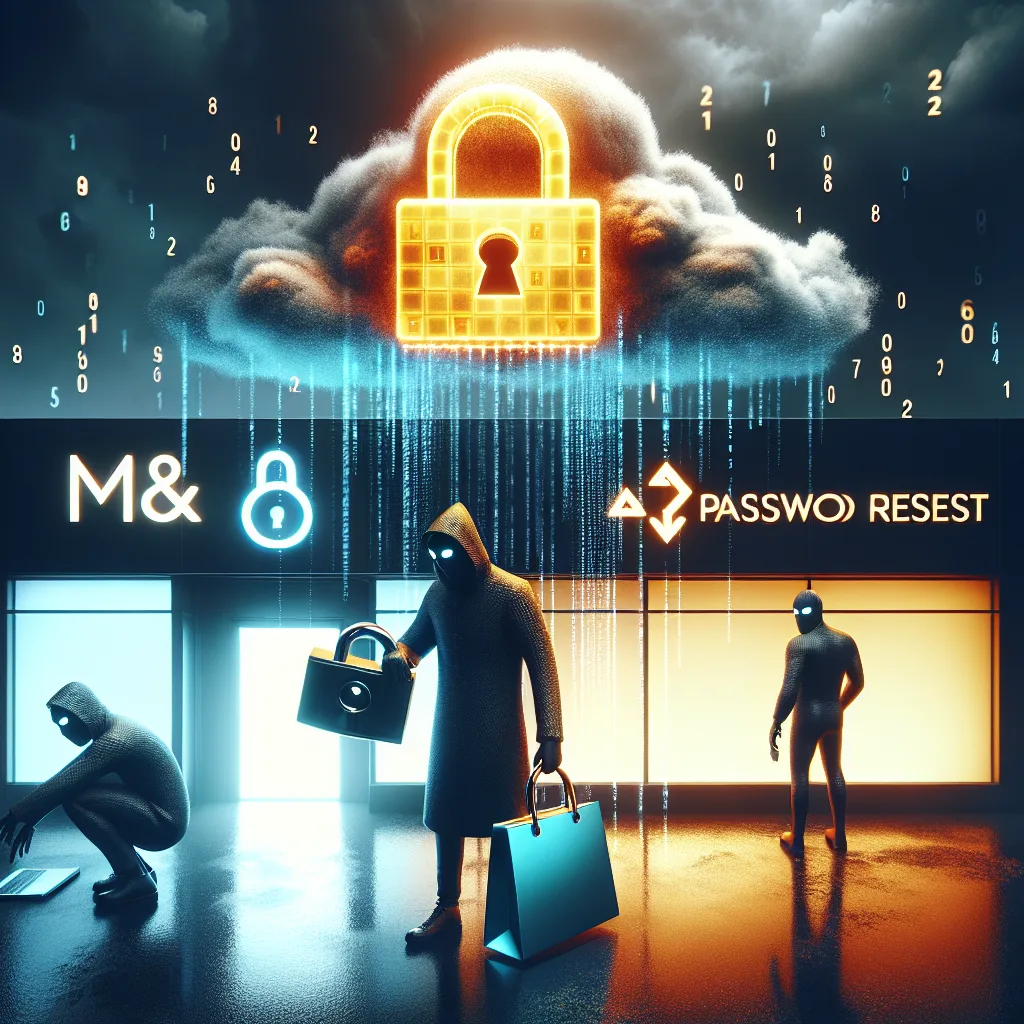
Marks & Spencer Under Siege: A Cyberattack Unmasks Hidden Vulnerabilities
In a stark reminder of the evolving threat landscape, Marks & Spencer (M&S), a venerable name in retail, confirmed that customer data was stolen during a cyberattack last month. The incident, which saw ransomware encrypt critical servers, has forced the iconic retailer to reset passwords for millions of loyal patrons and prompted broader questions about cybersecurity preparedness in a rapidly digitizing world.
The attack unfolded quietly but with far-reaching implications. As M&S scrambled to contain the damage, internal communications later detailed the breach, acknowledging that sensitive consumer information had been illicitly accessed. The company’s swift move to force password resets signals both a commitment to remediate immediate vulnerabilities and a recognition of the urgent need to reexamine digital defenses amid mounting cyber threats.
This development is not only a wake-up call for one of Britain’s storied retailers but also an urgent alarm for businesses across sectors. As organizations increasingly shift their operations and customer interactions online, cybercriminals have honed their tactics, often exploiting the very trust on which these companies build their reputations.
Historically, retail giants like M&S have weathered various economic storms—from shifting consumer habits to evolving regulation—and have built resilient operational models on a legacy of trusted service. Yet, in today’s interconnected digital environment, even institutions with decades of history are falling prey to sophisticated cyberattacks, revealing that no company is entirely immune.
On the day of the breach, customers were greeted with an onslaught of warnings indicating that their personal information might have been compromised. As the news broke, representatives from M&S emphasized that the company has engaged external cybersecurity experts to both monitor and respond to the incident. Corporate spokesperson, in a statement released via the company’s official media channels, noted, “We are taking significant steps to safeguard our customers’ data and are working closely with law enforcement to investigate the breach.”
Underpinning this crisis is the broader trend of ransomware attacks which have intensified over the past several years. Cybersecurity firm Sophos reported in its 2023 Global Threat Report that ransomware incidents increased by over 60% in the previous year, a statistic that aligns with the current trends and reinforces the persistent targeting of large enterprises. With adversaries becoming more audacious and technologically advanced, M&S’s situation illustrates a larger systemic vulnerability facing both private and public sectors.
The immediate response featured a forced splash of password resets across customer accounts, a standard protocol intended to minimize further risk. However, the implications reach far beyond the simple act of changing passwords. Such incidents trigger cascading concerns regarding consumer privacy, regulatory compliance under frameworks like the UK’s Data Protection Act 2018, and the erosion of public trust. As these issues intersect with the broader realms of economic stability and national security, they merit a rigorous, multi-faceted analysis.
Cybersecurity experts across the board, including those from the National Cyber Security Centre (NCSC), have long cautioned that the retail sector represents an especially lucrative target for cybercriminals. With vast amounts of personal data—from addresses to payment details—stored on servers, each breach not only compromises customer security but can also serve as an inchworm toward larger, coordinated attacks that ripple throughout the financial infrastructure.
Beyond the immediate financial and reputational risks, the attack on M&S raises strategic questions about the state of technology governance in legacy organizations. For decades, large companies have relied on a mix of legacy systems alongside new digital solutions, often creating complex layers of security that are difficult to manage. The integration of modern cybersecurity measures with these older systems frequently poses significant challenges, a fact underscored by the ongoing attack.
From a policy perspective, the incident reignites debates over the adequacy of current cybersecurity regulations. Lawmakers in the United Kingdom have worked closely with industry experts to bolster digital protection measures in financial services and retail sectors alike. However, the rapid pace of technological change means that policies are always playing catchup to the innovative techniques employed by cybercriminals. Recent efforts by the Information Commissioner’s Office (ICO) to modernize data protection guidelines imply a growing governmental commitment to confront these challenges head-on.
For business analysts and cybersecurity strategists alike, the M&S breach serves as a practical case study in crisis management and risk mitigation. David Parker, a cybersecurity strategist at the Computer Security Institute (CSI), observes that “the impact of a breach is as much about the incident itself as it is about how the company responds afterward. M&S’s decision to force password resets, while disruptive, is an essential step toward regaining customer trust and ensuring longer-term resilience.”
In reviewing the broader impact, the financial sector watches closely. Cyberattacks have grown more sophisticated, frequently serving as preludes to more destabilizing operations, such as supply-chain disruptions or targeted attacks against infrastructure. In the retail context, the breach may challenge consumer perceptions of safety and reliability, potentially leading shoppers to reconsider their loyalty in a marketplace where trust is paramount. It also serves as a stark reminder that digital transformation must be paired with robust security protocols at every layer.
While M&S works to restore both service integrity and customer confidence, the attack’s ripple effects extend into competitive dynamics. Industry competitors are under pressure to reassess their own cybersecurity measures, and investors are watching for signs of whether such breaches could materially impact market valuations. Analysts at Bloomberg recently noted that consumer-facing companies often experience short-term stock price declines after confirming data breaches, although recovery can be swift if remedial actions are transparent and effective.
Looking ahead, it is likely that M&S—and many companies in similar positions—will invest heavily in next-generation cybersecurity solutions that leverage artificial intelligence and machine learning for threat detection and response. The incident underscores not only the reactive need for patching vulnerabilities but also the proactive requirement to anticipate and counter sophisticated cyber threats before they take root.
Industry observers such as Bruce Schneier have long argued that cybersecurity must be ingrained into the corporate culture rather than treated as an afterthought. With increasing instances of intrusion into even the most secure environments, the balance between operational efficiency and cyber resilience becomes a key strategic imperative.
Ultimately, this breach invites a sober reflection on the intersection of commerce, technology, and the human element of trust. For millions of consumers, the M&S incident is more than just a technical glitch—it is a disruption that evokes deeply personal fears about privacy, identity theft, and the convergence of online and offline vulnerabilities within our everyday lives. The incident bridges the narrative between high-level analytical strategy and the very human repercussions, underscoring that behind every dataset lies a story of human interaction and expectation.
- Immediate Action: Forced password resets reflect an urgent effort to mitigate further unauthorized access.
- Technical Implication: Ransomware targeting legacy and hybrid systems exposes systemic vulnerabilities in cybersecurity infrastructure.
- Regulatory Impact: The breach renews calls for stricter data protection laws and improved coordination between private companies and regulatory bodies.
- Consumer Trust: Beyond financial implications, the incident risks long-term reputation damage if remedial measures are not transparently communicated.
As the dust begins to settle after this cyber assault, the resilience of M&S and its ability to restore customer trust will be closely watched by market analysts, cybersecurity experts, and consumers alike. In a world where digital threats loom large, the story of this breach serves as both a cautionary tale and a blueprint for the future—a future where safeguarding personal data is as much about technology as it is about trust, transparency, and the human spirit.
Will the lessons from this breach fortify the digital defenses of legacy organizations, or will adversaries continue to exploit the cracks in the modern digital façade? As M&S embarks on the arduous journey of recovery and realignment, the answer may well define the next chapter in our collective quest for cybersecurity resilience.