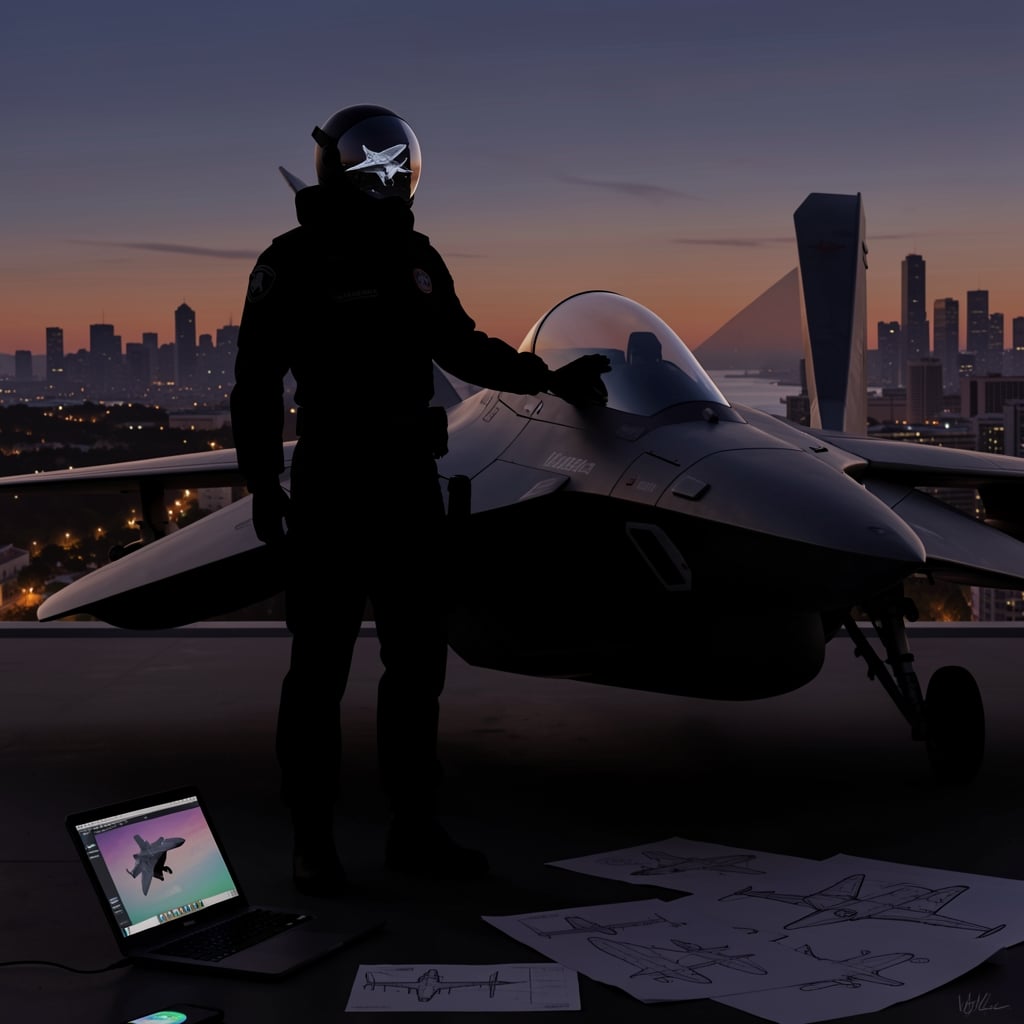
What will the Marine Corps’ next-generation fighter look like? “It’s early,” a top Marine general warned, but he added he would expect a next‑gen fighter to “look something like” the Navy’s F/A‑XX.
Where things stand
The Marine Corps is, according to reporting, beginning early work on concepts for a sixth‑generation fighter. At this stage, officials are in the conceptual phase and have not committed to a finalized design. A top Marine general described his expectation that a Marine next‑generation fighter would resemble the Navy’s F/A‑XX, saying he would expect it to “look something like” that program.
The plain meaning of the statement
The comment from the top Marine general offers a directional cue rather than a technical specification. It conveys two clear facts: Marines are engaged in early conceptual work on a sixth‑generation fighter, and a senior Marine leader envisions the service’s future fighter bearing resemblance to the Navy’s F/A‑XX. Beyond that, the remark is framed with caution — “it’s early” — signaling that plans remain formative.

This site is the portfolio.
OSINTSights runs on Cloudflare Workers, D1, R2, and Vectorize, with an AI pipeline on Hetzner ARM. Nubivance designed, built, and operates it. We do the same for clients.
See what we buildWhy that resemblance matters — questions, not conclusions
The explicit comparison to the Navy’s F/A‑XX raises a set of practical and policy questions without asserting answers. If future Marine concepts are intended to “look something like” the F/A‑XX, observers will reasonably ask how closely the services’ goals will align, what aspects of the F/A‑XX would be emulated, and how early concept work may influence later decisions. The general’s phrasing stops short of commitment, leaving open whether resemblance would be conceptual, operational, industrial, or something else.
Perspectives to watch
- Technologists: The early conceptual phase will be where design direction and requirements begin to take shape; the general’s comparison to the F/A‑XX indicates a possible starting point for technical conversations.
- Policymakers: An expressed expectation of similarity between Marine and Navy concepts could inform budget prioritization and joint development considerations as concepts evolve.
- Users and operators: Marine Corps planners and aviators will be stakeholders as concepts move from early work toward more concrete requirements.
- Adversaries and competitors: Any stated alignment between services’ future aircraft concepts may be watched as an indicator of strategic intent, even at this early stage.
All of these are areas to monitor as the Marines’ early concept work progresses and as further statements or decisions clarify whether the service’s sixth‑generation fighter will indeed follow the Navy’s F/A‑XX model.
How much of a guiding blueprint is a comment like “look something like” when plans are still only beginning to take shape? For now, the answer rests with the work still to be done and the next public signals from Marine leaders.