"This contingency dry dock capability is a critical pre-condition of Australia receiving its first Virginia class submarine and will provide a critical contingency capability for Australia and its partners," the Australian Department of Defence said in a news release announcing that a Leidos subsidiary will design the shore facility intended to support nuclear‑powered submarines operating under AUKUS Pillar 1.
Leidos Gibbs and Cox to lead preliminary dry‑dock design
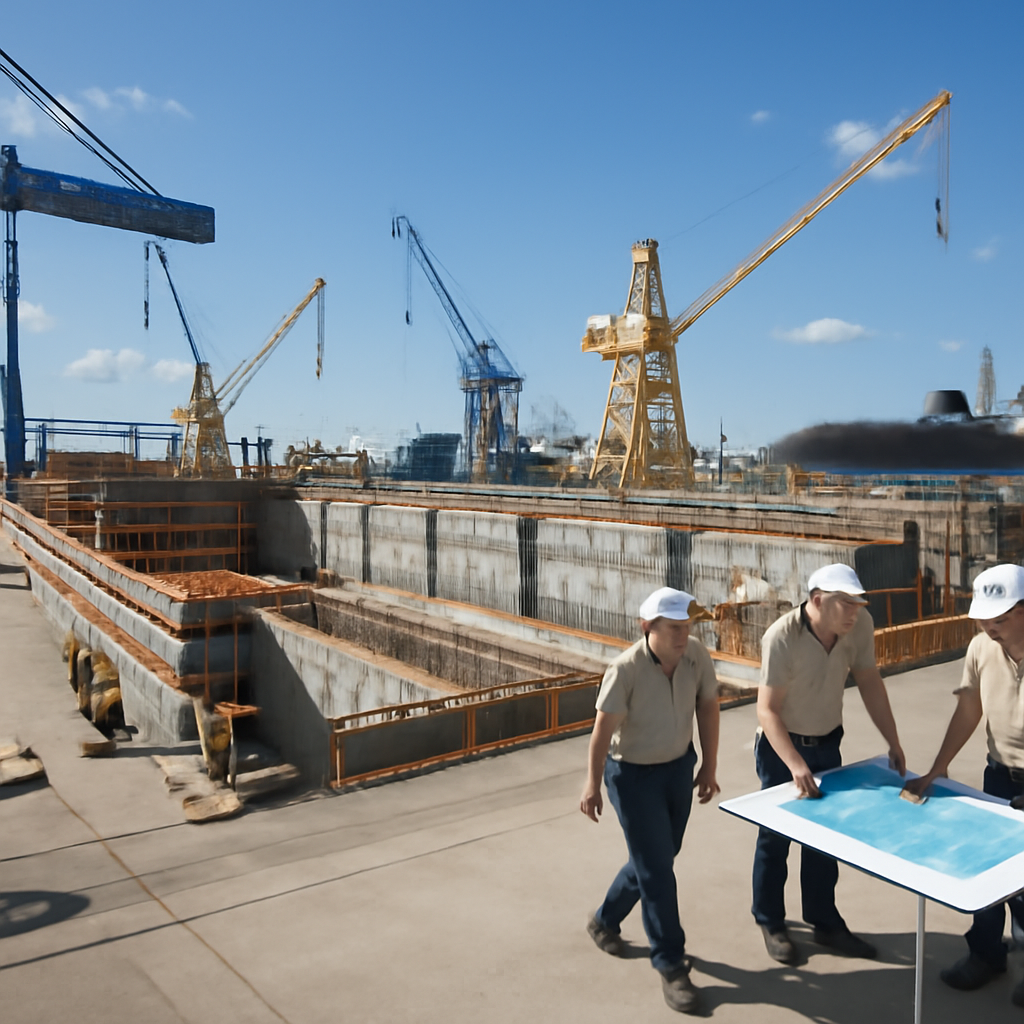
Leidos Gibbs and Cox, a U.S.‑based company with Australian offices, has been chosen to lead the preliminary design of a contingency dry dock for critical repairs and maintenance on the submarines Australia will operate under AUKUS Pillar 1, the defence department said. The announcement frames the work as design activity rather than construction: Leidos Gibbs and Cox will lead preliminary design efforts for a capability intended to accept the submarines when repairs or maintenance require shoreside docking.
Dry dock positioned as a pre‑condition for Virginia‑class transfers
The department described the contingency dry dock as a "critical pre‑condition" for Australia to receive its first Virginia‑class submarine. Under the trilateral AUKUS partnership, the Royal Australian Navy is slated to receive three second‑hand Virginia‑class, conventionally armed, nuclear‑powered attack submarines before transitioning to the AUKUS class submarines to be operated by the Royal Australian Navy and the UK’s Royal Navy. The dry dock is presented in the release as a contingency measure to support those operational steps.

The cyber insurance questionnaire just landed. Now what?
SOC 2, HIPAA, insurance renewals - someone has to own security strategy. Nubivance provides fractional CISO leadership without the full-time salary.
Get a security leadBisalloy Steel contract brings HY80 plates into U.S. builds
The same defence department release announced that Australian steelmaker Bisalloy Steel will provide HY80 steel plates — a military‑grade material — to General Dynamics Electric Boat under a $2 million USD contract for the construction of U.S. submarines. According to the release, this will be the first time Australian‑produced steel is used in the build of Virginia‑class submarines, following Bisalloy's qualification through the Australian Defense Industry Vendor Qualification (DIVQ) program. The release said the DIVQ program certifies that Australian suppliers meet the U.S. Navy’s structural steel standards and is designed to help "Australian companies enter US submarine supply chains while strengthening Australia’s sovereign industrial capability."
The Henderson Defence Precinct, jobs, and sovereign shipbuilding
The government tied the dry‑dock design to broader investments in Western Australia, specifically HMAS Stirling and the Henderson Defence Precinct. The release said the design work "forms part of the Government’s broader investment in Western Australia across HMAS Stirling and the Henderson Defence Precinct for sovereign shipbuilding." It added that the Albanese Government has committed an initial $12 billion [$8.34 billion USD] to deliver the Defence Precinct at Henderson, and that the Government’s shipbuilding investments "will support 10,000 direct jobs over the next two decades in Western Australia."
How the Royal Australian Navy, General Dynamics Electric Boat, and Western Australia are affected
- The Royal Australian Navy: The department framed the dry dock as a contingency asset essential to accepting and maintaining Virginia‑class submarines while the transition to AUKUS class vessels proceeds; the announcement links afloat capability to shoreside infrastructure readiness.
- General Dynamics Electric Boat and U.S. submarine builders: The $2 million USD Bisalloy deal marks an integration of an Australian supplier into the Virginia‑class supply chain, enabled by DIVQ certification that the release says demonstrates compliance with U.S. Navy structural steel standards.
- Western Australian workforce and precinct planners: The government’s stated $12 billion initial investment in the Henderson Defence Precinct, and the claim of supporting 10,000 direct jobs over two decades, positions the dry‑dock design and steel contracts as parts of a broader industrial expansion focused on sovereign shipbuilding capacity.
Australian Minister for Defence Industry Pat Conroy framed the developments as fulfilling central aims of AUKUS, saying the trilateral agreement "is about expanding the industrial base of all three countries to deter conflict and promote peace in our region, as well as supporting Australia to acquire the most advanced, nuclear‑powered but conventionally armed submarines in the world." The announcement therefore links technical decisions — who designs a dry dock and who supplies structural steel — to industrial policy choices and job‑creation commitments.
The immediate, concrete steps recorded in the department’s release are narrow but consequential: Leidos Gibbs and Cox will undertake the preliminary design of a contingency dry dock, Bisalloy Steel will supply HY80 plates under a $2 million USD deal to General Dynamics Electric Boat, and the Albanese Government’s $12 billion initial investment underwrites the Henderson precinct expansion. Those items together convert policy rhetoric about sovereign shipbuilding into named contracts and certified suppliers; the next visible milestones will be the completion of Leidos’s preliminary design work and further integration of DIVQ‑qualified Australian firms into U.S. submarine supply chains.