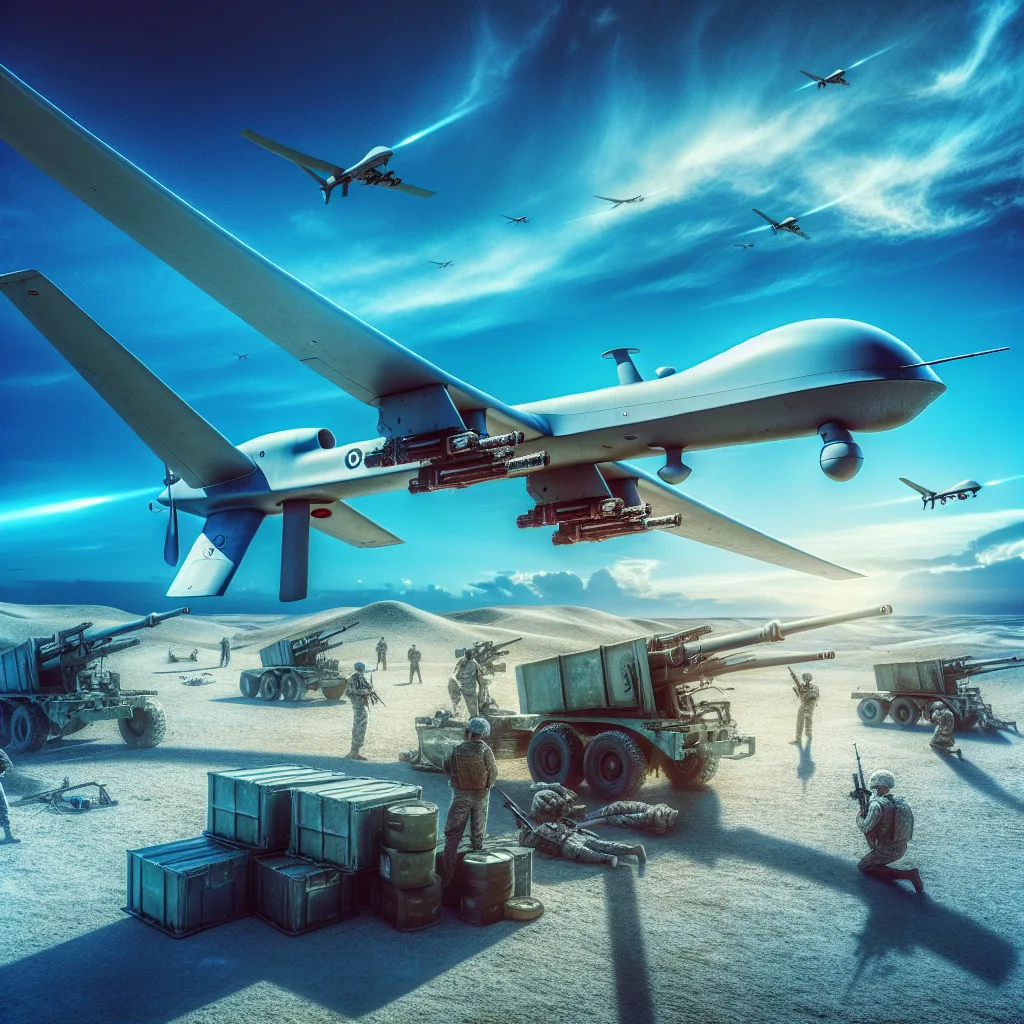
Russian Lancet Drones: A Game Changer in the Conflict’s Artillery Dynamics?
As the conflict in Ukraine continues to draw global scrutiny, Russian defense sources are now pointing to a surprising development: the Lancet loitering munitions, previously seen as a relatively minor asset, are reported to have annihilated more than half of the American-made M109 self-propelled howitzers delivered by NATO countries to Kyiv. This latest twist in modern warfare, emerging from the ongoing drone operations in Ukraine, raises critical questions about the effectiveness of supply lines and the evolution of battlefield strategies in an era defined by rapid technological innovation.
Official intelligence reports, notably disseminated through military-affiliated outlets in Russia, have cast new light on the role of unmanned systems in bridging artillery gaps. While Western military planners had long anticipated challenges posed by precision-guided munitions, few expected the Lancet drone system to register such dramatic operational success against a backbone of NATO-supplied artillery.
Historically, the exchange between conventional artillery and emerging unmanned aerial vehicles has been both dynamic and unpredictable. The M109 howitzers, a cornerstone of Western artillery support in Ukraine, were deployed with the intent of providing reliable indirect fire support to Ukrainian forces. Yet, as Battle Management Systems evolve and integrated drone networks become more sophisticated, the calculus for conventional artillery units has markedly shifted, as demonstrated by the claims being made today.
A closer inspection of the situation reveals a multifaceted narrative. The Lancet drones, developed to offer precision strikes while minimizing collateral damage, have now taken on a role that directly undermines the operational integrity of a key part of Western military aid to Ukraine. Military analysts point out that these drones are built to loiter over the battlefield, await the opportune moment for a strike, and then deliver a warhead with pinpoint accuracy. Such attributes enable them to target static or slowly moving assets such as the M109 howitzers, which often require a time-intensive setup and repositioning, thereby making them vulnerable to such agile threats.
Russian defense assessments underscore the importance of adapting to an evolving conflict environment. With a steady push towards incorporating unmanned warfare technology, the Russian military appears to have recalibrated its approach to meeting artillery gaps traditionally filled by manned artillery units. By leveraging the Lancet drone’s capabilities, Russian forces intend not only to reclaim the initiative on the battlefield but also to complicate the logistical and operational planning of NATO’s support efforts for Ukraine.
It is essential, however, to report that these claims come amidst a broader narrative of contested information. While Russian sources assert significant success against the M109 howitzers—a fact that, if verified, could signal a game-changing juncture in the conflict—Western officials have yet to confirm these losses independently. Such conflicting reports highlight the perennial challenge of information warfare, where verified facts, strategic messaging, and on-the-ground observations often diverge sharply.
Experts in modern warfare, including former Defense Department analysts and military strategists, observe that the integration of loitering munitions into conventional battle plans is emblematic of a larger trend. They note that while traditional artillery continues to play a critical role in support operations, the infusion of drone technology is reshaping tactical priorities. As the Russian military reportedly harnesses these capabilities to adapt to weakened conventional fronts, questions arise regarding future arms transfers, battlefield procurement, and the recalibration of defense doctrines by NATO and its allies.
For instance, retired U.S. Army Colonel David Petraeus has previously commented on the radical shift in technology-dependent conflicts, stressing that “the future battlefield is one where speed, precision, and cost-efficiency determine strategic success.” Although Colonel Petraeus has not commented directly on this specific incident, his perspective offers insight into why unmanned systems like the Lancet drones are increasingly viewed as pivotal assets in modern military engagements.
Several strategic implications now surface from this development:
- Technological Superiority: If the Lancet’s effectiveness against the M109 howitzers is substantiated, it may compel NATO to reassess the balance between manned platforms and emerging unmanned systems in conflict zones.
- Operational Vulnerability: Modern artillery systems, designed primarily for sustained fire rather than rapid redeployment under drone threat, might require enhancements in counter-drone technology or adjustments in deployment doctrine.
- Strategic Messaging: The use of Lancet drones to achieve such notable tactical gains could bolster Russia’s narrative of innovation in warfare, potentially affecting the broader strategic dialogue between military planners in the West and the Kremlin.
- Supply Chain and Logistics: As evidence mounts regarding the vulnerability of NATO-supplied equipment, discussions around the resilience and adaptability of artillery support become inevitable, carrying implications for both military procurement policies and on-ground tactics.
While the ongoing drone warfare in Ukraine has already forced rapid recalibrations on both sides, the reported achievement by the Lancet drones stands as a reminder that technological innovation and adaptability remain decisive factors. For policymakers and military strategists alike, this latest account serves as a catalyst for deeper investigation into how unmanned systems can influence the operational landscape.
Moving forward, Western officials will likely increase their efforts to verify these claims. Independent satellite imagery, field reconnaissance, and contributions from allied intelligence agencies will be crucial in painting a comprehensive picture of the evolving battlefield. Observers from organizations such as NATO and the U.S. Department of Defense have reiterated that all strategic data must be corroborated by multiple sources, emphasizing a methodological approach over reactionary assessments.
Experts caution that while the current focus is on the capabilities of the Lancet drones, the broader narrative is one of transformation. As modern conflicts increasingly depend on a blend of conventional firepower and agile drone warfare, the incident underscores the urgency for all parties involved to innovate continuously. In this complex milieu, every technological adjustment has far-reaching implications beyond immediate tactical gains—touching on issues of strategic trust, long-term procurement policies, and even diplomatic posturing.
Public trust in military aid and its effectiveness remains a fundamental concern. Ukrainian officials, supported by intelligence briefings from NATO partners, have expressed a need to ensure that equipment provided to their forces remains viable against unforeseen modern threats. In this context, the potential success of the Lancet drone system offers both a cautionary tale and a roadmap for future defense technology integration. It is a sharp reminder that triumph in modern warfare depends not just on cutting-edge technology, but also on adaptability, resilience, and a willingness to reassess long-held assumptions.
Looking ahead, the strategic landscape is poised for further shifts. Military planners, now acutely aware of the vulnerabilities associated with supply lines and static artillery placements, are expected to reconsider the deployment of assets in the face of agile drone threats. The balance of power on the battlefield might soon be redefined by these emerging technologies, and alliances will need to evolve their strategic doctrines to contend with such asymmetries.
In the end, the unfolding narrative surrounding the Lancet drones and the alleged decimation of M109 howitzers invites broader reflection. As long as conflict continues to evolve, so too will the technological and strategic paradigms that define it. The challenge for policymakers and military strategists is to remain vigilant, ensuring that every claim is closely scrutinized and that the human cost of modern warfare guides thoughtful and responsible strategic recalibrations. Do these developments signal the dawn of a new era in combat, or merely a temporary tactical adjustment in an age-old struggle for supremacy on the battlefield?