Kongsberg Unveils Cutting-Edge Counter-Drone Capabilities on the Amphibious Front
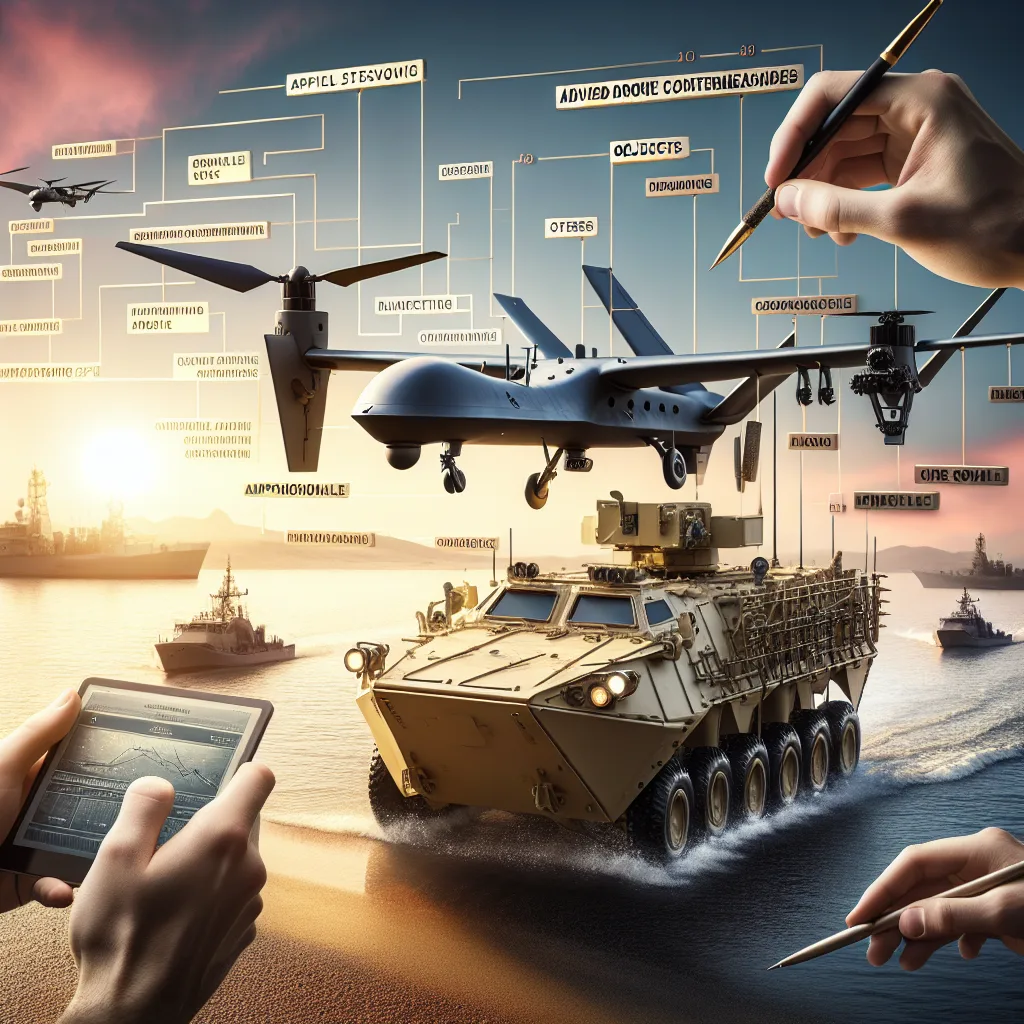
A fully networked amphibious combat vehicle, outfitted with an array of advanced sensors and precision weapons systems, grabbed the spotlight at the Northrop Grumman Bushmaster User Conference. At the event, defense contractor Kongsberg demonstrated its latest progress in integrated battlefield solutions, specifically highlighting the counter-drone capabilities now integrated onto the U.S. Marine Corps’ Amphibious Combat Vehicle (ACV). This development underscores a shift in modern warfare, where technological advancements are aligning rapidly with strategic needs on both land and sea.
As military operations evolve against the backdrop of increased asymmetric threats—including the emerging challenge of drone warfare—defense manufacturers across the globe are being pressed to innovate. Kongsberg, a stalwart in sensor and weapons integration with decades of experience, is positioning itself at the forefront of this vital transformation. The company’s demonstration at the conference illustrated not merely incremental updates but a significant step forward in counter-drone defense tactics deployed on a platform traditionally designed for amphibious assaults.
Historically, amphibious combat vehicles have been conceptualized to provide rapid deployment and enhanced mobility along contested littoral zones. Over time, these vehicles have incorporated increasingly sophisticated networking and sensor capabilities. The integration of advanced counter-drone systems represents a response to the modern battlefield’s kaleidoscopic threats—a challenge that demands a fusion of electronic warfare, precision targeting, and coordinated communication. The recent upgrade is informed by a long lineage of battlefield innovations, reflecting lessons learned from decades of armed conflict and technological evolution.
At the heart of Kongsberg’s system is a network-centric architecture. This structure not only enhances the vehicle’s situational awareness but also provides an integrated defense that is critical in denying low-altitude airspace to hostile unmanned aerial systems. According to official statements made at the conference, the system leverages real-time data feeds from both onboard sensors and larger communication networks, ensuring immediate threat identification and response. Such capabilities are designed to counter the increasing risk posed by adversaries who deploy inexpensive yet effective drone technologies for reconnaissance or direct attack roles.
Beyond its immediate tactical utility, the integration of counter-drone capabilities on the ACV has broader implications. For military strategists and policymakers alike, such developments are a clear demonstration of the shift toward systems that merge traditional kinetic capabilities with electronic and cyber defenses. This is in line with evaluations from prominent defense analysts such as those at the International Institute for Strategic Studies, which emphasize that multidomain operations are reshaping the context of modern combat. The U.S. Marine Corps, for its part, has steadily adopted more integrated approaches, with recent budget allocations reflecting an increased emphasis on both technological innovation and resilience against emerging aerial threats.
This breakthrough is not without its complexities. Integrating counter-drone systems into an amphibious vehicle requires overcoming both technical and operational challenges. Among these are ensuring reliable sensor accuracy in environments characterized by high clutter, mitigating the risk of interference with friendly systems, and maintaining network integrity amid electronic warfare conditions. Defense experts note that while the counter-drone technology is robust, ensuring interoperability with other systems on the battlefield remains a core priority. Moreover, the rapid pace of drone technology improvements means that the countermeasures must be continuously updated—a fact that is driving increased collaboration between defense contractors and military research laboratories.
Several elements underpin the strategic significance of this development:
- Innovative Integration: Kongsberg’s system is designed to work seamlessly with existing ACV architectures, providing a model for future upgrades in multifaceted conflict zones.
- Network-Centric Operations: The ability to merge sensor data and operational commands in real time reflects a broader shift toward integrated network-centric operations in modern military doctrine.
- Adaptability in Threat Environments: With drone technology continuously evolving, the counter-drone capabilities on the ACV illustrate the need for agile, adaptive defense strategies that can respond to new forms of warfare.
Expert analysis has linked this development to a wider trend in defense procurement and capability development. Analysts at the U.S. Congressional Research Service have noted that defense technology procurement is increasingly focused on systems that are not only lethal but also smart, networked, and capable of countering asymmetric threats. The incorporation of counter-drone capabilities on the ACV is emblematic of this trend, highlighting a broader institutional recognition that future conflicts will be fought at the intersections of manned and unmanned systems.
Looking ahead, the deployment of these enhanced ACVs is likely to influence both tactical maneuvers and strategic doctrines within the U.S. Marine Corps and its allies. Military training programs may evolve to incorporate lessons from this integration process, ensuring that operators can maximize the vehicle’s multifunctional potential. Furthermore, as adversaries become more reliant on unmanned systems, similar counter-drone technologies are expected to proliferate. Defense observers caution, however, that the technological arms race in counter-drone systems may soon extend beyond conventional battlefields to urban environments and civilian airspaces, making robust policy debates about regulation and ethical use increasingly urgent.
In the broader context of defense strategy, the human element remains paramount. While technology and networked warfare are reshaping combat scenarios, the effective use of these systems depends on the skill, training, and judgment of military personnel. As operational doctrines adjust to embrace innovative technologies, there is an equally pressing need to ensure that soldiers are equipped not only with advanced hardware but also with the cognitive and ethical frameworks necessary to navigate an increasingly complex battlefield.
Looking ahead, observers will be watching closely for further milestones from both Kongsberg and the U.S. Marine Corps. The evolution of amphibious combat vehicles is poised to be a bellwether for how modern militaries adapt to the emerging challenges of drone warfare, cyber threats, and multidomain operations. It is reasonable to expect that ongoing enhancements will continue to refine the interplay between traditional combat roles and advanced technological capabilities, prompting regulators and policymakers to also evolve in their oversight and support mechanisms.
As history has shown, every leap in military technology comes with a mixture of promise and peril. The integration of counter-drone capabilities on the ACV perfectly encapsulates this duality—a striking demonstration of human ingenuity tempered by the inevitable complexities of modern warfare. In this rapidly changing landscape, where each technological stride demands rigorous assessment and adaptation, one is reminded of the timeless interplay between innovation and the enduring need for prudent strategy.
Amid the backdrop of an evolving global security environment, Kongsberg’s latest demonstration invites military strategists, policymakers, and the public to consider how technological advancements will be harnessed in the quest to maintain stability and security. Can the promise of automation and integrated systems translate into tangible battlefield advantages, or will the pace of change outstrip our ability to manage its consequences? Only time will tell, yet initiatives such as these highlight the unyielding drive toward an increasingly connected—and contested—future.