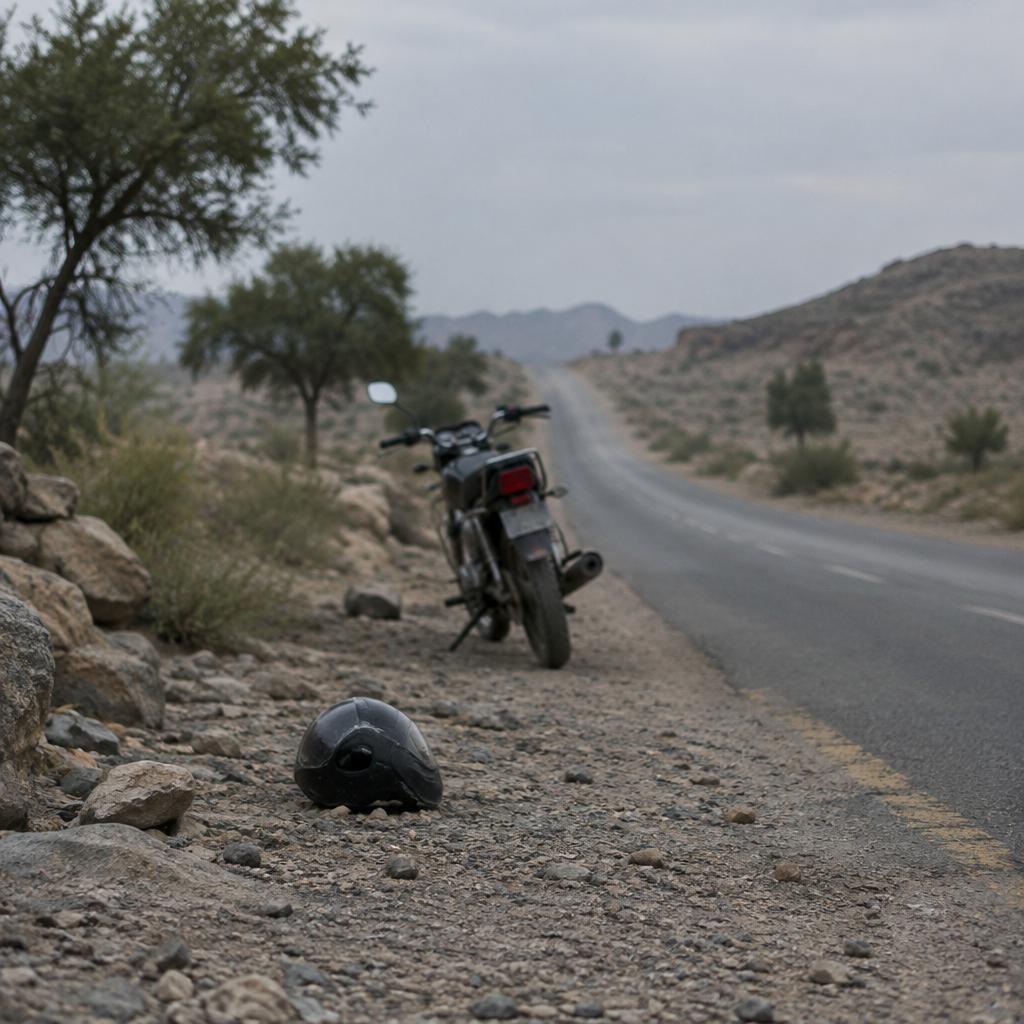
Three young men were abducted at gunpoint in Pakistan’s southwestern province of Balochistan on November 16, after armed men riding motorcycles intercepted them near the Kotera River in Jhal Magsi district, police said. The victims were identified as Riaz Ahmed, Iltazai Lashari, and Tariq Lashari; a police and security search was launched, but their whereabouts remained unknown as of this writing.
The November 16 abduction in Jhal Magsi and the immediate pattern
The Jhal Magsi abduction is one of several high‑profile kidnappings recorded across Balochistan in recent weeks. In many of the incidents reported by authorities, attackers intercepted travelers on highways or seized workers at remote sites. Often no group publicly claimed responsibility and investigators had not identified perpetrators publicly, leaving attribution unresolved in key cases.
National figures and the October spike, according to PICSS
Data from the Pakistan Institute for Conflict and Security Studies (PICSS) show a marked rise in kidnappings in October 2026: 88 people were abducted nationally in incidents linked to militant violence, up 22 percent from 72 in September and the highest monthly total in the previous year. Balochistan accounted for 70 of those abducted — nearly 80 percent of the national total — even as conventional militant attacks and casualties declined.
PICSS reported 143 militant attacks in October compared with 226 in September, a decrease of 37 percent. Deaths from those attacks fell by 57 percent, from 260 to 111, while injuries dropped 71 percent. That divergence — falling attacks and casualties alongside rising kidnappings — highlights abduction as a distinct and growing dimension of insecurity.

Audit-ready is a season. It shouldn't be.
Evidence in spreadsheets, controls drifting between audits, frameworks multiplying on flat headcount. Nubivance runs continuous compliance on Rapid7 Cyber GRC - SOC 2, HIPAA, ISO 27001, PCI, CMMC.
End the scrambleMilitant names cited: Fitna‑al‑Hindustan, the Baloch Liberation Army, and criminals
At least some abductions have been tied in public statements to separatist militants. In a September operation near Kalat, security forces recovered 23 abducted people and said armed men had set up an unauthorized checkpoint along the N‑25 highway to abduct passengers for ransom, extort money, and seize vehicles; five militants were killed in that operation. The military attributed a campaign of abductions in that area to Fitna‑al‑Hindustan, a designation used by Pakistani authorities for Baloch separatist militants, including the Baloch Liberation Army (BLA) and associated groups.
But not every disappearance in Balochistan fits that profile. The record also shows cases consistent with criminal ransom‑taking and a separate, longstanding problem of enforced disappearances: families have accused state security agencies of detaining relatives without disclosing their whereabouts, allegations authorities have disputed. The available public reporting does not establish how many abductions are militant hostage‑taking, criminal kidnapping for profit, or related to other forms of disappearance.
Recent incidents illustrating motives and methods
Several incidents since mid‑September demonstrate the range of methods and targets. On October 16, armed men intercepted the vehicle of Asad Ullah Kakar, commissioner of Rakhshan division, while he was travelling from Quetta to Kharan along the Noshki‑Kharan highway; his driver was released, and no group publicly claimed responsibility in initial reporting. On the same day, armed men stopped a passenger van carrying 20 recruits of the Levies Force returning from police training in Kalat; the attackers released the driver and three passengers but took the recruits to an undisclosed location; all 20 were recovered safely on October 20.
Two days later, attackers abducted 18 laborers and the son of a marble factory owner from a mining facility in Naal, Khuzdar district; vehicles and equipment were also seized and one worker was shot and injured while attempting to escape. In a separate September case, Kharan Deputy Commissioner Munir Ahmed Soomro was seized on September 20 and released on October 3 after negotiations involving local tribal elders and the kidnappers, underscoring the role of informal mediation.
What this means for the military, businesses, and tribal elders
- The military: Operations such as the Kalat recovery, and public attributions to Fitna‑al‑Hindustan, indicate the military is treating a subset of abductions as part of an armed separatist campaign and is using forceful operations to recover hostages and dismantle unauthorized checkpoints.
- Businesses operating in Balochistan: Mining, construction, and transport firms face direct disruption when workers are abducted or equipment is seized, and may need to reassess staff movements along routes such as the N‑25 and near remote sites where attacks have occurred. The seizure of vehicles and equipment from the Naal marble facility is a concrete example of how abductions translate into operational losses.
- Tribal elders and local communities: The release of Kharan’s deputy commissioner following negotiations highlights the continuing role of informal tribal mediation in securing freedom for abductees, particularly where conventional law enforcement and state reach are limited.
Kidnapping in Balochistan has emerged as a flexible tool: it intimidates communities, generates resources through ransom or seizure, and enables pressure on institutions without necessarily producing the casualties associated with bombs and armed raids. That shift complicates any simple reading of improved security based solely on falling attack and casualty counts. For authorities, businesses, and communities, abduction trends — the numbers, the locations, and whether incidents are attributed to militant groups or criminal networks — will be a crucial barometer of stability in coming months.