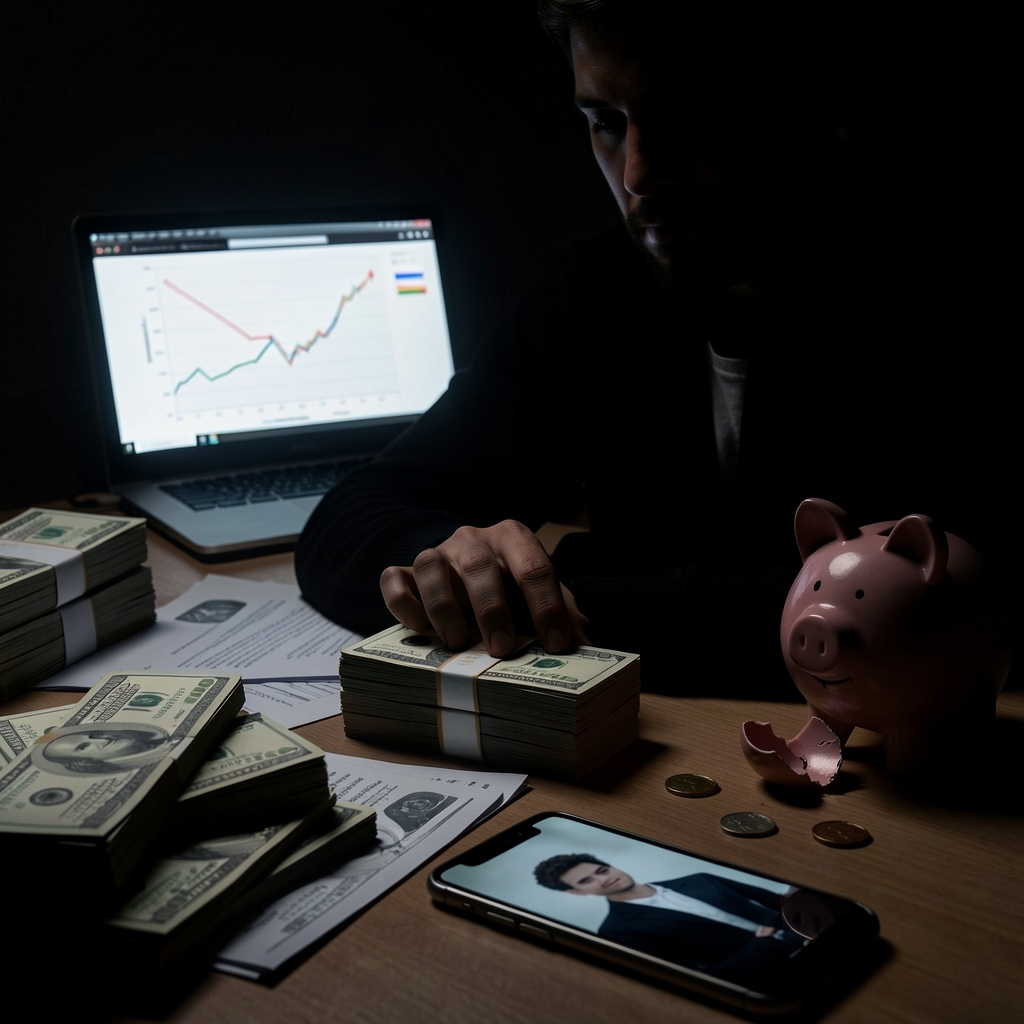
<p“How do you tell the real financial adviser from the actor in a convincing video?” That is the question now haunting investors across Asia as a new generation of fake investment platforms — polished websites, paid search ads and AI-generated media — lures victims into transferring life savings to accounts that disappear overnight.
<pOver the past year security researchers and regional authorities have documented a sharp rise in schemes targeting cryptocurrency and forex markets. Criminal groups are combining paid visibility on search and ad platforms with high-fidelity synthetic audio and video to impersonate regulators and well-known financiers, creating a veneer of legitimacy that persuades even cautious users to invest, Group-IB and others warn .
<pBackground: old cons, new tools
<pInvestment fraud is hardly new — advance-fee schemes, pump-and-dump operations, and boiler-room cold calls have been around for decades. What has changed is scale and sophistication. Search advertising gives scammers instant reach to people already seeking investment opportunities; generative AI supplies lifelike audio and video that impersonates trusted figures; and onboarding flows are engineered to mirror regulated platforms, directing victims to wire funds or surrender credentials. The combination lowers the friction to commit fraud and raises conversion rates far above older, clumsier methods .
<pCurrent situation: a regional surge with cross-border complexity
<pResearchers report campaigns that mimic government pages and use deepfakes of recognizable officials to build trust. Landing pages can be near-perfect visual imitations of national regulatory sites, complete with official-sounding language and logos; the scam’s playbook often includes placing those sites high in search results through paid placement so victims encounter them first . The result is financial crime that is geographically broad — victims across Southeast Asia and beyond — and legally thorny, because perpetrators, infrastructure and money flows cross jurisdictions rapidly.
<pWhy it matters: systemic risk beyond individual losses
- Trust erosion: When official seals and top search placements can be rented by crooks, the basic confidence that underpins markets and government communications frays. That’s not merely an economic problem — it’s civic and institutional.
- Scalability and asymmetry: Buying plausible imitation is cheap; building durable trust is expensive. The cost asymmetry means attacks scale quickly and defenders must respond in multiple domains.
- Enforcement lag: Cross-border operations hinder speedy takedown and prosecution. The time between a campaign’s launch and coordinated action is often long enough for large damage to occur.
<pPerspectives: technologists, policymakers, users, adversaries
Technologists see immediate mitigation tasks. Ad networks and search platforms already ban impersonation and ad fraud, but automated ad approvals and domain lookalikes slip through. Experts recommend combining automated signals — domain age, SSL anomalies, ad account history — with human review for sensitive categories, and improving brand-protection tooling so fraudulent domains and ads are flagged faster .
Policymakers face trade-offs. Measures such as disclosure requirements for synthetic media, stronger identity verification for advertisers, and faster cross-border takedown protocols can reduce harm but risk overbroad rules that stifle legitimate speech and innovation. Some jurisdictions are already tightening laws on online falsehoods and fraud; coordination with international partners and platforms remains crucial to act where campaigns span borders .
Users are the most immediate line of defense but often the least equipped. Even informed citizens can be deceived by a convincing video and the convenience of a top search result. Practical advice includes verifying URLs (seek official domains such as .gov.sg), checking public advisories from national regulators, contacting agencies through verified channels rather than links on a suspicious page, and treating unsolicited investment invitations with skepticism. Financial institutions can help by flagging unusual transfers and strengthening payout authentication .
Adversaries, meanwhile, are nimble. Deepfakes and pay-for-placement advertising are inexpensive and effective; a successful tactic is quickly localized and reused. As defenders harden one vector, attackers pivot to others — messaging apps, compromised legitimate sites, or language-specific lures — preserving the asymmetric advantage.
<pDefenses and emerging solutions
Responses cluster into three approaches: platform-level technical fixes, policy and legal measures, and user- and institution-focused education and controls.
- Technical: Stricter advertiser vetting for financial and government-related ads; faster domain takedowns; provenance standards or watermarking for synthetic media to help identify AI-generated content; and cryptographic signing of official audio/video for verifiable authenticity are among proposed fixes .
- Policy and law: Disclosure requirements for synthetic content, enhanced identity checks for ad buyers, and stronger cross-border legal cooperation and takedown frameworks can reduce windows of exposure, though they must be balanced against free-expression and innovation concerns .
- User and financial institution measures: Public-awareness campaigns, clear consumer advisories from regulators, and bank-level transaction monitoring and authentication controls reduce the damage when scams do succeed .
<pLimitations and the path ahead
No silver bullet exists. Technical fixes like watermarking and cryptographic attestation require broad adoption and interoperability. Legal reforms need international coordination. Public education campaigns help, but they are slow to change behavior at scale. Meanwhile, the attackers’ incentives remain strong and their toolkits continue to improve.
<pConclusion
The rise of AI-enhanced, ad-amplified investment scams in Asia is a warning bell: the institutions that anchor market trust are vulnerable to low-cost, high-fidelity deception. Solving the problem will demand coordinated action from platforms, regulators, security researchers, financial institutions and citizens. Otherwise, we risk a future where the line between official and fake is not just blurred but routinely exploited. Will we harden the trust that markets and democracy rely on — or let convenience and novelty erode it?
Source: https://www.infosecurity-magazine.com/news/investment-scams-spread-across-asia/



