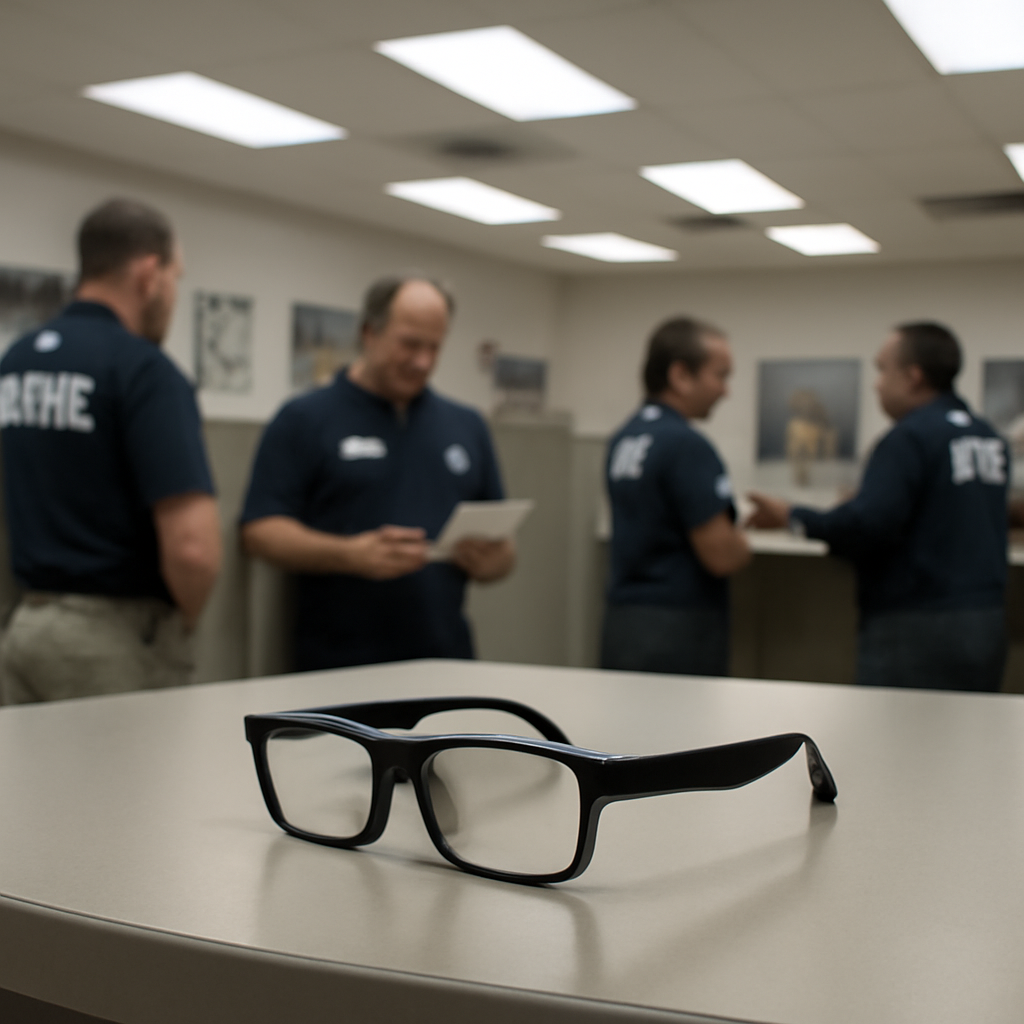
"The use of Meta Glasses or similar devices could unintentionally capture, record or transmit sensitive information, potentially compromising privacy and legal protections," David Venturella, Immigration and Customs Enforcement acting director, wrote in a Tuesday memo.
Venturella's memo and the message to agents
David Venturella, identified in the memo as ICE acting director, told agency employees that Meta smart glasses are essentially "body-worn cameras" because they can covertly record video and audio. The memo, reported by The New York Times and referenced by The Register, was delivered on a Tuesday and framed the devices as capable of unintentionally capturing sensitive information that could compromise privacy and legal protections.
ICE policy: personal body-worn cameras are barred
ICE policy — cited in a referenced PDF — explicitly prohibits employees from using personal body-worn cameras in the workplace. Under that policy, ICE employees' personal Meta glasses, along with "similar wearable devices capable of recording audio or video," are banned from use on the job. An ICE spokesperson reiterated that the agency sometimes reminds employees of existing policies and said the agency "takes privacy and operational security seriously."

Audit-ready is a season. It shouldn't be.
Evidence in spreadsheets, controls drifting between audits, frameworks multiplying on flat headcount. Nubivance runs continuous compliance on Rapid7 Cyber GRC - SOC 2, HIPAA, ISO 27001, PCI, CMMC.
End the scrambleSpokesperson response and unanswered questions
When asked about the memo, an ICE spokesperson told The Register: "This isn't news - nothing has changed. Personally owned body-worn cameras and unauthorized recording are prohibited, as they always have been." The same spokesperson declined to answer The Register's questions about what prompted the reminder and whether a growing number of agents had been bringing Meta glasses to work. Meta declined to comment on the story.
Parallel venue and event restrictions: DEF CON, Soho House, Wetherspoons, NBA arenas
The ICE reminder comes amid a broader wave of restrictions on smart glasses with recording capabilities. DEF CON organizers advised attendees ahead of the annual August event to "Be sure to pack non-violating eyewear if you need them," instructing hackers to leave any glasses equipped with recording capabilities at home. Several restaurants, pubs and private clubs — the story names Soho House and UK pub chain Wetherspoons — have similarly prohibited or strongly discouraged patrons from wearing these devices.
A Wetherspoons spokesperson told The Register that "the general code that applies in our pubs, and most pubs, is that you can't film customers or employees without their permission," adding that "Meta glasses seem to breach this code, and common sense, by enabling surreptitious surveillance, so our instinct is to say turn off the cameras." Some National Basketball Association arenas have also told fans to place glasses with recording capabilities inside their vehicles and not wear them at NBA games.
UK privacy watchdog investigation into Meta's smart glasses
In March, the United Kingdom's privacy watchdog began an investigation into Meta's smart glasses after reports that human contractors reviewing recordings from the devices were exposed to "extremely private moments" captured by unsuspecting users. That regulatory action is one of several external pressures cited in coverage of the devices' privacy and operational risks.
How law enforcement agencies, venue operators, and end users are responding
- Law enforcement agencies: ICE's memo and the cited internal policy show a clear posture — a reaffirmed ban on personally owned, recording-capable eyewear while on duty and an emphasis on protecting operational security and privacy.
- Venue operators and event organizers: DEF CON, Soho House, Wetherspoons and several NBA arenas have already moved to restrict or discourage wearable cameras at events and in public venues, reflecting an operational response to potential surreptitious recording.
- End users and consumers: Reports that contractors reviewing device recordings were exposed to highly private content have prompted regulatory scrutiny and public concern, and consumers face growing limitations on where and how they can wear recording-capable eyewear.
The immediate takeaway is plain: ICE has reiterated an existing prohibition and framed Meta's glasses as a workplace risk because of their recording capability. What remains unanswered in the public record is why the reminder was issued now — a question ICE's spokesperson declined to address — and whether enforcement or further internal disciplinary guidance will follow. As smart eyewear circulates in public life and private workplaces, the tension between convenience and the protection of privacy and operational security is likely to produce more written rules, venue bans and regulatory attention.